Global Graphite Production and Reserves: China Dominates Market Amid Surge in Electric Vehicle Battery Demand
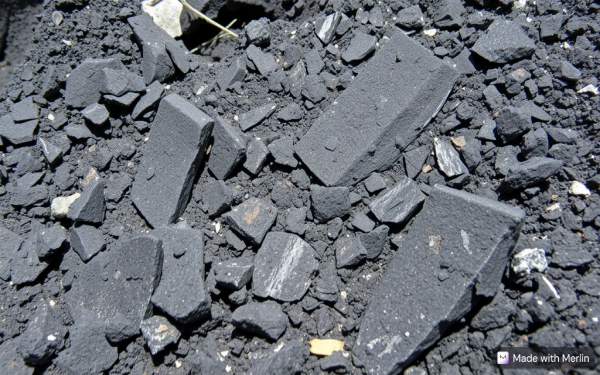
Graphite is a naturally occurring soft form of carbon known for its excellent chemical stability and corrosion resistance. It has a wide range of applications across various industrial sectors, including refractory materials, electrical industries, lubricants, the battery industry, and emerging materials.
Notably, graphite is a critical mineral for electric vehicle battery production, a sector experiencing a significant surge in demand. Since 2018, the global graphite market with batteries as the end-use has grown by 250%.
According to Fortune Business Insights, the global graphite market is expected to grow at a compound annual growth rate (CAGR) of 6.9% from 2023 to 2030, reaching USD 13.35 billion. The company highlights that the ongoing demand from the refractory industry and the skyrocketing demand from the battery sector could lead to supply constraints, prompting countries worldwide to consider the supply security of this essential material seriously.
China holds a dominant position in the graphite market, both in natural and synthetic graphite, as well as in mining and refining. The United States Geological Survey (USGS) reported that in 2023, the global graphite production was 1.6 million tons, with China producing 1.23 million tons, accounting for 76.87%. Additionally, China has the largest graphite reserves globally, with known natural graphite reserves totaling 78 million tons.
To safeguard national defense and military security, China has added categories of high-purity, high-strength, and high-density graphite to its export control list.
According to data from the USGS, here are the top ten countries with the highest natural graphite production and their respective graphite reserves:
- China: 1.23 million tons (production); 78 million tons (reserves) – Production increased by 50% compared to 2021, accounting for about 77% of global supply; 85% of flake graphite production.
- Madagascar: 100,000 tons (production); 24 million tons (reserves) – Fourth-largest reserves globally; NextSource Materials commenced production at Molo mine in June 2023, planning an annual output of 17,000 tons.
- Mozambique: 96,000 tons (production); 25 million tons (reserves) – Two major producers: Syrah Resources and Triton Minerals; Syrah Resources’ Balama project is the world’s largest integrated natural graphite mining and processing operation.
- Brazil: 73,000 tons (production); 74 million tons (reserves) – Second-largest reserves globally; South Star Battery Metals’ Santa Cruz project began construction in 2022 for phase one, with commercial production slated for September 2024.
- South Korea: 27,000 tons (production); 1.8 million tons (reserves) – Aimed at leading the global electric vehicle battery market and reducing dependency on Chinese graphite; Ministry of Trade, Industry, and Energy has allocated a $7 billion fund.
- Russia: 16,000 tons (production); 14 million tons (reserves) – Production leveled due to the Russia-Ukraine conflict; major producers include Dalgraphite and Uralgraphite.
- India: 11,500 tons (production); 8.6 million tons (reserves) – Arunachal Pradesh holds nearly half of India’s graphite reserves; key producers are Tirupati Carbons & Chemicals, Chotanagpur Graphite Industries, and Carbon & Graphite Products; HEG is a leading graphite electrode manufacturer.
- North Korea: 8,100 tons (production); 2 million tons (reserves) – Production has remained stable in recent years.
- Norway: 7,200 tons (production); 600,000 tons (reserves) – Deposits primarily consist of flake graphite; Skaland Graphite Mine is the largest crystalline graphite producer in Europe.
- Tanzania: 6,000 tons (production); 18 million tons (reserves) – Fifth-largest reserves globally; a hotspot for new graphite projects; Walkabout Resources’ Lindi Jumbo mine begins exporting concentrate to Europe in July 2024, and Volt Resources’ Bunyu project has obtained a production license.
China News
Electric Cars
Graphite
Mining