A cold country is about to discover a summer problem. The grid was built for winter peaks and steady hydro. The load is now shifting, weather is more violent, and supply is less firm. That is not a climate story. It is a fragility story. Systems that run too lean break not at the average day, but at the edge cases. Canada’s edge cases are moving closer to the mean.
The load curve is steepening. Air-conditioning is spreading in northern cities once built for radiators, not compressors. Data centers, new manufacturing, and transport electrification add year-round baseload and sharp peaks. North American electricity demand has risen by roughly 10 gigawatts since last summer, a non-trivial jump for a system already cutting it close. In parallel, over 7 gigawatts of fossil generation retired. Capacity was added—about 30 gigawatts of solar and 13 gigawatts of batteries—but much of it earns its keep on mild days, not during long, hot, smoky weeks when demand surges after sunset. The statistical problem is simple: variance is up, mean reserves are down. Heat spikes once viewed as outliers are now regular tests of a grid designed for yesterday’s statistics.
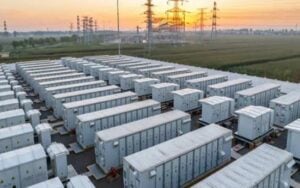
Intermittent supply is not a moral failing; it is a math problem. Solar is abundant at noon and scarce at 9 p.m., exactly when a heat wave keeps air-conditioners running and the sun is gone. Battery storage helps, but much of today’s fleet is two to four hours in duration. Heat domes do not care. They can sit for a week. Wind underperforms during some heat events. Smoke from wildfires can cut solar output by double digits for days. A grid that leans into weather-dependent resources without overbuilding firm capacity is like an aircraft that saves weight by removing a redundant hydraulic line. It flies, until it doesn’t. Capacity value is a time-specific thing. Energy is not the same as power when it is needed most.
Canada’s quiet assumption is that hydro is always there. Droughts say otherwise. Reservoirs are a battery with seasons. Snowpack timing, early melt, and low summer inflows can coincide with heat. Water management is constrained by treaties, fish, and flood control. The 1998 ice storm and the 2003 Northeast blackout showed how weather pushes lines and operators to their limits. Heat sags lines, reduces transformer capacity, and raises forced outage rates. In a long hot spell, hydro operators face a prisoner’s dilemma with future selves: generate now to keep lights on, or conserve water for August. If imports are also tight, the conservation choice can look like gambling with public patience. The risk is not in any single component, but in correlations: dry reservoirs, high temperatures, and line limits arriving together.
Reliability in eastern Canada and the northeastern United States is a networked product. Exports and imports smooth peaks. That trust is not guaranteed. Trade disputes can turn wires into weapons. A 25 percent tariff shock on cross-border goods has already invited talk of surcharges and even stopping electricity exports. That is not an idle threat for U.S. states like Vermont that depend heavily on Canadian power. In a heat wave, when both sides need help, the game looks like classic prisoner’s dilemma. Cooperation is optimal long-term, but defection in the moment is tempting. Interties built for mutual aid become bargaining chips. Grid planners talk about N-1 contingencies—survive the loss of one big element. Geopolitics creates N-1 at the border, exactly when the weather is producing N-1 on the system. Redundancy erodes from both ends.
Investors see low average wholesale prices and conclude supply is abundant. Politicians cap scarcity prices to protect voters. The result is obvious: not enough firm capacity is built, and maintenance is deferred. Energy-only markets struggle to compensate plants for being available on the worst day, which is when their value is highest. Demand response is useful but often exaggerated; it is not reliable when the call coincides with everyone’s misery. Distribution networks are the forgotten weak link. Transformers are aged, substation cooling is marginal, vegetation management lags, and urban feeders run near thermal limits. That is how cascading failures start: a line sags into a tree, a relay trips, operators race the clock. The 2003 blackout was not a freak event; it was a textbook on how optimization without slack ends.
Corporate site selectors chase cheap “green” megawatt-hours and neglect firm megawatts at peak. Data centers love Quebec’s hydro rates; they will also love curtailment notices less when water is tight and heat persists. Auto plants betting on electrified processes need power quality and uptime, not just low annual averages. EV charging networks introduce spiky loads in neighborhoods never designed for them. The joint probability of heat, smoke-reduced solar, low wind, thin hydro, and cross-border friction is not the sum of independent parts. It is multiplicative, and it produces fat tails. Rare does not mean negligible. In ruin math, a 1 percent event with system-wide impact is a different animal than a 10 percent event limited to one substation. The grid is a balance sheet. Reliability is capital. Write down enough of it, and the economy’s earnings power drops.
A resilient grid does not try to predict weather perfectly. It assumes forecast error and builds buffers. That means boring things: more transmission to move surplus to deficit regions; firm, dispatchable capacity that can run for days; long-duration storage where it pencils; winterization and summerization of equipment; maintenance budgets that rise with heat risk; and interprovincial trust structured by contract, not handshake. It also means pricing reliability as a product. Capacity markets with real penalties can fund readiness. Scarcity pricing that clears political hurdles can do the same. Interruptible load must be truly interruptible, not a paper promise. Optionality beats precision. Diversity beats monoculture. Hybrid fleets—hydro, nuclear, gas with carbon limits, storage, flexible demand—behave better under stress than any single technology.
The stoic view is simple: plan for the worst day, not the best average. War-game a seven-day heat dome with smoke, a drought-limited hydro system, a major transformer failure, and limited imports. Then ask what would break and what must be bought now to prevent it. The Roman aqueducts outlasted empires because the engineers built fallbacks and margin. Canada’s grid should do the same. If tariffs and tempers can disrupt the border flow, then build more domestic flexibility. If batteries are two hours today, find the mix that covers 12. If the political system cannot stomach scarcity prices, pay for capacity another way. Blackouts are not only an inconvenience. They are a compound risk to public health, industrial output, and political trust. The cost of slack looks high in quiet years. It looks cheap when the lights stay on.