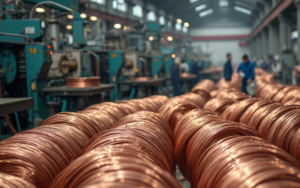

Finnish supplier Metso just booked a minerals processing package for Fortress Minerals’ Bukit Besi iron ore and Mengapur copper projects in Malaysia. The order, logged for the September 2025 quarter, reads like a small line item in a supplier backlog. Locally, it fits a larger regional story: Southeast Asia is quietly building capacity to serve a tight iron ore and copper market while China manages steel output and miners ration capex.
China’s provincial press is again flagging production discipline in steel hubs. Hebei outlets continue to reference “采暖季错峰生产” (staggered production during the heating season), reinforcing the cyclical curbs that shape iron ore demand from mills in Tangshan and beyond. The National Development and Reform Commission’s familiar line—“坚决遏制粗钢产量增长” (firmly curb any increase in crude steel output)—still frames local enforcement language. In Malaysia, Malay-language coverage of Terengganu’s east coast often notes “perlombongan bijih besi Bukit Besi” (Bukit Besi iron ore mining), a reminder that the resource base sits close to port, with short haul distances and established permits. These native cues matter because they explain why ore and equipment flows are shifting, even if English headlines focus elsewhere.
In Asia trading, resource-linked equities tilted firmer while broader indices were mixed. Japan’s Topix steel and materials names were bid on tighter product spreads. Australian miners outperformed the ASX 200 as iron ore sentiment steadied on low Chinese inventories. Singapore’s small-cap resources names saw better two-way flow alongside the Metso order chatter. In Malaysia, the benchmark was rangebound, but logistics, engineering, and port-exposed plays in the east coast corridor drew interest. The tone reflects a near-term tug-of-war: optimism on restocking versus caution on Chinese output caps.
Metso’s order spans comminution kit—typically primary and secondary crushers, screens, and mills—plus automation and wear parts that drive throughput and lower unit costs. Fortress is already a low-strip, high-spec iron ore producer at Bukit Besi and has copper optionality at Mengapur. Tying in a single OEM reduces integration risk, simplifies maintenance, and shortens ramp timelines. The equipment package turning up in Malaysia rather than North Asia is the tell: capacity is being added closer to deposits with simpler permitting and faster paybacks. That is consistent with Macquarie’s near-term view that “Chinese steel inventories sit well below the levels seen a year ago,” supportive for steel inputs while stocks rebuild. It is also consistent with an allocation shift by miners who want shorter-cycle, modular expansions over mega-projects.
The Commonwealth Bank of Australia flags a mixed impulse from Tangshan: reduced steel production there “will likely have a mixed impact on steel, iron ore and coking coal prices ahead.” The local phrase “错峰生产” matters because staggered production can lift mill margins even as it caps tonnage, creating windows when mills chase specific ore blends to hit emissions and cost targets. For exporters and regional suppliers, this can mean sporadic bids for low-impurity ore from Malaysia. That dynamic supports localized investments in beneficiation and comminution, which Metso supplies. When steel curbs tighten, premiums for cleaner feedstock and pellets can widen. When curbs relax, volume has the bid. Equipment that flexes across both regimes is the hedge.
Financial Sense notes that “planned copper mining projects will be unable to support demand growth at current rates,” a point echoed by majors like Rio Tinto that see probable projects covering roughly 3 percent annual growth at best in earlier forecasts. Procurement Resource adds the structural demand kicker from EVs, grid upgrades, and renewables in China and India. Mengapur’s copper potential sits at the intersection of those themes. Fortress acquired the Mengapur project from a Canadian owner in recent years, and has been studying flowsheets to unlock copper while stabilizing iron ore cash flow. A single-vendor processing package with automation improves recovery rates and lowers variability—key for copper circuits that must meet concentrate specs to clear smelters. In a market staring at a supply gap, even medium-scale Southeast Asian copper units earn premium attention.
Malaysia offers short lead times. Road and rail links from mine to port on the east coast are established, and port congestion has been manageable relative to some Indonesian and Indian corridors. The regulatory cadence is predictable. Environmental approvals require diligence, but local operators have navigated them for iron ore recommissioning at Bukit Besi. That is why equipment suppliers are comfortable staging installs and service teams there. For Metso, shipping a full comminution train to Terengganu and Pahang plants creates an installed base that will drive high-margin spares and wear parts over the life of mine. For Fortress, the ability to phase-in capacity—iron first, copper next—mitigates cycle risk.
Macquarie also points to geopolitics nudging diversification in iron ore sourcing. “Geopolitical tensions have spurred some countries to explore alternative sources of iron ore, raising the profile of new geographic markets.” That reads directly onto Malaysia, Oman, and other mid-tier sources that can meet smaller lot sizes and specific quality ranges. For Chinese mills managing emissions targets, lower-alumina ore from regional suppliers reduces sinter emissions. For Indian and ASEAN buyers, proximity trims freight volatility. Equipment orders follow this pattern because processing needs to travel with the ore. That is the quiet strategy behind Metso’s Asian footprint: service centers and modular plants close to customers, not just a booking line from Europe.
Near-term, traders are pricing the push-pull between Chinese output caps and restocking. That supports iron ore in a range, with periodic squeezes on specific grades. Materials equities in Japan and Australia reflect that. The copper tape, by contrast, is trying to reconcile weaker global PMIs with multi-year structural deficits. That is why small, deliverable copper optionality like Mengapur matters more than headlines suggest. A metered ramp with a credible OEM increases the probability that tonnage arrives on schedule. In project finance terms, this compresses risk premia.
English-language coverage will focus on order size and whether Metso can sustain backlog into 2026. The more relevant read-through is regional: Southeast Asia is positioning as a flexible supplier of cleaner iron ore and incremental copper just as China enforces staggered steel output and the West searches for non-traditional supply. The native-language signals—“采暖季错峰生产” framing in Hebei, and steady references to “perlombongan bijih besi Bukit Besi” in Malay reporting—explain why orders are landing in Malaysia now. Investors should look through the cycle at three layers: 1) picks-and-shovels vendors with installed base leverage in ASEAN; 2) mid-tier miners with dual-commodity optionality; and 3) logistics assets on Malaysia’s east coast. What is being missed in most English coverage is the speed advantage. Projects like Bukit Besi and Mengapur can be modularized and commissioned faster than headline mega-mines, allowing them to capture pricing windows created by Chinese policy swings and structural copper tightness.