
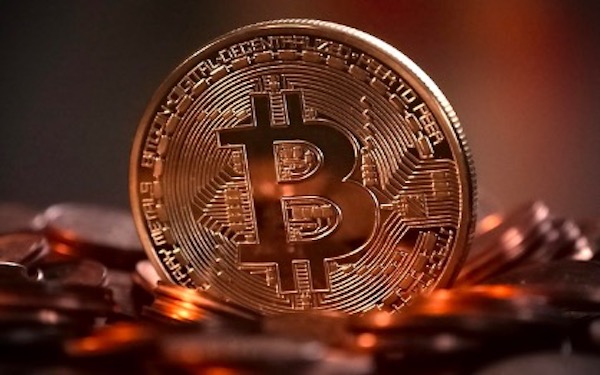
Deutsche Bank has released a significant forecast predicting that major central banks around the world may substantially increase their holdings of Bitcoin by 2030. The bank’s latest research indicates that the key drivers of this trend are the rising institutional acceptance of Bitcoin and the relative weakness of the US dollar. The report emphasizes that for central banks, allocating Bitcoin assets could evolve into a new form of “financial safe haven,” with its future strategic role in the reserve system potentially comparable to the core role gold played in the 20th century.
This forward-looking assertion comes at a time when global demand for both Bitcoin and gold is climbing to historic highs. Currently, economic uncertainty triggered by US tariff policies, coupled with complex geopolitical risks, is prompting global investors to actively seek tools to hedge against inflation and prepare for potential profound shifts in the traditional fiat currency system. Market dynamics clearly reflect this shift: the price of gold, the traditional ultimate safe-haven asset, has broken through the key psychological barrier of $4,000 per ounce; although Bitcoin’s trading price is slightly below the record peak set this week, its attributes as an emerging institutional “safe-haven tool” are being highlighted like never before.
Historical experience provides an interesting reference. Research shows that after the 2008 global financial crisis, the proportion of gold on central bank balance sheets began to rise significantly. It was the sustained wave of safe-haven demand from institutional investors that drove central banks collectively to become net buyers of gold starting in 2010. Now, against the backdrop of intensified trade uncertainties and amplified financial market volatility, gold is regaining favor—the total gold reserves of global central banks exceed 36,000 tons, strongly confirming the undeniable trend of “gold’s return.”
Deutsche Bank’s analysis further points out that the current sustained rise in gold prices is closely linked to the global “de-dollarization” process. Data shows that the US dollar’s share of global official foreign exchange reserves has significantly decreased from a high of 60% in 2000 to 41% in 2025. This structural trend theoretically benefits both gold and Bitcoin, among other non-sovereign assets. Fund flows provide evidence for this: in June of this year, gold ETFs and Bitcoin ETFs recorded net inflows of approximately $5 billion and $4.7 billion respectively, both setting historic monthly records.
Analysts from J.P. Morgan, however, offered a different perspective in a recent report. They suggested that the rise of stablecoins might instead generate new demand for the US dollar, predicting that the expansion of the stablecoin market could bring up to $1.4 trillion in additional dollar demand by 2027. This undoubtedly casts a shadow of doubt on the gold-Bitcoin reserve strategy advocated by Deutsche Bank.
Deutsche Bank’s analysis further indicates that as Bitcoin market volatility gradually moderates and regulatory support in major economies like the United States and China continues to strengthen, market confidence in Bitcoin as a potential reserve asset is steadily growing.