
Tilray Brands lit up the tape after posting a cleaner-than-expected top line. Shares of the cannabis and beverage player spiked 17.1 percent to about 2.02 as quarterly revenue rose 4.7 percent to 209.5 million, topping estimates. Non GAAP earnings landed at breakeven versus a four cent loss a year ago. The operating line flipped to a one percent margin from negative territory last year, and free cash flow burn narrowed. For a sector still starved of consistent profitability, that combination was enough to spark a rally.
The setup going into the print favored upside. Expectations were low, and guidance across cannabis has leaned conservative. Tilray cleared the bar with a 2.7 percent revenue beat, driven by steady cannabis sales and contribution from its beverage portfolio. Adjusted EBITDA of 10.18 million missed by a hair against 10.29 million consensus, but the direction of travel mattered more. Investors rewarded the return to positive operating margin, a sharp improvement from negative 18.3 percent last year. When the market is skeptical, small beats can move stocks, and Tilray delivered just enough.
Under the hood, Tilray’s mix is beginning to carry more operating leverage. The company squeezed out a one percent operating margin while growing sales modestly, a notable swing year on year. Free cash flow improved to negative 10.86 million from negative 42.02 million in the prior year period, signaling tighter working capital and cost control. Still, trailing free cash flow remains negative, and the business has averaged roughly a negative 10 percent free cash flow margin over the last two years. That is the crux for cannabis investors. Margin momentum is encouraging, but the cash register needs to ring consistently. Breakeven non GAAP EPS is a psychological win; sustainable free cash generation is the real hurdle.
The headline profit story is complicated by a large GAAP loss tied to non cash items. Tilray reported a net loss of about 793.5 million for the quarter, driven by impairments and other accounting adjustments. That divergence between GAAP and adjusted results is not unusual in this sector, where asset valuations and deal accounting have been volatile. But it does temper the celebration. Impairments do not drain liquidity today, yet they speak to prior capital allocation and the value of acquired assets. Management’s job now is to translate cost cuts and integration work into measurable, recurring profitability that shows up in both adjusted and cash metrics.
Tilray has been taking down debt and bolstering liquidity. The company reduced total debt by 71 million, including a 58 million cut to convertible notes, supporting a cleaner balance sheet. As of early April, cash and marketable securities stood at approximately 248 million, giving room to maneuver on operations and opportunistic deals. With a market capitalization near 1.9 billion and trailing twelve month revenue of about 831 million, the stock trades around 2.3 times sales. That is not demanding for a consumer staples adjacent name with improving margins, but it assumes the balance sheet continues to de risk and that dilution stays controlled. Debt reduction helps. The market will want to see discipline persist if volatility returns to cannabis equities.
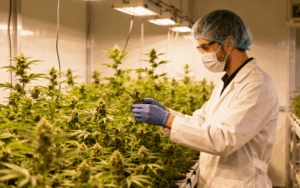
Tilray has also leaned into efficiency. The company says it is implementing artificial intelligence across its operations, including horticulture automation that adjusts greenhouse conditions in real time. In theory, that should push yields up, lower per gram costs, and stabilize quality. AI in supply chain and planning can smooth inventory turns and reduce waste across cannabis, hemp foods, and beverages. The test is execution and payback period. If AI driven automation lifts throughput without ballooning capex, it can widen margins faster than price competition can compress them. If not, it becomes another expense line that does not cure the sector’s profitability problem. Early margin gains suggest some progress, but investors will want quantified savings and multi quarter consistency.
The bullish read on Tilray is straightforward. A broader consumer platform with cannabis, beverages, and wellness softens category risk, spreads fixed costs, and builds retail leverage. Positive operating margin and improving free cash flow show the model can work. Debt is coming down, cash is adequate, and management is tightening the cost base while investing in automation. On today’s numbers, the price to sales multiple is workable if revenue grows and margins expand. The catch is growth looks slower in the near term. Sell side models call for roughly 3.9 percent revenue growth over the next year, below Tilray’s three year annualized pace of 10.6 percent. To win the debate, Tilray needs to compound low single digit growth into mid single digit with steadier profitability, or unlock a faster lane via new markets.
The sector’s macro drivers remain a moving target. In the United States, federal reform chatter continues, including a proposal to reclassify cannabis that, if finalized, could ease tax burdens for plant touching operators. Timelines are uncertain. Tilray, based in Canada, has kept exposure within permissible channels while positioning for eventual US participation. In Europe, regulatory evolution is uneven, but changes to medical frameworks can lift addressable demand. None of this is bankable on a quarter to quarter basis. That makes execution in the current footprint critical. If Tilray can post a string of quarters with positive operating margin and shrinking cash burn, it can ride any regulatory tailwind when it arrives rather than needing it to justify the multiple.
The 17 percent jump says the bar was low and that investors were positioned for disappointment. It also says short term traders will demand follow through. Cannabis stocks are prone to sharp round trips when momentum fades. For Tilray, the next checkpoints are visible. Maintain top line growth near or above low single digits, hold operating margin in the black, and push free cash flow toward breakeven. Keep whittling down debt without tapping equity. Show that AI and automation are not just buzzwords but margin drivers with measurable savings. If those conditions hold, the multiple can expand from a sales base that is at least stable.
This was a credibility quarter for Tilray. A clean revenue beat, a turn in operating margin, improved cash burn, and a quieter balance sheet were enough to reset the narrative, even with a GAAP loss distorted by non cash charges. The company has the liquidity to execute, tools to squeeze more efficiency from its footprint, and a portfolio that can diversify demand. The burden now shifts to consistency. The market has given Tilray a pop and a path. To keep it, management will have to deliver the unglamorous compounding that cannabis investors have been waiting for.