
American Tungsten Corp. (TSXV: TUNG, OTCQB: DEMRF)
Building America’s Defense Critical Metals Supply
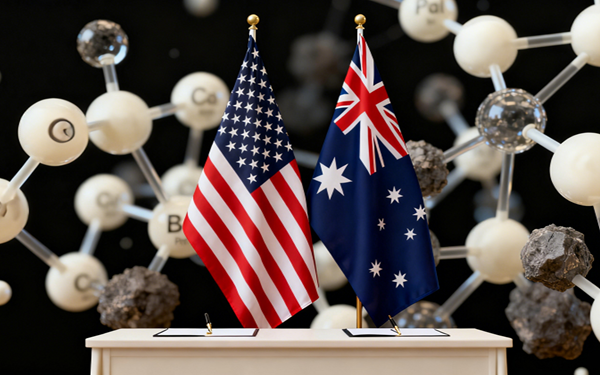
The United States and Australia unveiled a major critical minerals agreement on Monday, as President Donald Trump and Australian Prime Minister Anthony Albanese met at the White House to advance a partnership aimed at reducing reliance on Chinese supply chains.
The deal, valued at up to $8.5 billion, will see both nations invest more than $1 billion each over the next six months in initial projects spanning mining, processing, and supply chain development. As part of the agreement, the U.S. Department of Defense will help fund an advanced gallium refinery in Western Australia with an annual capacity of 100 metric tons. The U.S. Export-Import Bank has also issued letters of interest for over $2.2 billion in financing for critical minerals initiatives.
In about a year from now, we’ll have so much critical mineral and rare earths that you won’t know what to do with them, President Trump said during a joint press conference, estimating the materials could be worth around $2 billion.Albanese described the partnership as one that would elevate U.S.-Australia economic and defense ties “to the next level,” adding that Japan would also participate in certain projects.
The agreement comes as China tightens controls over exports of rare earth magnets, raising concerns among Western economies about supply chain stability. Australia, which holds the world’s fourth-largest reserves of rare earths, aims to position itself as a secure and sustainable alternative to Chinese supplies.
Investors have responded enthusiastically. Shares of Australian rare earth miners such as Lynas Rare Earths Ltd. have surged more than 150% over the past 12 months. On Monday, Arafura Rare Earths Ltd. jumped as much as 21%, Brazilian Rare Earths Ltd. gained 6%, Resolution Minerals Ltd. soared 49%, and Lynas climbed 7.2%.
The U.S. is also exploring mechanisms to take equity-like stakes in Australian mining companies, according to people familiar with the discussions. More than a dozen Australian firms traveled to Washington last month for talks with U.S. officials.
Despite the strategic momentum, the sector faces headwinds from persistently low mineral prices. In response, the Australian government has begun work on a A$1.2 billion national mineral reserve to help stabilize the market.
As Albanese noted in a social media post ahead of the meeting, “Australia’s national interest is at the heart of everything we do.” Yet analysts caution that while the partnership marks a significant step in building a China-alternative supply chain, aligning investment efficiency with market realities will be an ongoing challenge.