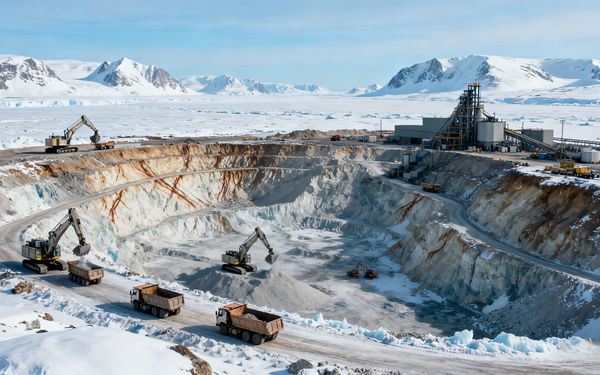
Critical Metals Corp (Nasdaq: CRML), a US-based developer of strategic mineral resources, has achieved a pivotal regulatory milestone, receiving key environmental approvals for its giant Tanbreez rare earth project in Southern Greenland. This breakthrough significantly de-risks the path to production for a mine considered vital to building a non-Chinese rare earth supply chain.
The Environment Agency for Mineral Resource Activities (EAMRA) of Greenland approved the geochemical test work and mine closure plan for the ‘Hill’ area of the project. These reports, prepared and submitted in late September by Danish engineering and environmental consultancy NIRAS, received a swift approval from regulators.
The fast approval of these test reports is a key milestone for Critical Metals Corp towards commencing the mining process at Tanbreez, said Tony Sage, CEO of Critical Metals. The company stated that the only remaining approvals required are for the final sections of the mine plan and specific activity permits.
The market responded positively to the news, with shares of Critical Metals rising nearly 3% to $11.26, giving the company a market capitalization of approximately $1.33 billion. The stock has been on a strong run, gaining 176% over the past three months.
Tanbreez is ranked among the world’s largest rare earth projects, hosting a resource base of at least 45 million tonnes across its ‘Hill’ and ‘Fjord’ zones. Critically, approximately one-third of this resource is composed of ‘heavy’ rare earth elements (HREEs), which are essential for high-performance magnets used in electric vehicles, wind turbines, and defense applications. This makes Tanbreez the largest deposit of its kind globally.
A Preliminary Economic Assessment (PEA) released earlier this year outlined a robust financial case for the project. It calculated a pre-tax net present value (NPV) of approximately $3 billion and an exceptional internal rate of return (IRR) of 180%. The proposed development plan involves a phased strategy, with initial production targeted at 85,000 tonnes of rare earth oxides per annum, potentially starting as early as next year, before scaling up to 425,000 tonnes per annum through modular expansion.
The development of Tanbreez comes at a crucial time. With China controlling an estimated 70% of global rare earth mining and nearly 90% of processing capacity, Western nations are aggressively investing in alternative sources. The U.S. government has been actively supporting domestic production through investments in companies like MP Materials and Lithium Americas.
The Tanbreez project offers a distinct strategic advantage with its direct shipping access to the North Atlantic Ocean, facilitating logistics. Its high concentration of hard-to-find heavy rare earths positions it as a cornerstone asset for Western efforts to secure an independent and resilient supply chain for these critical minerals.