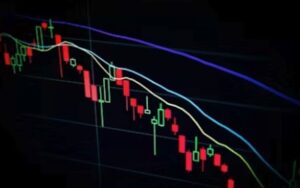

While global traditional financial markets generally embrace the year-end “Santa Rally” with significantly revived risk appetite, Bitcoin, the world’s largest cryptocurrency by market value, is moving sluggishly, standing out as an anomaly. Recently, Bitcoin’s price has continued to hover around $87,000, confined within a narrow range of $85,000 to $90,000. Trading is light, and volatility has surprisingly contracted.
Bitcoin’s current weakness primarily traces back to a significant correction in October this year. Since that sharp decline, Bitcoin has retreated from its historical peak, with a cumulative drop of approximately 30%, and may record its worst quarterly performance since the second quarter of 2022. The market’s recovery process is slow, trading volume remains persistently low, and retail speculative enthusiasm has noticeably cooled. More critically, the U.S. spot Bitcoin ETFs, which previously provided crucial support to the market, turned into net sellers in the fourth quarter, weakening a core source of demand.
In sharp contrast to the cryptocurrency market’s stagnation, traditional assets are sending positive signals. U.S. stocks are experiencing a “Santa Claus rally,” with the S&P 500 Index repeatedly hitting new highs; meanwhile, the price of gold, a traditional safe-haven asset, has soared near historical highs, posting an astonishing annual gain. In this environment, Bitcoin is “missing out on both fronts”: it has neither kept pace with the rebound in risk assets, nor has its proclaimed “digital gold” attribute attracted corresponding defensive fund inflows. So far this year, Bitcoin’s cumulative decline has exceeded 7%.
Behind the recent market stalemate lies a series of technical and structural factors. Over $23 billion worth of Bitcoin options contracts expired this week, dampening directional bets in the market. Coupled with reduced holiday liquidity, this has further solidified the consolidation pattern. Additionally, sustained selling by long-term holders is also putting pressure on the price. Analysis points out that Bitcoin’s price performance this year has been “clearly disconnected from the positive news cycle.” Profit-taking by early holders and forced selling triggered by previous sharp declines have repeatedly suppressed rebound momentum.
Despite its weak short-term performance, viewed over a longer cycle, Bitcoin has delivered astonishing returns. For example, a $100 investment in Bitcoin ten years ago would have grown in value by nearly 20,000% to date, far exceeding the S&P 500’s total return of approximately 300% over the same period. However, it must be recognized that Bitcoin is a digital asset with a relatively short history and extremely high volatility, posing risks far greater than traditional markets like U.S. stocks. The prevailing view is that allocating a small portion of funds (e.g., no more than 5% of a portfolio) to such assets can capture potential growth opportunities while controlling overall risk.
Looking ahead, some market participants believe that persistent selling pressure may be nearing its end. The current price range Bitcoin is in may hold value and lay the groundwork for next year’s performance. Nonetheless, in the absence of new strong catalysts, the market may still require time to regroup.