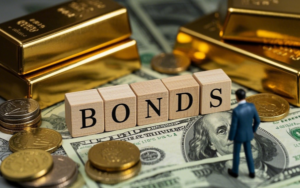
A paradox sits at the center of this latest gold rush. The asset investors call safety now carries the risks of a crowded trade, a brittle structure, and a narrative that depends on fear staying high. The so-called great debasement trade is back as gold marks fresh records and the dollar wobbles. But a hedge that everyone piles into is less a hedge and more a single point of failure. The lesson from markets and engineering is the same: strength without redundancy is fragility disguised as confidence.
Investors are buying gold as an insurance policy against inflation, currency devaluation, and geopolitical escalation. That policy has paid out this year. Episodes of Middle East tension and new trade frictions have triggered sharp safe-haven flows, with gold surging on days of heightened risk. CNBC reporting tied new highs to those bursts of uncertainty, even as the dollar softened and risk assets caught a bid. The narrative is tidy: governments spend, central banks monetize, deficits endure, currencies debase, gold re-rates higher. It is the oldest inflation hedge in the book and it fits the headlines cleanly. Yet markets do not price narratives; they price marginal flows, plumbing constraints, and the probability of regime shifts. When those move, the story can turn from tailwind to trap.
The headline price hides a rotation under the surface. Spot and futures markets scream demand, but major gold ETFs have not seen commensurate inflows. Trading data show that while gold has set record after record, gold funds drew a fraction of the net money that poured into spot bitcoin ETFs. That divergence matters. The marginal buyer has changed. Central banks and sovereigns are accumulating bars; retail and advisors are experimenting with digital scarcity claims. Crowding risk has migrated, but it did not vanish. A single hedge dominating portfolios creates a monoculture. In biology and finance, monocultures are brittle. When conditions change, correlation rises to one and the hedge stops hedging. The safe haven works until it is the only haven, at which point liquidity and exit dynamics dictate the outcome more than fundamentals.
Investors forget how gold behaves in the first act of a shock. When volatility spikes and collateral demands rise, good assets get sold to meet margin calls. In 2008 and again in March 2020, gold fell alongside equities before recovering. The mechanism is simple: cash is king when leverage unwinds. A liquidity crunch is a game of musical chairs, not a referendum on long-run inflation. This is the fragility investors do not model when they call gold the ballast. The hedge fails in the moment they need it most, then works later, if they are still solvent. If a portfolio is built on the assumption that gold will offset losses on day one, the design is flawed. The antifragile approach is to pair uncorrelated hedges and keep dry powder. A single-asset talisman is not risk management. It is faith.
Another unseen risk is structural. Most gold exposure in portfolios is not bars in a vault but financial claims on bars. The ETF wrapper is efficient, but it relies on functioning arbitrage between futures, London spot, and vault inventory. In 2020, this basis blew out when logistics and refinery constraints hit, revealing that the gold market can fracture under stress. Authorized participants, unallocated accounts, and transport bottlenecks add operational risk that is easy to ignore in a calm tape. This is not an argument against ETFs; it is a reminder to understand the weak link. A hedge with hidden plumbing is a bridge with an uninspected joint. If the crisis you fear is one that snarls metal movement, price discovery can deviate from expectations. The financial claim may behave like a derivative of confidence rather than a claim on certainty.
Price targets that assume permanent crisis invite disappointment. Some banks have floated scenarios in which gold runs toward 5,000 per ounce on persistent conflict and policy support. Possible, but fragile. Peace is also a regime, and the risk premium can compress faster than models allow. A cease-fire in the Middle East or a credible path to a frozen conflict in Ukraine would not fix the world, but it would change flows. Investors positioned for indefinite escalation would scramble to reprice. In game theory, players switch strategies when payoffs invert. Geopolitics is not a linear input; it is a switching variable. The debasement trade is most profitable when surprise tilts toward worse outcomes. If the surprise tilts the other way, gold’s short-term appeal can evaporate even if long-run fiscal math remains ugly.
The historical relationship is clear: higher real yields and a firmer dollar weigh on gold; lower real yields support it. This cycle has bent that rule. Gold has advanced even with periods of elevated real yields, which signals that story risk is in control. That is fragile by definition. Narratives can decouple price from carry for a time, but carry reasserts itself. If disinflation persists or productivity improves, real yields can rise even as headline inflation ebbs, increasing the opportunity cost of holding a zero-yield asset. Conversely, if the dollar rallies on growth or stress, non-dollar buyers face a higher hurdle. The base rates here matter. Over long horizons gold preserves purchasing power, but its path is lumpy and its real return is sensitive to the level and volatility of real rates. Betting against that math is not prudence; it is crowd psychology.
Physical supply responds slowly, but it does respond. At higher prices, scrap supply rises and marginal projects get funded. That is not immediate relief, but it is a dampener on long-run upside. More important for investors who try to lever gold through mining stocks: miners are not gold. They are operating businesses with energy, labor, and jurisdictional risk. When gold rises during an inflationary squeeze, input costs often rise faster, compressing margins. Permitting delays, ESG constraints, and resource nationalism add friction. The result is a sector that can underperform the metal even in bull markets, and crater in drawdowns. History is clear on this. The late 1970s ended with a blow-off top in gold and a long, grinding bear market that punished anyone who extrapolated. Fragility in the miners is operating leverage with a fuse you do not control.
The lesson is not to abandon gold. It is to stop treating it as a cure-all. An antifragile portfolio accepts that shocks come in clusters and from directions models miss. That means diversifying the shock absorbers. Some risks respond to duration and cash; some to commodity trend exposure; some to convexity via options; some to currency mix and geography. The first rule is to avoid leverage on the hedge. The second is to assume correlation goes to one when you most need decorrelation. The third is to run inversion tests: what breaks if gold drops 20 percent in a week, or if peace headlines hit when positioning is one-way long. The so-called great debasement trade may be back on, but the price of safety goes up with each convert. Safety bought at any price is not safety. It is a premium for comfort dressed up as strategy.