Liberty Gold has redrawn the map around its Utah portfolio, carving out a critical minerals package next to the historic Apex Mine while adding ground and key de-risking pieces at Goldstrike. The company says it will advance divestiture options for Antimony Ridge and the newly assembled Gage Critical Metals Project and keep Goldstrike in-house with more claims, water rights work, and refreshed internal economics. In a junior market leaning toward partnerships and selective spending, this split signals capital discipline. It also puts real weight on drill results, metallurgy, water, and permitting to determine value in 2026.
Liberty’s shift is straightforward: keep the oxide gold optionality at Goldstrike and package Antimony Ridge with Gage as a critical minerals opportunity for a potential sale. The company noted it had reviewed separation structures earlier this year and opted against them given market conditions. In today’s financing environment, bundling non-core assets and seeking a buyer or earn-in partner often delivers better risk-adjusted outcomes than shouldering multi-commodity exploration costs internally. This move aligns the Utah portfolio with the company’s bigger stated focus on U.S. oxide gold while offering a clean runway to monetize adjacent antimony and specialty metals ground. It also reduces management bandwidth drag and preserves cash for higher-confidence development paths.
The company added 35 claims to the west and north of Goldstrike to cover new oxide gold targets and is acquiring process water rights while reviewing nearby land opportunities and internal economics. For any future open-pit, heap-leach scenario in the Great Basin, water rights are not an afterthought; they are a gating item alongside metallurgy, permitting, and land control. Oxide gold systems are attractive because low strip ratios and simple cyanide leach flowsheets can support competitive margins at moderate grades, but only if water is secured and permitting is practical. Consolidating ground around target corridors improves drill efficiency and potential pit designs. Refreshing internal studies matters too: updated inputs on reagent costs, leach kinetics, and haul distances can materially shift project returns before a dollar is spent on new drilling.
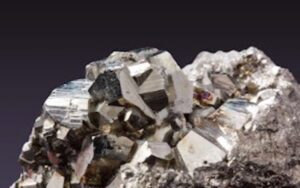
Five kilometers east of the Goldstrike resource, Antimony Ridge hosts surface antimony and gold mineralization with outcrop samples up to 5.8 percent antimony in brecciated, silicified zones controlled by high-angle faults and contacts. Soil anomalies outline more than 3 kilometers of strike. Mineralization dips 20 to 25 degrees northeast, with a transition from mixed sulfide at surface to full sulfide at depth expected. Liberty has 16 permitted and bonded drill sites ready to go. The geology is encouraging, but rock-chip highs are not a resource and sulfide-dominant antimony can introduce metallurgy and environmental complexity. Typical flowsheets rely on flotation to produce a stibnite concentrate, followed by smelting or hydromet routes, each with permitting considerations. Drilling needs to answer thickness, grade continuity, and variability across structures before meaningful value can be assigned.
Liberty has staked 181 unpatented claims and secured two Utah State leases totaling 5,916 hectares in a northwest-trending belt that covers five historic mines and more than 20 prospects, surrounding Teck’s Apex Mine. Apex historically produced copper, zinc, lead, and silver for decades and later became the only primary gallium and germanium producer in the United States when it operated in the 1980s and 1990s. That history confirms a fertile hydrothermal system capable of concentrating specialty metals used in semiconductors, high-speed electronics, and defense. From a business standpoint, adjacency to an established deposit increases geologic plausibility and potential buyer interest. From a technical standpoint, the variability of gallium and germanium distribution in polymetallic systems means systematic drilling and modern metallurgy testwork are essential. Liberty intends to sell or partner, but the quality of early technical data will dictate price and structure.
With Antimony Ridge drill-ready and Gage in a district-scale land position, the likely playbook is a staged earn-in or sale with retained royalty. Upfront payments for undrilled or lightly drilled critical minerals packages tend to be modest, with the bulk of value tied to funded exploration, milestones, and a net smelter return or metal-specific royalty. Buyers could include the adjacent landholder, base and critical metals producers seeking optionality, or funds targeting U.S. supply-chain assets. The presence of permitted pad locations at Antimony Ridge helps, but a few well-placed holes showing thickness, grade continuity, and recoverability would improve terms. Without that, expect a lower initial cheque and heavier use of contingent payments tied to drilling and delineation. If Liberty wants stronger valuation, it may need to execute a short, focused drill program before closing a deal.
In the last day, we saw several signals that capital is available, but selective. A $33 million earn-in backed by KoBold on Ontario lithium, a $25 million earn-in by Centerra in Idaho gold, and Radisson’s plan for 140,000 meters at O’Brien at roughly C$290 per meter show the market supports programs with scale and clear technical theses. Search Minerals secured a convertible loan to advance rare earth projects, while Sparton moved ahead on permits at a critical metals project. On the gold side, Axcap hit 18 meters at 1.75 grams per tonne in Nevada and Goliath reported consistent intercepts with visible gold in British Columbia, reflecting how the drill bit can reset valuations quickly. Barrick’s reported addition of 111 million gold-equivalent ounces at a discovery cost of about $10 per ounce underscores a broader point: value creation in this cycle is skewed to the drill bit and tight capital allocation rather than M and A. Liberty’s plan fits that playbook.
At Goldstrike, water rights procurement is a critical path item in arid basins. Investors should look for confirmation of volumes, priority dates, and conveyance plans. At Antimony Ridge, the shift to sulfide mineralization at depth elevates processing complexity relative to simple oxide gold, and smelting or hydromet routes for antimony concentrates can face stricter permitting. For Gage, surrounding Apex is strategically useful, but it does not guarantee consolidation or easy access to shared infrastructure. On the corporate side, divestiture timelines can slip, and terms may disappoint if drilling is deferred. Finally, gold price volatility will influence internal study outcomes at Goldstrike, and federal permitting timelines on Bureau of Land Management ground tend to be longer than state processes, adding schedule risk.
Key near-term catalysts are clear. Any announcement on a sale, earn-in, or royalty package for Antimony Ridge plus Gage will signal the market’s appetite for U.S. critical minerals in this belt. A short, targeted drill program at Antimony Ridge could sharpen terms by establishing continuity and recoverability. At Goldstrike, updates on water rights, land consolidation, and internal economic work will frame the viability of advancing an oxide heap-leach concept. Field work to rank the 35 new claims and early-stage mapping, soil geochemistry, and trenching would set up the next drilling phase. Macro factors also matter: trends in antimony, gallium, and germanium pricing, as well as any U.S. policy support for domestic supply chains, could improve buyer interest and valuation leverage for the critical minerals package.
Segmenting the Utah assets gives Liberty a cleaner narrative and better capital allocation. Goldstrike gets the de-risking focus a heap-leach project requires. Antimony Ridge and Gage become a coherent critical minerals story next to a proven producer footprint, which should be easier to market. The upside is a potential non-dilutive cash event and a tighter operating focus. The constraint is that today’s package is long on geological promise and short on drill-defined tonnage and metallurgy. If Liberty can convert surface signals into credible subsurface data, the bid depth should improve. Until then, set expectations around staged deals with contingent payments and keep an eye on water, permits, and the first few holes.