Archer Aviation Inc. (ACHR), a next-generation electric vertical takeoff and landing (eVTOL) aircraft developer, presents a striking paradox: it generates no meaningful revenue today yet commands a market cap of approximately $6.5 billion backed by an indicative order backlog of around $6 billion. This disconnect underscores its position as a focal point of market speculation—a company whose disruptive potential is matched only by its significant operational and regulatory uncertainties.
The stock’s trajectory has mirrored the volatile ascent of its aircraft prototypes. While shares have traded largely flat over the past year, they rebounded more than 60% from their spring 2024 lows, only to shed 39% since peaking in October. This roller-coaster ride reflects deep-seated market ambivalence: soaring optimism about the future of urban air mobility clashing with sobering near-term execution risks.
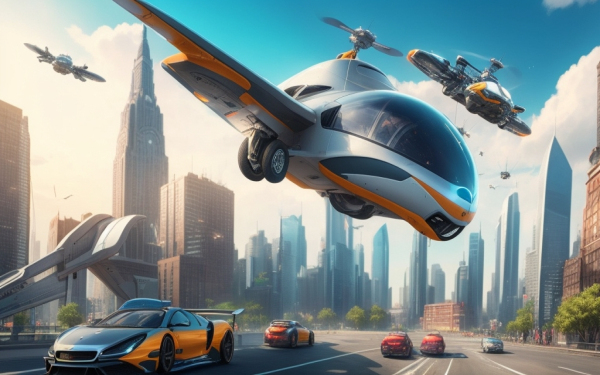
Archer’s flagship product, the “Midnight” eVTOL, resembles a large drone equipped with a dozen propellers. Designed to carry a pilot and four passengers up to 100 miles at speeds of 150 mph, its primary application is as an air taxi for short urban and airport shuttle routes, targeting premium customers. Potential military and medical transport use cases add to its market scope.
The company has secured partnerships with major players including United Airlines, the Soracle joint venture (Japan Airlines and Sumitomo), Ethiopian Airlines, and Abu Dhabi Aviation, alongside a contract with the U.S. Air Force. Its most high-profile commitment is serving as the official air taxi provider for the 2028 Olympic Games in Los Angeles.
Wall Street analysts project revenue will skyrocket in the coming years:
Based on the 2029 estimate, Archer trades at less than 4x sales—or an enterprise value multiple of about 2.8x when factoring its cash-rich balance sheet. Some analysts also believe it could reach adjusted profitability sooner than key rival Joby Aviation (JOBY).
Yet current operations tell a different story. Since going public via SPAC merger in 2021, the company has consistently missed its own aggressive targets. Initial projections called for 10 aircraft in 2024 and revenue of $3.4 billion by 2027. Reality: in 2024, Archer delivered just one test aircraft to the U.S. Air Force, recorded negligible revenue, and posted a net loss of $537 million. As of August 2025, it had built only two commercial prototypes, with six more in the pipeline.
For Archer to truly lift off, it must clear several critical barriers:
Archer represents a quintessential “future bet” for investors. Its appeal lies in a well-defined use case, strong partnerships, a substantial order book, and reasonable long-term valuation multiples. However, risks are equally pronounced: the nascent industry’s uncertainty, an unclear certification timeline, unproven mass-production capabilities, and fierce competition—notably from Joby Aviation, whose aircraft have demonstrated superior speed and range in testing.
Trading at about 21x its projected 2027 sales, Archer’s current valuation leaves little room for error. Meaningful progress in production or the launch of commercial flights in Abu Dhabi within the next 12-24 months is likely necessary to justify further stock appreciation.
Archer Aviation’s story is a grand narrative about the future of transportation, with each stock price swing representing the market’s recalibration of the gap between its ambitious vision and tangible progress. For investors seeking disruptive growth and able to tolerate extreme risk, it remains a compelling watch. For most, however, this particular flight might be one to observe from the ground—until it proves it can land sustainably on the solid runway of commercial reality and profitability.