Treasuries rallied on cheaper oil after a dramatic turn in Venezuela. Relief is not resilience. Markets once again priced a straight line from a volatile commodity to a tame inflation path. That is neat, but it is not how complex systems behave. The contradiction is simple: a drop in oil eases the next CPI print, but the event behind the drop increases the distribution of future outcomes.
An oil downtick lowers headline inflation. It does not fix the sticky parts. Energy is less than a tenth of the CPI basket. Services, shelter, and wages are the durable drivers. They move on a slower clock tied to contracts, demographics, and bargaining power, not to a headline barrel price. History is blunt on this point. Oil plunged in 2014 and the US enjoyed disinflation, yet healthcare, rents, and education costs kept rising. Oil collapsed in 2020 and the CPI crashed for a few months, then services inflation re-accelerated as reopening clashed with limited capacity. Investors who treat oil as a control knob for inflation are borrowing persistence from a variable that has none. The base rate says the signal decays faster than portfolios discount.
It is easy to declare victory when yields fall for a day. It is harder to remember how thin the ice is under the largest bond market. The plumbing has not changed much since 2019’s repo spike or the 2020 dash for cash. Leverage in basis trades still depends on repo liquidity. Intermediation is concentrated in a few dealers and principal trading firms. Convexity hedging from mortgages can flip direction when rates swing, adding forced flows at the worst moments. When headlines hit, the Treasury market must carry risk just as balance sheets get scarce. That is fragility, not strength. A rally on an oil headline tells you more about positioning and duration demand than about the long run path of inflation or growth. If you need daily good news to keep yields down, you do not have a stable equilibrium.
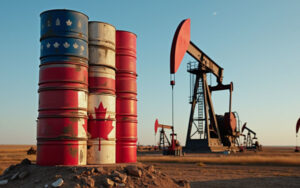
Bloomberg linked the Treasury bounce to cheaper oil after the US captured Venezuela’s president. Equities took the risk-on cue, as CNBC framed it, and bond buyers read disinflation into the tape. That is first-order thinking. The second order is messier. The capture raises questions about governance, sanctions risk, and retaliation in a country with meaningful heavy crude output and relationships across OPEC and non-OPEC producers. The Financial Times flagged long-term supply chain risk. That is the correct frame. The immediate price drop says some barrels might flow more freely. The strategic logic says political instability expands the uncertainty band. Energy markets price options on future scarcity, not hope that a single arrest simplifies a decade of dysfunction. The probability tree did not collapse. It branched.
Crude is not a monolith. Refineries are tuned to specific grades. Heavy Venezuelan barrels do not substitute one-for-one with light sweet crude. Shipping routes, insurance, financing, and blending constraints decide what actually reaches end markets. The Financial Post warned the sector remains vulnerable to further tensions. That is not boilerplate. Energy systems exhibit path dependence. When a node fails, rerouting is slow and expensive. Ports, pipelines, and refinery slates do not adapt overnight. Even if spot prices dip, convenience yields and regional spreads can widen as traders pay for reliability over headline price. The result is a lagged and uneven pass-through from oil to fuel prices to consumer costs. Betting a Treasury rally on a clean chain of transmission is an engineering error dressed up as macro.
In the past two years, the stock-bond correlation has flipped signs more than once. In inflation shocks, bonds and equities can fall together. In growth scares, they often move opposite. Today they rallied together. That is not new information about the economy. It is a reminder that correlation is a weather pattern, not a climate. Treat it as constant and you will size wrong, hedge wrong, and panic at the wrong time. Retail traders speculating in energy names questioned the sustainability of the move. They are right to be uneasy. The same traders will forget that a risk-on day does not immunize against a risk-off week if the narrative turns. Portfolios that rely on a negative stock-bond correlation to smooth losses learned the hard way in 2022 what happens when regimes shift. Fragility hides in assumptions that once worked.
Oil price dynamics are a repeated game with imperfect information. Producers maximize revenue over time, balancing price with volume. Sanctions shift payoffs. Geopolitical arrests alter expectations among players who matter more than press releases. OPEC’s reaction function is not to subsidize cheap gasoline in consuming countries. If chaos in one producer tightens risk premia, others may prefer to bank the optionality than flood the market. Policymakers face their own trade-offs. A lower oil print can tempt central banks to declare disinflation progress. That risks easing into supply uncertainty. A higher oil print can coax a hawkish stance that cools growth. Either way, the Nash equilibrium is unstable because shocks arrive faster than institutions adapt. Resilience comes from buffers and flexibility, not declarations. The US Strategic Petroleum Reserve, spare capacity, and diversified imports are the antifragile tools. Trading narratives are not.
For markets, today’s relief is a price. For policy, it is a trap. Central banks cannot set rates off a commodity bounce any more than pilots fly by the latest gust. The signal that matters is broad, sticky inflation and the labor market’s residual heat. Favor services and wage trends over barrels. For investors, the weak link remains duration crowds and liquidity holes. The Treasury curve will continue to kink when intermediaries step back. The right response is to price liquidity as a risk factor, not a free good. Avoid linear bets on oil leading inflation leading policy leading growth. That chain breaks at the first weak link. If your investment case needs four sequential things to be true, you do not have a case. You have a prayer contingent on path.
The right posture in days like this is a barbell. Hold dry powder that benefits from volatility. Own real assets and cash-flow businesses with pricing power. Keep optionality in the capital stack you can control. Hedge basis, not headlines. Reduce exposure to single-point failures in supply chains and funding markets. Assume the next oil move is as likely to be up as down, and the next Treasury move will be driven by liquidity as much as by macro. Markets will keep rewarding tidy stories on quiet days. Systems will keep punishing them on loud ones. The aim is not to predict the next print. It is to survive the fat tails that come when everyone else mistakes a breeze for a trend.