
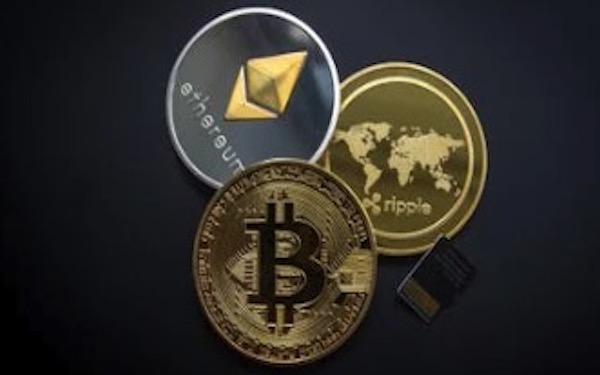
For Bitcoin (BTC) bulls, 2025 was a disappointing year. The world’s leading cryptocurrency experienced extreme volatility but ended the year down over 5%. This decline can be attributed to several factors: Treasury yields remained high even as the Federal Reserve cut benchmark interest rates; the macro environment was complex and fraught with headwinds; and a rotation of funds into more conservative investments.
Bitcoin has had a smoother start to 2026. As of the time of writing, it is up only about 1% year-to-date, but several catalysts could stabilize its price and drive it higher in the coming year.
At first glance, Bitcoin’s most significant catalysts seem to be in the past. In 2024, the U.S. Securities and Exchange Commission (SEC) approved the first spot-price exchange-traded funds (ETFs), and a halving event occurred (reducing the mining reward by half every four years). The Federal Reserve also stopped raising interest rates (which had driven investors away from Bitcoin and other speculative cryptocurrencies) and cut rates six times during 2024 and 2025.
With many catalysts already priced in, Bitcoin might not seem highly attractive to growth investors anymore. However, the stabilization of Bitcoin could drive its evolution this year into a safe-haven asset akin to gold and silver.
Bitcoin is often called “digital gold” because it is “mined” using an energy-intensive proof-of-work (PoW) mechanism via powerful custom chips. Nearly 20 million of its total supply of 21 million have already been mined, and its scheduled four-year halving mechanism makes profitable mining increasingly difficult.
This scarcity makes it more akin to a hard asset than other, smaller cryptocurrencies and could serve as a valuable hedge against inflation or fiat currency depreciation. Therefore, if the Federal Reserve continues to cut rates and weaken the dollar, more institutional investors might increase their Bitcoin exposure through spot Bitcoin ETFs.
These large investors could accumulate Bitcoin far beyond the holdings of retail investors, thereby reducing the token’s overall volatility and making it a more stable investment. As this trend develops, more countries might establish their own Bitcoin treasury reserves or adopt it as legal tender.
Over the past decade, Bitcoin’s price has skyrocketed by approximately 23,360%, but as it gains wider recognition as a stable “blue-chip” cryptocurrency, its annual gains have slowed in recent years. Investors should not expect it to soar dramatically in the next 12 months, but its price should gradually rise as macro conditions improve and its spot ETFs stabilize.
Bitcoin’s meteoric rise has delivered enormous returns for holders. Even small investments have transformed into tens of thousands of dollars.
In 2016, Bitcoin (BTC) was still an emerging technology. Trading around $400 at the time, it was still fighting for recognition as a legitimate alternative to fiat currency.
A decade later, Bitcoin has firmly established itself. Institutions hold it. Financial advisors include it in model portfolios and client accounts. The U.S. Securities and Exchange Commission (SEC) has approved related ETFs. It has also paved the way for the rise of other cryptocurrencies like Ethereum (ETH), Solana (SOL), and XRP (XRP).
As an investment, Bitcoin remains volatile but has also created significant returns for investors over the years. Although its price is still down about 30% from its all-time high, long-term holders have ample reason to be satisfied.
For many, Bitcoin remains more of a speculative growth asset belonging in a diversified portfolio. When paired with the U.S. dollar and the S&P 500, it has been a reasonable diversification tool. However, its true potential still lies as an alternative to fiat currency.
With the AI revolution still in its early stages and the global monetary system continuously evolving, Bitcoin’s time may still be ahead.