
In the three years since the release of ChatGPT, global demand for accelerated computing has exploded. NVIDIA’s (NVDA) annual revenue surged from $27 billion in 2022 to $216 billion in 2025, an increase of nearly eightfold, with market expectations of a further 62% growth in 2026, reaching $350 billion. Correspondingly, the global growth rate of data center system investment has jumped from an average annual rate of 5% over the past decade to 30% in the last three years, with an expected further increase of over 30% in 2026, totaling $653 billion. ARK Research shows that accelerated computing, driven by GPUs and AI-specific integrated circuits, now accounts for 86% of server sales, becoming the dominant force.
The driving force behind sustained growth in AI infrastructure spending stems from the continuous expansion of generative AI applications in consumer and enterprise scenarios, alongside the ongoing pursuit of “superintelligence.” Meanwhile, costs are plummeting rapidly: AI training costs are declining by 75% annually, while inference costs are dropping at an even steeper annualized rate of 95%. This is fueled by generational improvements in hardware performance and continuous advancements in software algorithms, which together have significantly lowered the barriers to entry for AI applications.
Consumer adoption of AI has far outpaced that of the internet in its early days, with penetration reaching approximately 20% within three years—a rate more than double that of the internet. Enterprise demand is equally staggering, with token demand increasing by 28-fold since December 2024. Over the past two years, Anthropic, an AI lab highly favored by enterprises, saw its revenue skyrocket from $100 million to nearly $10 billion, and its momentum continued into 2026, with annualized revenue reaching $14 billion. Another giant, OpenAI, now counts over 1 million enterprise customers, with its Chief Financial Officer noting that enterprise business growth has surpassed that of its consumer business and is expected to account for half of total revenue in 2026. To meet this robust demand, large-scale infrastructure investment is imperative.
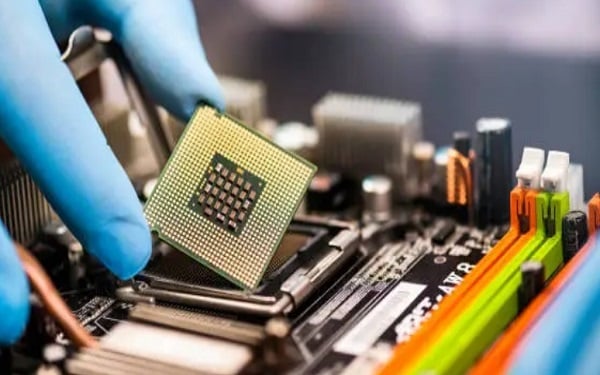
In the core area of AI capital expenditure—computing chips—NVIDIA remains at the forefront, but challengers are emerging. Advanced Micro Devices (AMD), with its EPYC processors, has grown its share of the server CPU market from nearly zero in 2017 to 40% in 2025. For small-model inference, AMD’s GPUs are now on par with NVIDIA in terms of total cost of ownership, though NVIDIA still maintains a significant lead in large-model performance with its rack-scale solution, Grace Blackwell.
Simultaneously, hyperscale cloud providers are pursuing cost advantages through custom silicon. Google’s (GOOGL) self-developed TPU is estimated to reduce computing costs by 62%. Amazon’s Trainium chips and Microsoft’s Maia series have also entered the fray. Broadcom (AVGO) dominates the backend design services for custom chips, serving as a key partner for companies like Google, Meta, and OpenAI. Additionally, chip startups such as Cerebras and Groq are leveraging innovative architectural paradigms, positioning themselves as potential forces to challenge the existing market landscape.
Looking to the future, ARK Research forecasts that sustained demand growth and continuous performance improvements will drive AI infrastructure spending to triple over the next five years, rising from approximately $500 billion in 2025 to nearly $1.5 trillion by 2030. As demand for AI computing power continues to escalate, custom chips designed for specific workloads—offering superior performance per dollar—will account for a growing share of computing expenditure, potentially exceeding one-third by 2030.
The current infrastructure build-out is not a bubble but a once-in-a-generation platform shift. Over the next five years, enterprises that can design the most efficient chips, build the most powerful models, and achieve deployment at scale will stand out in this transformation.