SLAM Exploration Ltd. (TSXV: SXL)
‘Exploring for critical elements and precious metals in New Brunswick, Canada.’
Freeport-McMoRan (FCX) shares cratered more than 13% on Thursday, erasing its freshly minted $100 billion market capitalization in a single session, after the copper and gold giant slashed the production restart timeline at its flagship Grasberg mine in Indonesia.
The sell-off was so swift and severe that it wiped out over $10 billion in value, just 24 hours after the stock had vaulted into an elite club of only seven mining companies ever to cross the $100 billion threshold.
That the rout happened on a day the company delivered first-quarter earnings comfortably ahead of Wall Street expectations tells you everything about where investor attention is fixed.
Revenue rose to $6.23 billion from $5.73 billion a year earlier. Adjusted earnings per share hit $0.57, easily topping the $0.47 consensus. Gold fetched an average realized price of nearly $4,889 an ounce, while copper held around $5.78 a pound — both delivering chunky margins. None of it mattered.
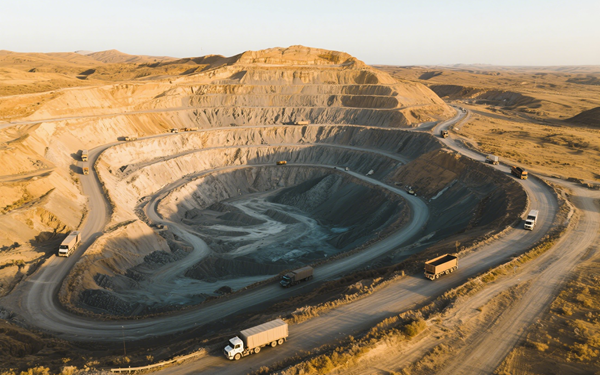
The entire market was staring at one thing: Grasberg. The world’s second-largest copper mine, perched in the remote highlands of Indonesia’s Papua province, has been struggling to recover from a catastrophic mud-rush last September that killed seven workers and halted operations.
When management laid out its recovery roadmap in January, the promise was that the mine would be running at around 85% of capacity by the second half of 2026. Investors bought that timeline, and the stock rallied hard, eventually breaking into the $100 billion club on Wednesday.
Thursday’s earnings report shredded that roadmap.
Freeport confirmed that while the phased restart at the Grasberg Block Cave underground operation began in late March as planned, the path back to full production has “slowed materially.” The second-half target has been cut to just 65% of capacity. A full ramp-up, the company now says, won’t arrive until near the end of 2027 — more than a year later than the market had been banking on.
The slower recovery rippled straight into the company’s full-year outlook. Freeport chopped its 2026 gold sales forecast for Grasberg to 650,000 ounces from 800,000 ounces. Consolidated copper sales guidance was reduced to roughly 3.1 billion pounds, down from an earlier estimate of 3.4 billion pounds — a sizable 300-million-pound hole for a copper market that is already running tight.
BMO Capital Markets didn’t sugarcoat the disappointment. “The change to the Grasberg timeline is disappointing and will turn the sentiment more cautious yet again,” the firm wrote in a note following the results.
The analysts did, however, point to a silver lining: with more than three-quarters of Freeport’s production coming from outside Indonesia, a supply squeeze at Grasberg could actually lend support to copper prices, and the company’s higher-economic-interest operations in North and South America would be the direct beneficiaries. That dynamic is a key reason why Freeport shares are still up more than 20% for the year, even after Thursday’s punishing session.
The irony is thick. On Wednesday, Freeport’s ascent into the $100 billion club was heralded as a sign that the mining sector had entered a new era, riding a historic bull market in copper and gold. A day later, the stock became a cautionary tale about how quickly production uncertainty can deflate even the most euphoric of valuations. A memorandum of understanding signed in February to extend the Grasberg mining permit beyond 2041 — a move that should anchor the mine’s future for decades — did nothing to steady the ship.
What Thursday made brutally clear is that in this market, promises about late 2027 don’t buy much patience. When a $100 billion miner tells its shareholders that its single most important asset won’t be back to full strength for another 18 months, they don’t stick around to debate the long-term thesis. They sell first.