Nuclear startup Oklo (OKLO) didn’t just grab headlines on Thursday — it grabbed Nvidia. The company announced a three-way collaboration with the AI giant and the Los Alamos National Laboratory to put artificial intelligence to work on nuclear fuel development and reactor simulation. No dollar figure was attached, and none was needed. When the picks-and-shovels king of the AI boom personally shows up to help design your reactor, the market pays attention.
And it did. Shares of Oklo jumped, adding to a run that already had Wall Street buzzing. Hours after the news, HSBC launched coverage with a Buy rating and a $96 price target — a number that implied more than 30% upside from where the stock was sitting. Coming on the heels of a landmark deal with Meta to build a 1.2-gigawatt power campus in Ohio — complete with prepaid electricity — the Nvidia tie-up feels less like a surprise and more like an inevitability.
The logic is as simple as it is brutal. AI data centers are on track to become some of the largest single-site consumers of electricity on the planet. A single hyperscale campus can draw a gigawatt or more — the kind of steady, around-the-clock load that solar farms and wind turbines simply cannot guarantee. Coal and gas are political and regulatory poison. Nuclear is what’s left.
Oklo’s pitch slots neatly into this gap. Its small modular reactors are designed to be factory-built and rapidly deployed, sidestepping the decade-long timelines and budget blowouts that have made conventional nuclear a graveyard of ambition. But the real differentiator is the fuel cycle: the company’s fast-fission design can run on recycled spent nuclear fuel, effectively turning some of the planet’s most regulated waste product into an almost limitless power source. For a tech industry desperate to hit net-zero targets without sacrificing reliability, it is an offer that borders on irresistible.
Cue the 10-bagger debate. Oklo’s current market capitalization hovers around $10 billion. Bank of America’s analysts see small modular reactors capturing roughly 15% of global nuclear expenditure by 2050 — an addressable market measured in the hundreds of billions. If Oklo can carve out even a leadership slice of that, a tenfold expansion to a $100 billion valuation does not look like spreadsheet fantasy. Sam Altman’s long-standing association with the company — he chaired its board for years — only sharpens the narrative: the man at the center of the AI explosion knows better than anyone that the cost of intelligence eventually meets the cost of electricity.
But the chasm between a compelling story and a functioning reactor remains vast.
Oklo’s first application to the Nuclear Regulatory Commission was rejected; its resubmission is still grinding through a process that can consume years with no fixed endpoint. Until a reactor actually connects to the grid and generates power — and revenue — the company must rely on external capital, and equity dilution remains a live risk that can steal a chunk of the 10-bagger glory from today’s shareholders. Then there is the macro wildcard: the entire thesis is tethered to AI capital expenditure continuing at a breakneck pace. If a recession forces tech giants to tighten their belts, the data center buildout — and the stock’s valuation — could cool fast.
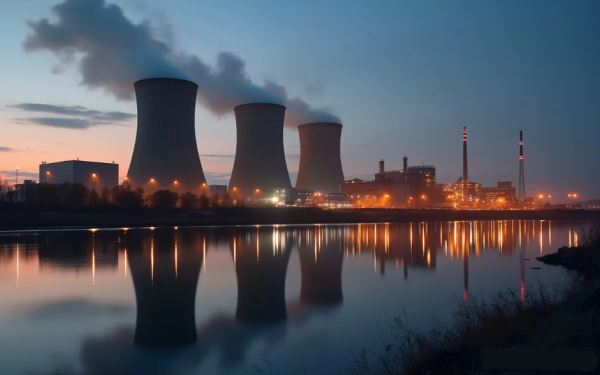
Oklo has assembled all the right ingredients: an elite partner roster, a potentially transformative technology, and a market opportunity that looks almost too large to ignore. What it does not yet have is a single kilowatt-hour of electricity flowing into a paying customer’s server rack. Ten-baggers are not made by betting on stories that everyone already believes. They are forged by holding on during the long, messy interval between a blueprint and a working reactor — and most investors run out of patience long before the first steam plume ever appears.