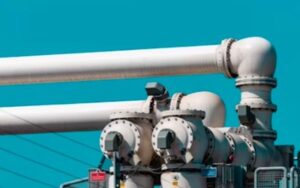
How can a pinch of water narrower than a morning commute bend a $100 trillion system? Because markets are less like oceans and more like plumbing. Pressure collects at the narrowest valve. The Strait of Hormuz, a 21-mile throat that moves roughly one in five barrels of the world’s oil, has again proved that a single point of failure can set the terms for everyone else. A maritime blockade and reversed tankers are not just a news cycle. They are an audit of a system that forgot redundancy and priced peace as if it were policy.
Investors talk about shocks as if they are rare, meteor-like events. The Strait of Hormuz is not a meteor. It is a known choke point with a long record of coercion and counter-coercion: the 1980s tanker war, mining incidents, escorts and convoys, and periodic harassment of shipping. Today’s blockade conditions are the logical end point of that geometry. The U.S. Navy can halt the flow with a few decisions. Iran can threaten it with mines, drones, and missiles at a fraction of the cost. That asymmetry is structural. You would not build an aircraft with a single rivet holding the wing. Yet the global energy system still leans on a single narrow channel as if redundancy were optional. It is not a surprise event. It is a design mistake compounding over decades.
Iran’s regime learned that hard power works best when it is cheap and deniable. Swarm tactics, anti-ship missiles, and proxies impose costs on richer adversaries. Deterrence is meant to prevent war, but it can also calcify into brittle equilibria. When the U.S. imposes a maritime blockade, it signals resolve but also exposes the world to a binary risk: either traffic flows or it does not. Binary systems create jump conditions in prices. Oil does not go up smoothly; it gaps. That payoff profile is an option. The party with the cheapest disruption technology owns the optionality. Iran’s leverage is not an aircraft carrier. It is the market’s fear of a few missing days of crude and LNG. The regime understands this. Deterrence, in practice, has made the strait more central, not less.
When traffic stalls at a hub, networks try to reroute. The petrodollar system is no different. A sustained blockade pushes cargoes to longer routes, makes insurers reprice war risk, and tempts marginal producers and buyers to test new settlement rails. China has been laying those rails for years, from yuan-settled oil contracts to deeper swaps lines with energy exporters under sanctions. None of this dethrones the dollar on a headline. But it creates basis risk where there used to be near-perfect alignment. A trader can hedge Brent exposure; hedging a scrambled mix of route risk, payment risk, and political risk is messier. The dollar can remain dominant even as the hedgeable surface area shrinks. Networks do not flip. They fray, then bifurcate.
Thomas Schelling taught that power flows to focal points where commitments are visible and costs are shared. The Strait of Hormuz is a Schelling point. The more the world relies on it, the more credible the threats around it become. Iran can vary harassment intensity without formally “closing” anything, keeping deniability while raising costs. The U.S. can enforce a blockade to project resolve. Both sides can keep moving the boundary. Shipping insurers mark it to market in real time, pushing up premiums. Charters demand higher day rates. Re-routing around the Cape of Good Hope adds weeks, which is not just distance but working capital tied up in floating inventory. Time is a commodity here. When your supply chain is built on just-in-time, a week is an eternity.
This is where the unseen fragility lives. Refiners tuned to specific crude grades cannot flip a switch. LNG schedules are tight; regas and liquefaction are bottlenecked by hard assets, not press releases. Tanker fleets cannot scale overnight; shipyards have multi-year order books. Inventory cover at importers, often measured in days, becomes the variable that matters more than abstract GDP. On the finance side, trade credit and letters of credit must reset to higher risk premiums. Cross-currency bases widen as dollar funding demand spikes to pay for rerouted and delayed energy cargoes. The cost is not just the price of oil. It is the price of time, insurance, and dollar liquidity braided together.
Most portfolios are short time and short volatility without knowing it. The carry trade thrives on normal days and dies on boundary conditions. This is one. Value-at-Risk models trained on the last decade compress tails until the tail shows up. Energy importers that enjoyed low inflation and tight spreads reprice all at once: fiscal outlays for subsidies, current account pressures, and currency pass-through. Sovereign credit default swaps widen faster than shareholders update their priors. Equities that looked defensive on spreadsheets behave like cyclicals because their logistics were the real beta. This is not an argument for doomsday positioning. It is an argument that selling insurance in a world of engineered chokepoints is not a free lunch. The premium was mis-set.
A sustained blockade is not a headline. It is a series of equations. Remove a few million barrels a day for a few weeks, and inventories draw. Refining margins where alternatives exist spike, but only if feedstock arrives. Freight rates jump as vessel supply is fixed and route lengths expand, tightening effective capacity. Futures curves swing into backwardation or steepen, inviting inventory liquidation and stranding those who counted on carry. The price of oil is the headline, but the regime shift hides in spreads, shipping, and credit. If your model does not convert geography into time and time into cash, it is not a model. It is a wish.
The answer is not better point forecasts. It is architecture. Systems that survive chokepoints share traits: slack in inventories, diversified routes, flexible financing, and modular assets that can adapt to new grades and flows. In markets, that means preferring convex exposures to supply shocks over leveraged bets on calm. It means treating insurance costs as part of the base case, not a tail. It means scenario analysis built around days to reroute, not basis points of spread drift. The companies that prosper will be those that can change inputs and outputs without pleading for time. The portfolios that endure will own the option to be wrong on timing without being ruined on cash flow.
The question posed by the latest Hormuz crisis is framed as political: will Iran’s regime change under pressure. The more important regime change is already here. Correlations that anchored a decade of low-volatility finance are breaking. Settlement systems are fragmenting at the edges. The physical map is rewriting the financial one. A narrow channel has reminded the world that complexity without redundancy is fragility disguised as efficiency. We keep trying to make the ocean act like a spreadsheet. The strait answers with a lesson from engineering: when one valve controls the whole line, the system belongs to whoever can close it fastest, or merely threaten to.