
Brent crude pushed slightly above $110 a barrel after President Trump warned he would “destroy Iran’s power plants and bridges” unless Tehran reopens the Strait of Hormuz, reigniting a geopolitical risk premium that had faded in recent weeks. The escalation, arriving as the regional war enters its sixth week, sent energy markets into a higher-volatility gear and sharpened investor focus on supply routes that move a major share of the world’s oil.
The Strait of Hormuz is the narrow throat between the Persian Gulf and open waters, a critical passage for roughly a fifth of global oil flows and an even larger share of seaborne crude. Any credible threat to close or impede it typically forces traders to reprice risk across the entire energy complex. That is exactly what unfolded in the past several hours. Trump’s ultimatum raises the stakes well beyond routine saber-rattling. It hardens the chance of miscalculation on both sides and introduces a scenario in which civilian infrastructure could become a direct target in any kinetic exchange. For markets, the nuance matters less than the binary: a chokepoint either functions or it does not. Today’s price action is a bet that the probability of dysfunction just rose.
The move through $110 reflects more than headline-chasing. Option markets have been marking up implied volatility, and time spreads are tightening as buyers pay up for nearby barrels. That is the hallmark of a war-risk premium reasserting itself, crowding out the recent calm anchored in rising non-OPEC supply and seasonal demand shoulder. Retail activity on popular trading platforms shows a jump in speculative interest in oil-linked exchange-traded products and futures, a pattern that often accompanies geopolitical headlines. Some of that is a momentum chase, but there is also hedging—refiners, airlines, and shippers cannot ignore a chokepoint shock. The broader energy complex is catching a bid, from refined products to shipping rates, as traders game potential reroutes and delays.
Energy equities are once again the defensive trade. Integrated majors and upstream producers typically outperform when crude grinds higher, and today is no exception. Offshore drillers and services names see renewed interest as investors revisit cash flow sensitivity to triple-digit oil. On the other side of the ledger, airlines, cruise lines, and logistics names are under pressure as fuel costs edge up and itineraries face possible disruption. Insurers and reinsurers with marine exposure are repricing Gulf transit risk. For emerging markets that import most of their energy, currency and bond markets may wobble as current-account math worsens at $110-plus crude. U.S. high yield energy credit tends to tighten on stronger commodity prices, but cyclicals outside energy could see spread widening if oil stays bid and growth expectations cool.
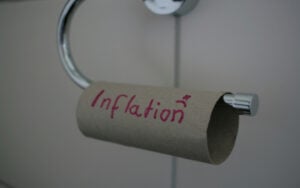
A durable breakout above $110 complicates an already fragile disinflation narrative. Headline inflation gauges will feel the pass-through quickly if crude holds its gains, and second-round effects become a risk if transportation and input costs seep into broader pricing. That blurs the timing of policy pivots. The Federal Reserve has signaled patience on rate cuts; a resurgent energy component argues for more of it. In Europe and the U.K., where energy price spikes have hit consumer confidence hard, policymakers face an odd mix of soft growth and sticky inflation if oil’s rally persists. In Asia, importers like India and South Korea must manage fuel subsidies, currency pressure, and growth targets in tandem. The longer Hormuz remains at risk, the less optionality central banks have to ease without reigniting inflation expectations.
What can offset a Hormuz scare? Spare capacity sits largely with Saudi Arabia and the UAE, but the bulk of that crude also faces Hormuz to reach market. Alternative routes exist—the East-West pipeline across Saudi Arabia and the Abu Dhabi Crude Oil Pipeline can move meaningful volumes—but they do not replace the strait’s throughput. U.S. shale can respond, but not on a 48-hour clock. Strategic reserves are a lever, yet coordinated releases tend to be measured and politically fraught. Russia, constrained by sanctions and logistics, is unlikely to ride to the rescue. That leaves OPEC+ with messaging power. A signal that the group stands ready to stabilize supply could tamp down the fear factor, but talk must be credible. The last time Hormuz risk spiked, it took weeks for physical markets to normalize even after rhetoric cooled.
Investors are conditioned to fade geopolitical shocks that lack immediate supply destruction. The risk in this episode is that the rhetoric directly targets infrastructure and ties de-escalation to a visible, binary condition: reopening a chokepoint. That narrows the path for quiet back-channel fixes. Naval deployments in the Gulf and Gulf of Oman are already elevated; more hulls in tight waters increase the odds of an incident that markets cannot ignore. Tehran’s response will set the next move. Signals of restraint could bleed the premium; counterthreats or activity perceived as blockade enforcement would likely harden it. Meanwhile, social sentiment is split—some applaud hard lines; others warn of the economic cost of another Middle East conflagration. That polarization adds political noise that markets must discount alongside fundamentals.
The near-term checklist is straightforward. Tanker traffic data through Hormuz, insurance quotes for Gulf transits, and reported day rates for very large crude carriers offer the fastest read on physical stress. DOE inventory data and refinery run rates will show whether U.S. supply buffers are bulking up or drawing down. Watch Brent-Dubai and Brent-WTI spreads for signs of regional dislocations. In options, skew toward calls over puts in front-month crude will tell you how aggressively the market is paying for upside tails. Energy equities’ breadth versus the S&P 500 is another tell on whether this is a fleeting scare or a regime shift. If headlines escalate, expect systematic funds to chase momentum and volatility-targeting strategies to reduce risk, magnifying moves.
Sustained triple-digit oil rarely breaks markets on its own, but it erodes cushions. Corporate margins thin at the edges, consumer sentiment softens, and fiscal balances in oil-importing nations crack under subsidy bills. Airlines revisit hedging programs. Chemical producers and shippers adjust surcharges. For the U.S., higher gasoline risks rekindling political heat just as election season accelerates, complicating any use of the Strategic Petroleum Reserve. For Europe, energy-sensitive manufacturing faces another headwind. For emerging markets, current-account deficits widen and central banks juggle inflation control with growth support. If today’s premium fades on diplomacy, risk assets will breathe a sigh of relief. If it does not, the conversation shifts from “headline noise” to a structural energy tax on the global economy—one set not by OPEC policy, but by a chokepoint and a threat to hit the lights.