1911 Gold Corporation (TSXV: AUMB; OTCQX: AUMBF)
1911 Gold is Manitoba’s Gold Standard - Ready, Permitted and High-Grade 1911 Gold is an Emerging Gold Producer, with Significant Cash Flow Generation and District-Scale Growth Potential
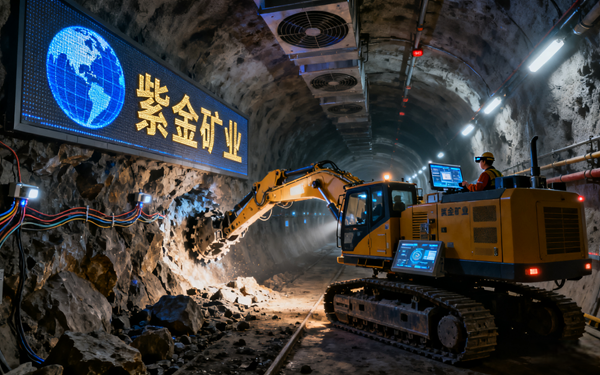
In January, Zijin Gold International, spun off from Zijin Mining Group, announced a bold C$5.5 billion (approximately US$4 billion or RMB 28 billion) all-cash offer to acquire Canadian and New York-listed gold miner Allied Gold (AAUC) (AAUC:CA) at C$44 per share, signaling a clear intention for overseas expansion. However, the deal is now facing resistance from Chinese regulatory authorities, slowing down the approval process.
Regulatory red light: Premium rational under scrutiny
The Financial Times reported on Friday that China’s National Development and Reform Commission (NDRC) has two main concerns about the transaction: first, whether the premium Zijin is paying is reasonable; second, whether the geopolitical risks associated with Allied Gold’s Mali gold mine are controllable. Notably, the offer price of C$44 per share represents only a roughly 5% premium over the pre-announcement share price, which is relatively low for cross-border mining M&A. It is worth pointing out that Allied Gold’s Sadiola mine in Mali contributes about half of its gold output. Mali has experienced frequent political turmoil in recent years, and such political risk has clearly put Chinese regulators on alert.
As of May 29, Allied Gold’s share price on the Toronto Stock Exchange had fallen to C$36.08, down about 18% from the offer price, with the deal spread widening to historical highs, reflecting a clear erosion of market confidence in the deal’s completion.
Domestic and external pressures: A regulatory path fraught with unknowns
As the transaction progresses, external uncertainties are also mounting. Comments from Mali’s defense minister previously raised concerns about Allied Gold’s operations. Although the company confirmed in late April that its Mali operations were normal, investors remain highly sensitive to such geopolitical news. On the regulatory front, while the transaction has received approval under the Investment Canada Act and unconditional clearance from the West African Economic Community’s competition authority, the most critical approvals from China’s NDRC and Ministry of Commerce are still pending. The original transaction deadline has been forced back from the end of May to July 29, adding further uncertainty to the deal.
Asset-driven strategy vs. risk defense: Zijin’s strategic calculus
For Zijin, Allied Gold’s asset portfolio holds strategic appeal. As of the end of 2024, the company reported gold resources of 533 tonnes at an average grade of 1.48 grams per tonne. Its three core assets in West Africa and East Africa – the Sadiola mine in Mali, the Côte d’Ivoire mining complex, and the Kurmuk project in Ethiopia – together produced approximately 380,000 ounces of gold in 2025, beating expectations. Zijin has previously established a presence in the West African gold belt, including in Ghana. If completed, this acquisition would create a resource synergy network covering West and East Africa, further solidifying its leading position in the global gold industry.
Nevertheless, the regulatory tug-of-war reflects a deeper issue: Chinese overseas natural resource expansion is now facing a dual scrutiny of “value judgment” and “risk control.” With the transaction having received shareholder approval only in April, the NDRC’s cautious stance highlights a heightened awareness of risk in China’s capital outflows.
The new July 29 deadline is approaching fast. Whether Zijin can convince domestic regulators to fully digest the Mali risk premium – while balancing external geopolitical pressures – will determine the fate of this African gold mining expansion.