American Tungsten Corp. (TSXV: TUNG, OTCQB: DEMRF)
Building America’s Defense Critical Metals Supply
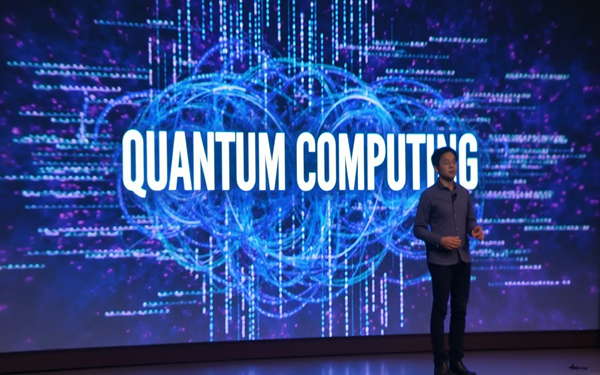
When seven of the world’s most successful investors – including Warren Buffett, Li Lu, Bill Ackman, Ken Griffin, Izzy Englander, Chase Coleman, and Philippe Laffont – all happen to be heavily invested in the same stock, it’s a signal that cannot be ignored. Surprisingly, this quantum computing leader favored by “smart money” is not the market’s darlings IonQ or D-Wave, but rather the search engine giant: Google parent company Alphabet.
Why are these billionaires willing to pour billions of dollars into Alphabet instead of pure-play quantum computing stocks? The answer lies in Alphabet’s unique dual identity.
First, Alphabet itself is an undeniable technological pioneer in the quantum computing space. As early as 2019, its Google Quantum AI team announced the achievement of “quantum supremacy” – using a quantum computer to solve a problem that would have taken a classical computer an extraordinarily long time. In 2023, the team demonstrated the first logical qubit prototype, proving the feasibility of quantum error correction. And in 2025, its next-generation Willow quantum processor achieved another breakthrough: becoming the first quantum computer to successfully run a verifiable algorithm that was beyond the ability of the fastest available supercomputer. These milestones demonstrate that Alphabet is at the forefront of quantum computing hardware, algorithms, and engineering.
However, unlike IonQ or D-Wave, Alphabet is not a “pure quantum” company – and that is precisely its greatest investment advantage. Quantum computing is still years or even more than a decade away from large-scale commercialization. Pure-play quantum companies need to continuously burn cash before achieving profitability, and they face enormous uncertainty regarding technological paths and market competition. Alphabet, on the other hand, has a powerful moat – mature businesses such as search advertising, cloud computing, AI models (Gemini), and autonomous driving (Waymo) generate tens of billions of dollars in free cash flow each year. This provides ample funding to support its long-term, high-investment quantum research without worrying about capital constraints.
For this reason, the primary reason these seven billionaires invest in Alphabet is not quantum computing itself, but rather its steady growth, abundant cash flow, and competitive barriers. However, quantum computing serves as a “free call option,” offering shareholders additional upside potential. When quantum technology eventually becomes commercialized, Alphabet is well-positioned to dominate thanks to its first-mover advantage and ability to integrate resources. Even if the quantum timeline takes longer than expected, its core business alone can support the stock price.
For ordinary investors, Alphabet offers a lower-risk way to participate in the quantum computing wave. Top-tier investors like Buffett and Li Lu pursue what is known as “asymmetric returns”: limited downside, unlimited upside. Buying IonQ or D-Wave directly could expose you to extreme volatility and the risk of going to zero. Holding Alphabet, in contrast, is like having a mature tech giant’s stock price as a floor, with a free long-term lottery ticket on the rise of quantum computing.
In summary, it is no coincidence that seven billionaires have collectively placed heavy bets on Alphabet. What they value is not just the future of quantum computing, but an investment philosophy that combines high certainty with a high ceiling. For investors looking to share in the dividends of the next generation of technology without taking on excessive risk, following the footsteps of this smart money may be the most pragmatic choice right now.