Taiwan’s decision to let life insurers allocate into artificial intelligence projects is the latest proof that Asian capital is moving toward real economy compute, not hype. The catalyst sits next door: China’s industrial-scale AI buildout is creating the deepest demand pool in the region for chips, servers, data centers and applied models. For allocators chasing durable cash flows and policy-aligned growth, the opportunity set is clear and investable.
Regulators in Taipei want more of a trillion-dollar insurance balance sheet working at home, and AI is now squarely in scope. The near-term beneficiaries will include Taiwan-listed hardware champions and local model startups. But the gravity well for monetizing that capacity is on the mainland. Chinese clouds and telcos are the buyers of record for AI compute, and Chinese platform companies are industrializing model deployment across finance, manufacturing, logistics and public services. Cross-strait supply chains never stopped mattering; this rule simply lowers friction for insurers to fund profit pools linked to China-scale demand.
Beijing’s roadmap is explicit. A national AI data center grid is budgeted at roughly 295 billion dollars through 2028, with a target to run on mostly domestic silicon. Industry projections suggest local suppliers could satisfy about three quarters of China’s AI chip demand by 2030, up sharply from today. Procurement is aligning with that push: domestic AI accelerators have been added to government secure and reliable purchase lists, widening the addressable market for homegrown vendors. On the software side, enterprises are standardizing on local foundation models, while global developers increasingly test Chinese open alternatives such as DeepSeek. None of this depends on a single quarter’s GPU headline. It is a policy-backed capex cycle aimed at sovereign compute.
Asia’s insurers want long-duration, inflation-resilient assets. AI meets that test when it comes packaged as servers, power, cooling and long-term cloud contracts. The incremental twist is China’s spillover demand through the Belt and Road. In 2025, new BRI deals hit a record 213.5 billion dollars, with energy and infrastructure leading. As digital corridors get embedded into those projects, data center and edge compute requirements travel with them. The result is a multi-year pipeline where China’s engineering scale shapes regional standards, and listed Chinese vendors monetize not just at home but across emerging markets plugged into BRI. Taiwan’s insurers are positioning into a wave that has policy at its back and export lanes at its front.
– Cambricon 688256.SH — China’s leading AI chip IP house topped a 2025 Hurun AI ranking with a 630 billion yuan valuation, up 165 percent year on year. Milestone achieved as enterprise buyers diversify beyond foreign accelerators. Global impact note: a native alternative stack for data center inference supports model deployment across Asia.
– Inspur Information 000977.SZ — The anchor of China’s AI server supply, with deep ties into all major domestic clouds and telecoms. Milestone: repeat leadership in AI-optimized server shipments domestically. Global impact note: designs tailored for local accelerators lower total cost of ownership for emerging market data centers.
– Sugon 603019.SH — High-performance computing specialist powering national supercomputing and green data center campuses. Milestone: key supplier to western region compute hubs under the East-to-West computing program. Global impact note: expertise in liquid cooling and power efficiency travels well to hot-climate emerging markets.
– SMIC 688981.SH, 0981.HK — The mainland’s flagship foundry is expanding mature-node capacity, a prerequisite for domestic AI accelerator and networking silicon. Milestone: dual listing and capacity ramps aligned with public procurement that now includes multiple domestic AI chips. Global impact note: higher local silicon content de-risks supply chains for Asian AI builders.
– iFlytek 002230.SZ — Applied AI leader in speech, education and productivity tools with a fast-improving large language model stack. Milestone: accelerated rollout of enterprise AI copilots across public services and SMEs. Global impact note: Mandarin-first AI services open usage in ASEAN and Belt and Road partner markets.
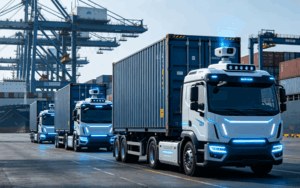
– Baidu BIDU, 9888.HK — Foundation model and AI-native cloud player with ERNIE and leading autonomy permits for fully driverless robotaxi operations in select Chinese cities. Milestone: regulatory approvals for driverless services underscore real-world AI safety leadership. Global impact note: model inference at scale drives demand for domestically built accelerators and servers.
– Alibaba BABA, 9988.HK — China’s largest cloud platform by market share is standardizing on homegrown Qwen models across e-commerce, logistics and enterprise software. Milestone: new data center regions tuned for AI training and inference capacity. Global impact note: tools for millions of exporters turn model upgrades into global productivity gains.
– SenseTime 0020.HK — Vision-first AI platform with the SenseNova model family and deployments across smart city, retail and industrial inspection. Milestone: rapid iteration of multimodal models for edge and data center use. Global impact note: solution exports to Asia and Middle East help set benchmarks for AI safety and governance.
– China Mobile 0941.HK — The world’s largest mobile operator is building a computing-first network, fusing cloud, edge and connectivity. Milestone: sustained capex into data centers and the national computing backbone that underpins AI services. Global impact note: nationwide reach turns AI into mass-market infrastructure.
– GDS GDS, 9698.HK — China’s pure-play data center operator with hyperscale campuses on the mainland and a growing Southeast Asia footprint. Milestone: long-term contracts with leading clouds and internet platforms anchor cash flows. Global impact note: regional expansion ties Chinese AI tenants to lower-cost power and land outside Tier 1 cities.
– Lenovo 0992.HK — End-to-end AI hardware provider from data center servers to AI PCs, leveraging global supply chains. Milestone: commercialization of AI PC and edge inference portfolios aligned with enterprise refresh cycles. Global impact note: bridges China’s model ecosystem with multinational IT standards.
Supply is the pressure point. Even with domestic accelerators gaining procurement status, and local capacity closing the gap, certain high-end chips remain constrained. Industry estimates that local suppliers could meet roughly 76 percent of AI chip demand by 2030 leave room for tightness near term. That is precisely why the data center grid plan targets 80 percent domestic silicon by 2028: it mobilizes capital, standards and procurement to derisk timelines. On software, the regulatory environment favors vetted local models, which channels demand to domestic platforms and clarifies revenue visibility for listed providers. Put simply, the policy put is explicit, budgeted and time bound.
The rule change is domestic-first, but exposures that monetize China-scale AI are within reach. Taiwan hardware champions that sell into mainland clouds and telcos offer natural hedges. Co-investment vehicles into green data center projects at home, backed by long-term offtake from Chinese platforms, can fit liability profiles. Structured allocations into H-shares and ADRs of China AI leaders allow insurers to capture the model-and-inference layer, while local private credit can finance server and power equipment for domestic tenants servicing cross-border workloads. The through-line is the same: align with Beijing’s compute roadmap, and let the region’s largest demand center do the heavy lifting.
Three datapoints will tell you whether this cycle is accelerating. First, new tenders tied to the national computing backbone and provincial AI data center parks; watch for capacity, power density and PUE specs trending tighter. Second, procurement lists and enterprise RFPs that explicitly favor domestic accelerators and local foundation models, a catalyst for Cambricon and server OEMs. Third, BRI-linked digital infrastructure announcements, especially in Central and Southeast Asia, where hyperscale and edge projects convert into server and service orders for Chinese vendors. If those needles keep moving, Taiwan’s insurers will have picked the right moment to fund the pipes and picks of Asia’s AI decade.