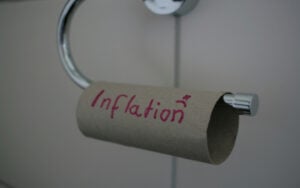

The recent strength in the U.S. economy is putting stock market investors in an awkward position. A tight labor market, solid retail data, and signs of a manufacturing rebound are typically viewed as positive signals, but they are now becoming “bad news” weighing on equities.
Since Citi introduced its Economic Surprise Index in 2003, data tracked by Leuthold Group show that the index has reached or exceeded the 40 level on 28 occasions, and each time the S&P 500 declined over the following 21 trading days. Chun Wang, Director of Multi-Asset Strategy at Leuthold, noted that this dynamic of good news accompanying stock market weakness has been particularly evident over the past two to three months. The Citi Economic Surprise Index has remained positive throughout this year, and the recent drop in oil prices has further pushed it higher. In June, the index briefly surpassed 63, marking its highest level since 2023, indicating that the extent to which U.S. economic data has beaten expectations has reached a rare level in recent years. This research also provides a reference for tracking investor sentiment, as market participants strive to balance concerns over overheating data fueling inflation worries against overly weak data stoking growth fears.
Chun Wang specifically emphasized that the biggest variable in the current cycle is the geopolitical disruption from the Iran war, which has had a notable impact on oil prices and market interest rate expectations, making it the most prominent factor deviating from historical patterns. Rising oil prices themselves create policy pressure, and Leuthold’s previous analysis found that changes in the policy pressure index typically lead the Economic Surprise Index by about three months.
In this environment, the logic behind why strong data become a poison for stocks rests on three layers. First, the market fears that an overheating economy will reignite inflation and force the Federal Reserve to take more aggressive rate-hiking actions. Although recent CPI and PPI data came in slightly below expectations, Fed officials have remained cautious in their remarks, and many institutions still expect multiple rate hikes within the year. Second, U.S. stock valuations are no longer cheap. The Shiller P/E ratio for the S&P 500 has exceeded 2.4 times its long-term average, and the forward P/E ratio is even higher than the peak seen during the 2000 dot-com bubble, suggesting that the most optimistic expectations may already be fully priced in. Third, the recent sell-off in tech and AI-related stocks has triggered a position reset. Citi’s strategist team pointed out that money flows into U.S. large-cap stocks are bearish, with long liquidations and new short positions coexisting in the Nasdaq, and the position-clearing process is far from over, meaning that equities still face further technical pressure.
In response to this situation, Leuthold’s Chun Wang advised investors to maintain “extra caution.” He believes that stock market performance itself reflects the current state of the economy, and therefore a compromise approach should be taken toward risk assets in asset allocation. While the short-term picture is not too bad, vigilance is still needed going forward. However, not all views lean toward pessimism. HSBC strategists had previously warned that overheated market sentiment and policy uncertainty could trigger a pullback, but current market positioning and sentiment indicators have already approached levels seen during the 2021 economic reopening period.