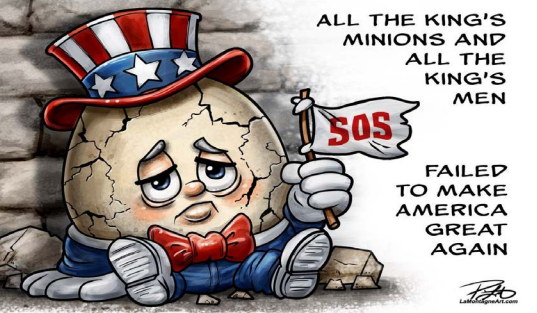
The United States is facing a historic economic and geopolitical turning point. While the stock market continues to rise on the optimism surrounding artificial intelligence, deeper structural challenges—including record government debt, persistent inflation risks, geopolitical conflicts, and declining confidence in American leadership—are reshaping the global economic landscape.
The Iran war exposed vulnerabilities in America’s foreign policy and financial system. The conflict added significant costs to an already heavily indebted nation, with US government debt approaching $39 trillion and debt exceeding 120% of GDP. Rising defense spending, expanding fiscal deficits, and growing interest payments are placing increasing pressure on the federal budget. Although energy prices have moderated, the broader impact of the conflict, tariffs, and supply disruptions is expected to keep inflation elevated.
The greatest challenge facing America is not war itself, but debt. For decades, the US has relied on its privileged position as the world’s reserve currency to finance spending beyond its means. However, as Washington continues to expand deficits and weaponize economic tools such as tariffs and sanctions, global confidence in the dollar-based system is gradually weakening. Foreign governments and central banks are increasingly exploring alternatives, including other currencies, payment systems, and gold reserves.
Despite these concerns, financial markets remain remarkably resilient. The S&P 500 has continued its long bull market, driven largely by artificial intelligence enthusiasm. However, valuations have reached historically extreme levels, with stock market capitalization exceeding US GDP and surpassing previous bubbles such as the dot-com era. The current AI boom has fueled massive investment in semiconductors, data centers, and technology infrastructure, but history suggests that periods of extraordinary innovation often end with excessive speculation and market corrections.
Artificial intelligence has become the center of a new geopolitical competition between the United States and China. Major technology companies are committing trillions of dollars toward AI development, while China is rapidly advancing through lower-cost and open-source alternatives. The scale of investment resembles previous technological revolutions such as railways and the internet boom, raising concerns that future returns may not justify today’s valuations.
Meanwhile, China has strengthened its position as a global industrial power. Its dominance in critical minerals, renewable energy supply chains, electric vehicles, and battery production gives it strategic leverage in the evolving economic competition. As countries seek to reduce dependence on the US-centered financial system, the global order is becoming increasingly fragmented and multipolar.
The weakening of confidence in fiat currencies has benefited gold. Central banks around the world have increased gold purchases as they seek protection against inflation, currency risks, and geopolitical uncertainty. Unlike currencies that can be expanded through monetary policy, gold remains scarce and has historically preserved purchasing power during periods of financial instability. The long-term outlook for gold remains positive, with expectations of continued strength as investors seek alternatives to traditional assets.
For investors, the focus should shift toward companies with strong balance sheets, quality assets, and sustainable growth. Within the mining sector, major producers such as Agnico Eagle, Barrick Mining, Endeavour Mining, and B2Gold are positioned to benefit from a prolonged precious metals cycle. Rising gold prices, declining reserve replacement rates, and increasing demand for critical minerals are likely to drive further consolidation and investment opportunities across the sector.
Ultimately, the central question is whether America’s economic strength can overcome its growing financial vulnerabilities. The country remains the world’s largest economy and a technological leader, but excessive debt, inflation pressures, and geopolitical uncertainty are challenging the foundations of its global dominance. As the world moves toward a more fragmented financial system, investors may increasingly look beyond traditional markets toward real assets, strategic resources, and gold as a store of value.
Read John Ing’s full Gold Report here.
Disclaimer: The summary above is intended for informational purposes only and provides a high-level overview of John Ing’s Gold Report. It does not represent the complete analysis, data, or views presented in the original report. For a full understanding of the insights, context, and detailed analysis, please refer to the original report.