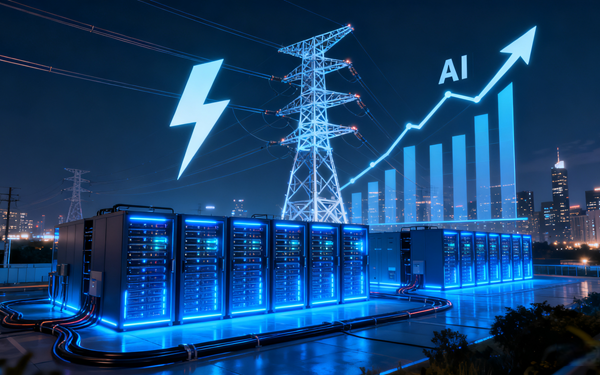
New York Governor Kathy Hochul on Tuesday signed an executive order halting the approval of new large-scale data centers that consume 50 megawatts or more, imposing a moratorium of up to one year. It marks the first time any U.S. state has directly blocked the construction of hyperscale AI infrastructure, immediately prompting investors to reassess the outlook for electric utilities and the broader technology sector.
Hochul was blunt about the rationale. “These hyperscale AI data centers consume enormous amounts of power, truly threatening to outpace our grid’s capacity, and they drive up costs for local ratepayers. I refuse to let those costs get passed down to New Yorkers,” she said. Residential electricity rates in New York have surged nearly 68% since 2019. A Siena Research Institute poll in June found that 46% of respondents believed a moratorium would be good for the state, versus just 21% who said it would be bad, with support crossing party lines. Environmental groups and U.S. Senator Kirsten Gillibrand endorsed the move, arguing that communities need “ironclad guarantees” their bills won’t spike and their environment won’t be harmed before development proceeds.
The moratorium is not without opposition. Republican State Assemblyman Scott Gray and colleagues wrote to the governor insisting that siting authority belongs to local communities, not Albany, and that the freeze chills investment and overrides work already underway. Pennsylvania Senator John Fetterman put it more starkly on social media: “China wins.” His comment echoes claims that foreign rivals have been quietly fueling the anti-AI movement in the U.S.
For investors, the direct impact appears limited for now. Alphabet, Amazon and Microsoft have no major projects in New York that would be caught by the ban, so the immediate hit to mega-cap tech names is negligible.
The real risk is the ripple effect. Fourteen other states have already introduced bills to restrict data center construction. New York’s first-in-the-nation action could embolden others to follow suit, shrinking the pool of viable sites and tightening compute supply just as demand is exploding. That, in turn, would pressure the electric utilities that are banking on data center load growth to drive future revenue; their growth assumptions may need to be revised downward.
More vulnerable still are smaller, less well-capitalized operators. As the original analysis noted, for a company like CoreWeave with a thinner financial cushion, any additional permitting hurdles or cost increases could upend the underlying economics, making related equities and private assets particularly sensitive to policy shifts.
Hochul is also directing regulators to explore requiring data centers to fund dedicated clean generation and battery storage, and she is pushing to repeal sales tax exemptions for large-scale facilities. If these measures advance, the industry’s cost structure would rise systemically, intensifying the regulatory headwind for power-intensive business models.
In the short term, a wholesale revaluation of big tech is unlikely. But the market has begun pricing in a new risk: that the breakneck expansion of computing capacity may be hitting a policy ceiling. Should more states enact similar restrictions in the months ahead, data center REITs, regional power companies, and AI firms heavily reliant on third-party infrastructure could all face valuation pressure. Investors would be wise to track state legislative calendars and reassess the policy risk embedded in their portfolios.