Clinical-stage biotech Viking Therapeutics (VKTX) finds itself at a sharp crossroads of sentiment. Over the past two years, shares have tumbled 46%, yet the average analyst price target sits at $92.58 — roughly 161% above the current level near $33. That enormous gap reflects a high-stakes tug-of-war between the promise of its lead obesity candidate, VK2735, and growing unease over how the company will fund its ambitious late-stage program.
The sell-off has two distinct chapters. First, long-time shareholders moved to lock in profits after the subcutaneous formulation of VK2735 posted impressive Phase 2 weight-loss data. Then, a second blow arrived when the oral formulation reported Phase 2 results marred by elevated discontinuation rates due to side effects, puncturing hopes for a convenient pill option. Consecutive waves of profit-taking and reset expectations have dragged the stock into a prolonged slide.
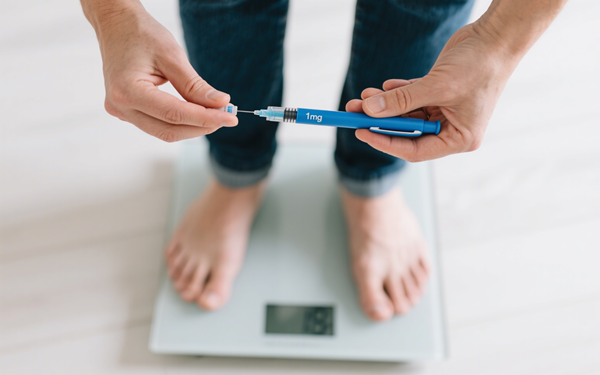
Despite the share-price weakness, Wall Street’s bull case is concentrated almost entirely on the subcutaneous injection. Two 78-week Phase 3 studies are underway, one of which enrolls overweight or obese patients with diabetes. The foundation for optimism lies in earlier mid-stage results: just 13 weeks of treatment delivered a placebo-adjusted mean weight loss of 13.1%, a pace that stands well above what comparable drugs have shown at similar time points. Analysts view that early velocity as a credible signal for what a longer trial could deliver.
The benchmark for comparison is Eli Lilly’s Zepbound, which recorded an average weight reduction of roughly 20.2% over 72 weeks in a pivotal study. Extrapolating VK2735’s trajectory into a 78-week setting, some analysts argue a mean weight loss approaching 25% is achievable — an estimate they describe as realistic rather than aggressive, provided the rapid early response is sustained. Hitting that mark would transform Viking from a clinical-stage name into a formidable competitor in the weight-loss market and force a fundamental repricing of its roughly $3.9 billion market cap.
The path to a potential blockbuster, however, is clouded by cash concerns. Viking burned approximately $96 million in its latest quarter, leaving cash and equivalents at $502 million, down from $706 million at the end of last year. Almost simultaneously, a shelf registration filed with the SEC disclosed plans to sell up to $500 million in common stock, alongside possible offerings of preferred shares, debt securities, or warrants. That filing triggered an 18.6% drop in the stock during July alone, as investors priced in the likelihood of dilution. Management stressed on the earnings call that existing cash can fund operations into 2028, but the filing itself has persuaded much of the market that a capital raise could arrive before key Phase 3 data readouts.
Clinical risks further complicate the picture. Even if the subcutaneous program stays on track, Phase 3 results could still disappoint in one of two ways: weight loss falls meaningfully short of the high-teens-to-mid-20s expectations, or an unacceptable side-effect profile undermines the drug’s commercial viability. Either scenario would collapse a valuation narrative built on multi-billion-dollar revenue potential. The oral formulation’s future remains similarly unsettled, with no guarantee that its tolerability issues can be resolved in subsequent studies.
Ultimately, the tug-of-war boils down to timing — between pivotal data and the next funding move. For investors comfortable with extreme volatility and willing to bet that VK2735 resets the weight-loss standard, the current price may embed opportunity. For those who cannot stomach steep drawdowns along the way, staying on the sidelines may be the more prudent choice. The decision to bet or not rests squarely on one’s own threshold for risk.