
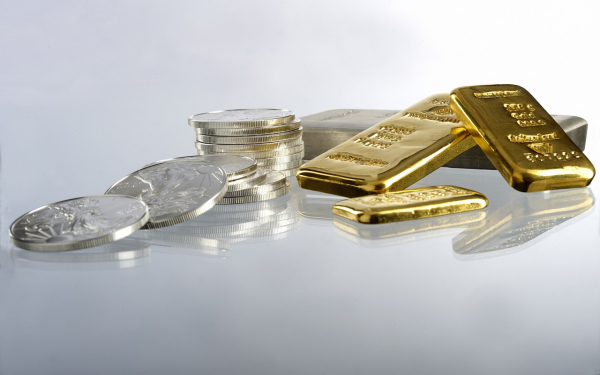
Spot gold slipped below the psychologically important $4,500 level on Monday, pressured by hawkish comments from Federal Reserve Chair Kevin Warsh and rising oil prices tied to renewed U.S.-Iran tensions. Yet several market analysts argue the correction has not broken the metal’s longer-term bull case — and may instead be offering investors a fresh entry point.
Gold traded at $4,446.50 an ounce, down 0.18% on the session, while spot silver edged up 0.16% to $66.360. Fed funds futures now price a 66.1% probability of a September rate hike, up from 57% before the weekend. The two-year Treasury yield held near 4.34%, and the 10-year yield climbed to 4.75%, making non-yielding assets less attractive in the short term. Still, gold found buying interest near $4,395 and recovered toward the $4,452–$4,487 resistance zone, suggesting underlying support remains intact. Silver bounced from a low of $65.51 to trade as high as $67.60, with the $66 level emerging as a key battleground.
Simon-Peter Massabni, head of business development at XS.com, told Kitco News that the market is repricing interest-rate expectations following Warsh’s speech at Jackson Hole, but this does not signal a fundamental reversal in the precious metals rally. He pointed to U.S. debt levels, fiscal sustainability concerns, geopolitical uncertainty and broader economic risks as durable sources of support for gold.
Massabni highlighted a structural dilemma facing the Federal Reserve: it must keep policy restrictive enough to contain inflation while managing the pressure that high borrowing costs place on government finances. That tension, he said, leaves gold caught between monetary policy and economic uncertainty. If Treasury yields stabilize or decline and fiscal worries return to the forefront, investment demand for gold could strengthen again. Warsh’s comments may temporarily stall the advance, Massabni said, but they do not necessarily mark the end of the medium-term uptrend.
Kevin Smith, founder and CEO of Crescat Capital, offered a similarly constructive view. He told Kitco News that the current correction has created an attractive entry point. Smith maintained a long-term gold target of $20,000 per ounce, based on global money supply growth and sustained central-bank buying. Over the past four years, central banks have purchased an average of roughly 1,000 tonnes of gold annually, double the pace of the prior decade. As some nations reduce dollar exposure and accumulate bullion, others face pressure to follow, reinforcing gold’s long-term support. The correction from this year’s highs, Smith said, has not altered that logic.
This week’s U.S. labor-market data will be the next major catalyst for precious metals. Tuesday brings JOLTS job openings and ISM manufacturing figures, followed by ADP employment and the Fed’s Beige Book on Wednesday, jobless claims and ISM services on Thursday, and the August nonfarm payrolls report on Friday. Until inflation and employment trends become clearer, volatility in gold and silver is likely to remain elevated. But for now, analysts say, the pullback looks more like an opportunity than a threat.