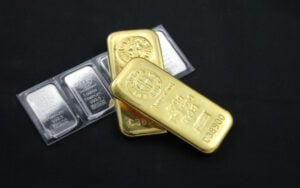
TOKYO — A native-language report in The Japan Times put the trend in sharp relief: Japanese shoppers are buying more jewelry not just for style, but as a way to park value while the yen stays weak. That matters for global investors because the move is showing up in hard numbers, not just in luxury-brand marketing. Department-store sales of gems, precious metals, and artwork rose 19% year over year to ¥330 billion in the first half of 2026, the highest level since records began in 2008, even as broader department-store sales rose only 3.2%.
What makes this more than a fashion story is the contrast with the rest of retail. Duty-free sales also rose 3.2%, which suggests domestic shoppers, not tourists, were driving the jewelry surge. In other words, this is not just inbound luxury spending from visitors taking advantage of a cheaper Japan. It is local money rotating into assets that buyers think will hold value better than cash in a depreciating currency environment.
The yen was trading near ¥164 per dollar, its weakest level since the 1980s, when The Japan Times reported the data. At the same time, Japan’s core CPI, excluding fresh food, rose 1.6% in June 2026. That combination helps explain why jewelry is drawing attention. Inflation is not running hot enough to look like a crisis, but the currency is weak enough for households to feel the squeeze, especially when imported luxury goods keep getting more expensive.
That backdrop is visible in consumer behavior. One 33-year-old office worker, Yuki Hayakawa, told The Japan Times that luxury brands keep raising prices, so she decided it was better to buy sooner rather than later. She said she saves where she can, but also wants to reward herself, adding that if she will use an item for many years, “it’s worth the price.” That is a classic luxury trade-up mindset, but in Japan it now carries a second motive: preserving value in yen terms.
The strongest clue comes from how shoppers and sellers talk about jewelry. Satoshi Maehara, president of Happiness and D Co., said: “It’s becoming more normal for people to hold 5% to 10% of their assets in gold, rather than cash. As the yen is losing value, people are increasingly turning toward gold. We’re seeing rising demand from that trend, and positioning ourselves to capture it.” That is not a macro thesis from a bank economist. It is a retail operator describing what customers are asking for and how his company is adjusting.
A separate comment from Kaoru Perkins, a partner at Bain & Co. Tokyo, gives the spending logic more texture. “There’s more interest in things that don’t lose value, and that’s part of the polarization — which is, ‘I don’t mind buying basic t-shirts, but I want something that is a little more longer lasting,’ not necessarily like heirloom level, but something that you can keep as an asset for yourself.” That is a useful frame for investors because it suggests demand is not only about conspicuous consumption. It is also about durability, store-of-value thinking, and a willingness to pay for pieces that feel more defensible than discretionary fashion.
The sales data lines up with what the global luxury groups are reporting. Richemont, the owner of Cartier, said its latest-quarter sales rose 20% from a year earlier, nearly double analyst expectations, and Japan was its top-performing region, led by jewelry. Kering, the owner of Gucci, said Japanese jewelry sales rose 57% in the first quarter of 2026, while its fashion and leather-goods business in Japan fell 14%. That split matters. It suggests Japanese consumers are not spending evenly across the luxury basket. They are favoring items that can be framed as both indulgent and resilient.
The Isetan Mitsukoshi side of the story points in the same direction. A company spokesperson confirmed that jewelry and watches led domestic sales alongside handbags, cosmetics, and food. For department stores, that is important because these categories sit at the intersection of prestige and repeat traffic. When jewelry leads, it often means shoppers are trading up inside the store rather than just browsing. It also hints that these purchases can support premium retail margins better than traffic driven by lower-ticket categories.
The weak yen is doing more than making overseas travel expensive for Japanese consumers. It is changing how value is perceived at home. If the currency keeps losing purchasing power, an item bought today can feel safer than cash held for later. That helps explain why jewelry, especially pieces with gold content or global brand recognition, is outperforming broader discretionary spending. In this sense, the consumer response is rational even if it looks emotional from the outside. Shoppers are not simply splurging; they are trying to protect themselves from further currency erosion while still indulging.
This also helps explain why the jewelry boom appears stronger than the overall department-store recovery. Total sales grew only 3.2% in the first half of 2026, far below the 19% gain in gems, precious metals, and artwork. That gap says the strength is concentrated. Investors should not extrapolate a broad Japanese consumption revival from it. Instead, they should see a selective shift toward categories that combine status, portability, and perceived resilience.
For smaller players, the currency move is creating strategic pressure as well as opportunity. The Japan Times said Happiness and D shifted from imported luxury brands and high-end watches toward jewelry to capture gold demand. That is the kind of channel shift that often happens when external conditions change faster than consumer habits. Retailers that can adapt merchandise mix quickly may benefit first, especially if customers are looking for products that feel less exposed to currency swings.
There is also a pricing dimension. If luxury brands keep lifting prices, shoppers may accept it in Japan more readily when they think the product could preserve value. But that does not mean demand is limitless. The current strength is still bounded by household budgets and by how far consumers are willing to substitute away from fashion and leather goods. Kering’s numbers show that jewelry can surge even when other categories weaken. For investors, that means one part of the luxury market can look healthy while the rest remains under pressure.
The Bank of Japan’s next policy meeting, scheduled for the week of July 28, 2026, is being watched through that lens. Market expectations, according to Caixin/CLS reporting, were for the BOJ to hold rates steady, and half of surveyed economists expected no hike until at least December 2026. If that view proves right, the yen’s pressure could persist and keep supporting the “buy now, hold value” mentality in Japan’s luxury market. If it does not, the jewelry trade may cool faster than current sales trends imply.
A separate market view from IG analyst Tony Sycamore projected the yen could weaken further toward the ¥165 psychological level. That is only one analyst’s call, not a consensus. Still, it captures the way currency traders and consumer behavior are linked here. A few yen either way can change the psychological case for buying luxury goods sooner, especially when the purchase is already being framed as both personal reward and asset preservation.
The English-language version of this story can sound like a simple luxury upgrade narrative: affluent Japanese shoppers are treating themselves while the currency is weak. That is partly true, but it misses the more interesting point. In Japan, jewelry is increasingly acting like a quasi-financial product for households trying to keep pace with a falling yen. That helps explain why the category is beating broader retail, why global luxury houses are seeing Japan outperform, and why local retailers are shifting their mix.
For investors, the takeaway is not that Japanese consumers have suddenly become more extravagant. It is that currency stress can redirect discretionary spending into items that carry emotional value and perceived durability at the same time. That is a more durable demand driver than pure fashion momentum, and it may keep jewelry stronger than the rest of Japan’s luxury market as long as the yen remains near these levels.