
District Metals Corp. (TSXV:V.DMX. Nasdaq: DMXSE SDB)
Advancing the Largest Undeveloped Uranium Deposit in the World
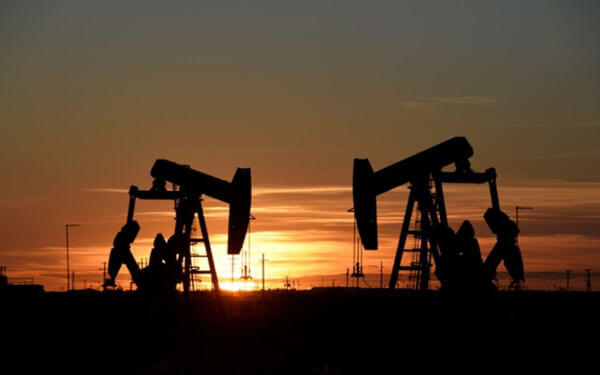
A comparative analysis report released Thursday by the International Energy Forum (IEF) revealed a massive 2.2 million barrel-per-day gap among the world’s major energy forecasting agencies in their assessments of 2026 global oil demand growth, reflecting how macroeconomic divergence, geopolitical deadlock, and an unexpected inventory build are collectively widening the market’s perception gap on supply-demand fundamentals.
The summary, which compiles projections from the Organization of the Petroleum Exporting Countries (OPEC), the International Energy Agency (IEA), and the U.S. Energy Information Administration (EIA), showed 2026 full-year global demand growth expectations ranging from a contraction of 1.6 million barrels per day under the IEA to an expansion of 0.6 million barrels per day under OPEC — a spread of 2.2 million barrels per day. In absolute volume terms, total consumption estimates differ by as much as 3.0 million barrels per day, spanning from a low of 102.7 million barrels per day from the EIA to a high of 105.7 million barrels per day from OPEC.
The analysis indicates that diverging outlooks for non-OECD consumption account for the majority of the disparity. The IEA and EIA expect non-OECD oil demand to contract by 1.2 million barrels per day and 0.8 million barrels per day, respectively, in 2026, while OPEC projects non-OECD consumption to grow by 0.6 million barrels per day — representing the entirety of expected global demand growth, with OECD consumption remaining unchanged.
Adjustments across major markets vary significantly. Chinese demand saw broad downward revisions, with the IEA projecting a drop of 460,000 barrels per day, the EIA reducing its estimate by 2.8% (approximately 250,000 barrels per day), while OPEC forecasts a modest increase of about 100,000 barrels per day. For Indian demand, the EIA, OPEC, and IEA cut estimates by 5.5%, 3.6%, and 1.5%, respectively. The United States was the only major market to receive unanimous upward revisions, led by a 2.1% increase from the IEA, reflecting stronger-than-expected resilience in the North American economy.
Near-term physical markets also came under pressure. EIA weekly data showed that U.S. commercial crude inventories surged by 17.4 million barrels during the week ending August 7, bringing total stockpiles to 424.4 million barrels. The build was driven by a 1.14 million barrel-per-day increase in crude imports and a 627,000 barrel-per-day reduction in exports. While stockpiles remain approximately 2% below the five-year seasonal average, the single-week increase was the largest so far this year.
In Asian trading on Friday, Brent crude fell 0.5% to $88.56 per barrel, while WTI crude dropped 0.60% to $82.77, following the bearish tone set earlier in the week after OPEC and the IEA simultaneously downgraded their demand forecasts on Wednesday.
Looking ahead to 2027, forecast divergences narrow considerably, with global demand growth expectations converging in a range of 2.2 million to 2.4 million barrels per day. OPEC and the EIA project growth accelerating to 2.2 million barrels per day, while the IEA expects 2.4 million barrels per day, with non-OECD economies contributing 1.8 million to 2.1 million barrels per day of that expansion, led by the Middle East, China, and India.
The key to medium-term market stability remains tied to political developments in Washington and the duration of the ongoing shipping blockade in the Strait of Hormuz. U.S. Vice President JD Vance said Thursday on Fox News that maintaining low domestic oil and gasoline prices is the Trump administration’s primary objective in the Iran conflict, prioritizing energy cost controls over nuclear non-proliferation.
This marks a significant shift from U.S. President Donald Trump’s earlier framing of the conflict, which presented the elimination of Iran’s nuclear program as the sole objective regardless of short-term domestic economic sacrifices. Market participants have noted that if the blockade persists and U.S. strategic priorities shift toward energy price control, persistent supply tightness may remain underpriced by the market, potentially serving as an upside driver for oil prices in 2027.