GR Silver Mining Ltd. (TSXV: GRSL, OTCQB: GRSLF)
Advancing a World-class Silver Resource in Mexico amongst a $80+ / oz Ag Market
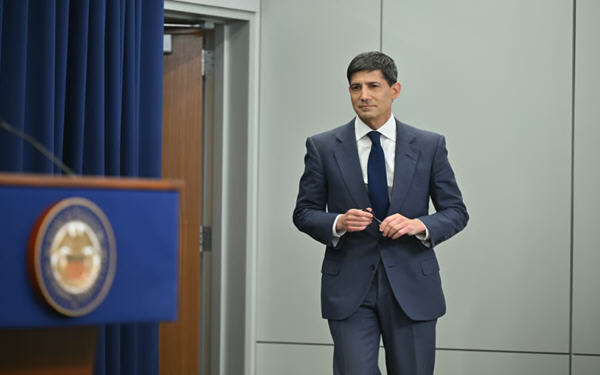
A single statement from the Federal Reserve is sending silent shockwaves across Wall Street. Following the latest policy meeting, Fed Chairman Kevin Warsh released a post-meeting statement that was slashed from the customary 341 words to just 130 — and completely eliminated all forward guidance on future interest rate paths. This move marks a turning point in the Fed’s communications strategy, plunging a market long accustomed to “following the map” into new uncertainty.
Warsh had made his core view clear from the very beginning of his tenure: the Federal Reserve has been providing the market with too much information. In his view, this excessive guidance has been distorting market behavior — investors no longer independently judge economic fundamentals and asset prices, but instead bet on the Fed’s next move, and even take on risks beyond reasonable levels based on that expectation.
The historical roots of this communication model can be traced back to the deep recession following the burst of the dot-com bubble, and were further reinforced during the 2008 financial crisis. At that time, with the global financial system on the brink of collapse, the Fed’s forward guidance provided a critical “safety net” for the markets. However, in Warsh’s view, maintaining such a level of guidance today risks giving investors the illusion that the Fed will backstop them, leading them to take excessive risks before any major market dislocation occurs.
Following the sharp reduction in the statement, the market’s immediate reaction was to push interest rate expectations higher on its own. Against the backdrop of inflation that has not yet fully returned to the target range, investors have priced in a somewhat higher trajectory for future policy rates. Viewed from another angle, this market-driven rise in rates may actually relieve some pressure on the Fed to raise rates directly, creating a delicate balance in which “the market tightens on the Fed’s behalf.”
But Warsh’s true intention is not to signal that “higher rates are here to stay.” His goal is to force the market to think independently and return to the operational norm that prevailed for most of the Fed’s history — that is, investors judging economic trends and bearing risks on their own, rather than relying on central bank promises to guide their decisions.
For investors, the unease brought by this change is real. The deeply ingrained habit of relying on the Fed’s “hand-holding” guidance cannot be reversed overnight. Yet Warsh’s strategy is essentially about returning uncertainty to the market — and that is precisely the outcome he aims to achieve: more self-judgment, less policy dependence.
So where will interest rates ultimately head in the future? The answer may no longer be found in a turn of phrase or a punctuation mark in the Fed’s statement, but rather in the real evolution of economic data and the collective game of market forces. What investors can be certain of is that the market ahead will be more volatile and harder to predict — and that is precisely the “new normal” Warsh is pursuing.