

1911 Gold Corporation (TSXV: AUMB; OTCQX: AUMBF)
1911 Gold is Manitoba’s Gold Standard - Ready, Permitted and High-Grade 1911 Gold is an Emerging Gold Producer, with Significant Cash Flow Generation and District-Scale Growth Potential
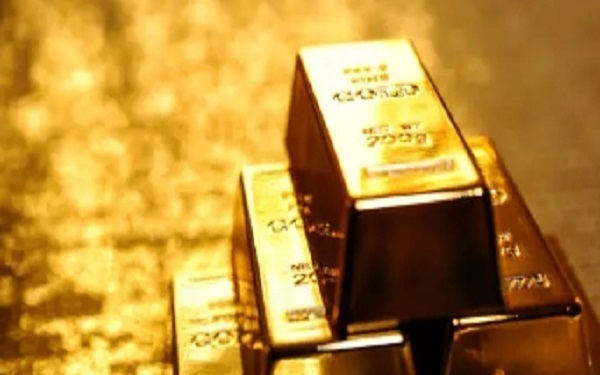
As of October 23, 2026, spot gold traded at $3,992.30 an ounce, down more than 4% on the week and marking its worst weekly performance since early June, with the key $4,000 integer and psychological level decisively breached.
Meanwhile, the U.S. 10-year Treasury yield has fallen below 5%. Analysts noted that gold’s bullish momentum continues to be restrained by persistent inflation, which has forced the Federal Reserve into a tightening cycle, driving interest rates and real yields higher and increasing the opportunity cost of holding the non-yielding precious metal.
On Thursday, long-dated U.S. Treasury bonds saw a significant rally as investors sought safety amid growing concerns about equity markets. Although the decline in 10-year yields reduced gold’s opportunity cost, analysts said technical selling and broader liquidity concerns continue to dominate price action.
Ole Hansen, Head of Commodity Strategy at Saxo Bank, said the market is still witnessing a battle between short-term technical traders looking for downside opportunities and longer-term investors, whose underlying demand remains robust. He explained that concerns about a potential liquidity event have exacerbated selling pressure, with Thursday’s break below $4,065 triggering further momentum-driven selling as traders scrambled for stop-loss orders. He is watching the next major support level at $3,970 in the near term, but added that speculative positioning may be approaching extreme levels, which could create conditions for a sharp rebound once the technical outlook improves.
Roukaya Ibrahim, Chief Commodities Strategist at BCA Research, believes this week’s pressure on gold prices is disappointing but does not signal the start of a steeper downtrend. She described Thursday’s price action as an isolated event that may have been related to broader cross-asset liquidity pressures rather than a fundamental shift in gold’s outlook. She noted that gold’s deviation from its 200-day moving average has reached levels last seen in late July, when prices established a short-term bottom before staging a significant rally. However, she warned that a stronger U.S. dollar and persistent inflation pressures could limit any meaningful rebound.
Neil Welsh, Head of Metals at Britannia Global Markets, likewise does not see the selloff as signaling a major shift in the market’s long-term fundamentals. He said that a deeper equity market correction could trigger forced selling as investors raise cash to meet margin calls, putting further pressure on gold, but several funds remain bullish and central bank gold buying has been steady, which could provide additional support.
Rob Haworth, Senior Investment Strategist at U.S. Bank Wealth Management, expects gold prices to remain under pressure as the Fed’s tightening cycle continues to support the U.S. dollar. He noted that the Fed is resolute but not aggressive in fighting inflation, and this measured tightening path should be enough to keep the dollar strong and limit gold’s upside potential.
The main economic event next week will be the Federal Reserve’s monetary policy meeting. Markets do not expect a rate hike at this meeting, but policymakers are expected to keep a December hike on the table. Haworth said his firm’s economists expect one more rate hike in December and another in March next year. In addition, the Bank of Canada, the European Central Bank and the Bank of Japan will also hold monetary policy meetings next week. Some analysts believe that as long as the underlying drivers of inflation remain in place, gold will continue to struggle, and an end to the Middle East conflict may be necessary for gold to regain investor interest.
Looking ahead, Hansen said that with hedge funds approaching a net short position, gold may be laying the groundwork for a sharp rebound, but prices would need to recover above $4,230 to confirm that the recent correction has run its course.