Lula Win Bolsters Brazil’s Rare-Earth Control, Critical Minerals Policy Faces Implementation Test
Brazilian President Luiz Inácio Lula da Silva secured victory in Sunday’s runoff against far-right senator Flávio Bolsonaro, clearing the way for his fourth non-consecutive term starting Jan. 5, 2027, once electoral authorities validate the result. The outcome is set to strengthen federal oversight over Brazil’s vast rare-earth reserves, raising hurdles for foreign miners and Washington’s push to diversify rare-earth supply away from China.
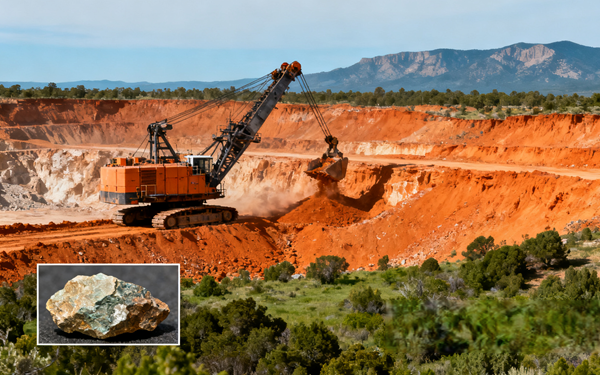
Lula signalled continued pushback against U.S. pressure in his victory speech, saying Brazil would not accept being anyone’s backyard. The Trump administration has imposed higher tariffs on Brazilian goods, keeping bilateral trade tensions elevated. Industry consultants frame the election result as a continuity event rather than a policy shift, locking in Brazil’s critical-minerals strategy launched in September. Home to the world’s second-largest rare-earth reserves at 21 million tonnes, per U.S. Geological Survey estimates, Brazil has become a top target for Western nations chasing alternative supply for electric vehicles, wind turbines and defence technologies.
Foreign investors have already raced into the basin. Brazil’s National Mining Agency data through June show foreign entities filed 42% of the country’s 2,727 rare-earth exploration applications, with investors from Australia, the U.S. and Canada most active. More than 86% of those applications landed in the past three years. Serra Verde, Brazil’s only operating commercial rare-earth producer, has been acquired by USA Rare Earth, in which the U.S. government holds a 10% stake.
The result also reshapes Latin America’s geopolitical landscape. Brazil and Mexico, the region’s two most populous nations, are now led by centre-left administrations, complicating Trump’s drive to expand U.S. influence across Latin America. Brazil is Latin America’s largest economy with annual GDP of roughly $2.6 trillion. Flávio Bolsonaro campaigned for closer alignment with the Trump administration and strategic critical-minerals cooperation, a sharp contrast to Lula’s posture. Still, commercial imperatives are expected to outweigh diplomatic friction. Mining carries long lead times and high upfront risk, and demand for outside capital leaves room for continued U.S.-Brazil collaboration. U.S. officials have already voiced willingness to back domestic processing and refining capacity in Brazil.
The bigger market test lies ahead, as Brazil’s new critical-minerals legal framework moves from congressional approval to enforcement. Senate passed Bill 2,780/2024 on Sept. 2, creating the National Policy on Critical and Strategic Minerals, after lower-house approval. The bill awaits presidential signature or partial/full veto. It creates the National Council for the Industrialization of Critical and Strategic Minerals with up to 20 seats, where federal government representatives hold a majority. It introduces mandatory government approval for a broad set of transactions, including changes in corporate control over mineral rights, foreign acquisition of substantial influence, mineral-rights transfers, access to strategic geological data and supply contracts that could affect national economic or geopolitical security.
The policy rationale mirrors reviews underway in many resource jurisdictions, but mining finance relies heavily on mergers, joint ventures and offtake agreements. Investors flag predictability as the central risk. Clear, consistent, timely review standards can make the new oversight workable. Broad, loosely defined tests tied to economic or geopolitical security may inject uncertainty just as Brazil seeks foreign capital.
Major implementation gaps remain unresolved. Rules for designating strategic zones and ranking priority projects are deferred to future regulation. Exploration licences covering critical minerals carry a non-extendable 10-year maximum term, with no carve-outs for delays from land-access disputes or discoveries of critical minerals mid-exploration. The legislation promises priority environmental licensing for strategic projects but sets no fixed procedures or timelines.
Lawmakers paired stricter screening with a suite of incentives to capture downstream value. Qualified domestic processing spending qualifies for a 20% tax credit, capped at 1 billion reais, or $192 million, annually between 2030 and 2034. A Mineral Activity Guarantee Fund will have a 2 billion-real, or $390 million, ceiling. Operators will contribute 0.2% of after-tax gross operating revenue for the first six years, alongside mandatory R&D spending starting at 0.3% and rising to 0.5%. The Reidi infrastructure tax regime and incentive debenture framework are also expanded to eligible mineral projects.
Mining investors are not alarmed by Lula’s re-election itself. Their main concern centres on how regulators apply the new rules. Investors accept state screening so long as frameworks are predictable, evenly applied and timely. Analysts warn incentives tied to commercially unviable downstream obligations risk eroding upstream project appeal without building competitive refining capacity.
Brazil’s policy will ultimately be judged by whether resource sovereignty can coexist with legal certainty for capital. The country does not need to choose between strategic mineral control and private investment. Congress has laid the statutory architecture; the harder work falls to implementing rules. Brazil’s pursuit of greater strategic leverage must not raise barriers to the foreign financing and technical expertise needed to develop its rare-earth potential.
China News
Mining
Rare Earth