Traditionally, gold and the U.S. dollar move in opposite directions: as the dollar weakens, dollar-priced bullion becomes cheaper for holders of other currencies, stimulating demand and driving up gold prices. This week, however, gold defied that pattern.
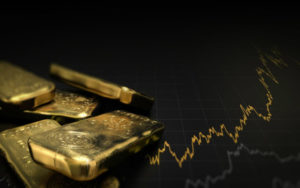
Although the dollar slid to its weakest level since early 2022, gold barely budged. In fact, without the dollar’s drop, gold would likely have fallen. Adding to the puzzle, futures and spot markets diverged: gold futures dipped below their 50-day moving average—now acting as resistance—while spot gold reclaimed this key technical level, reflecting short-term bullish sentiment in the physical market alongside more cautious positioning in derivatives.
Unlike gold’s muted response, silver has enjoyed a clear uptrend. Spot silver climbed to $36.55 per ounce, a gain of about 1.18%, while futures touched $36.56, up roughly 1.26%.
Most striking is the approach toward the $36.83 resistance level, which has held firm in all but one of the past twelve years. Whether silver can sustain this advance depends on several factors: ongoing structural imbalances between supply and demand, the outlook for industrial consumption, the role of monetary-policy hedging strategies, and the ability to break—and hold—this significant technical threshold.
Two main forces have driven the dollar’s recent slide. First, Fed Chair Jerome Powell’s semi-annual testimony before Congress disappointed traders hoping for dovish signals; by refusing to clarify the path for July rate adjustments and reiterating a “wait-and-see” stance, he left markets in a policy vacuum that undercut the dollar.
Second, looming political uncertainty around Federal Reserve independence has added a new risk premium. Reports that President Trump may replace Powell as early as September have shaken confidence in the Fed’s autonomy and forced investors to price in potential political meddling alongside traditional economic fundamentals.
This episode highlights the need to rethink the presumed linear link between the dollar and gold when political and policy uncertainty are front and center. Institutional investors are already adjusting their dollar exposure and exploring multi-asset strategies that hedge against shifting central-bank signals.
At the same time, technical breakouts—or failures—around key chart levels in both gold and silver will be closely watched as barometers of whether precious metals can decouple from conventional correlations and forge new trading patterns.