Banyan Gold Corp. (TSXV: BYN, OTCQB: BYAGF)
The New Yukon Gold Rush - TARGETING 5 MILLION OZ. AT 1+ G/T
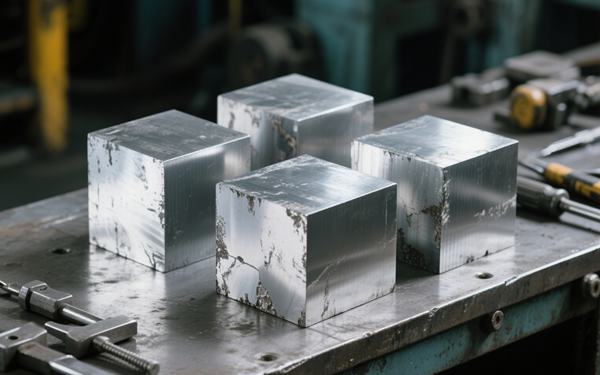
The advantages of investing in metal stocks lie in: rising metal demand driving growth potential, many companies paying above-average dividends, and helping to hedge against inflationary pressures. On the risk side, highly volatile metal prices directly impact earnings and stock prices; mine cost overruns or operational issues may hit stock prices; and the capital-intensive nature, if accompanied by excessive borrowing during economic downturns, may trigger financial problems. While pursuing returns, investors need to maintain close attention to the macroeconomic cycle and company fundamentals to balance risk and reward. The following three representative companies merit close monitoring.
Rio Tinto is a global diversified mining giant, with its core focus on the three major industrial metals of iron ore, aluminum, and copper, while its lithium business is rapidly expanding. As a global leader in aluminum, it operates high-quality bauxite mines, alumina refineries, and aluminum smelters, and has taken the lead in adopting low-cost, carbon-free hydroelectric power. In August 2026, the Australian government committed to providing up to $1.8 billion in funding to support the continued operation of the company’s Tomago aluminum smelter beyond 2028 and its transition to renewable energy.
Nucor is a North American diversified steel and steel products company, producing bars, sheets, beams, as well as fasteners, tubes, and other fabricated products, while also operating a leading scrap metal recycling business. Its core competitiveness lies in its focus on operating mini-mills that use electric arc furnaces to melt scrap steel—a process that is lower in cost than traditional blast furnaces and primarily uses natural gas rather than coal. As a company focused on recycled metals, Nucor is one of the lowest-cost steel producers globally and has partnered with Helion to develop a nuclear fusion power plant to supply zero-carbon electricity to its steel mills.
Its low-cost, environmentally friendly operating model enables Nucor to remain profitable under various economic conditions. By the end of 2025, the company had achieved its 53rd consecutive year of dividend increases, earning it the title of “Dividend King.” For investors seeking a low-risk steel manufacturer, Nucor, with its over-five-decade track record of dividend growth, can be considered an ideal choice.
Wheaton Precious Metals is one of the world’s largest metal streaming companies. Its business model involves providing upfront payments to mining companies to fund project development, in exchange for the right to purchase a portion of future production at fixed costs. Wheaton has a diversified portfolio of streaming agreements, with rights to purchase gold (accounting for 52% of revenue), silver (46%), palladium (0.7%), platinum (0.3%), and cobalt (1%) from multiple leading miners. Its agreements cover both producing mines and development projects, with the latter expected to boost gold-equivalent production by 50% before 2030.
This model provides a highly predictable cost structure—with total cash costs averaging $12.50 per ounce of silver and $650 per ounce of gold through 2030—while the company sells the metals at current market prices to capture the spread. With mid-2026 gold prices exceeding $4,400 per ounce and silver prices around $65, Wheaton is reaping substantial profits through its streaming agreements, providing ample cash for its dividends and investments in new projects. Its low-cost business model makes it highly attractive in the precious metals sector.