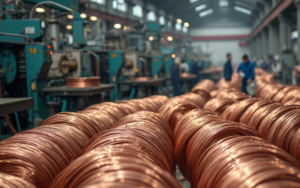

In an unprecedented move, Chinese polysilicon producers are reportedly in discussions to establish a RMB 50 billion ($7 billion) fund. This fund would serve the purpose of acquiring and subsequently shutting down approximately one-third of their current production capacity. The decision, as revealed by GCL Technology Holdings, the top dog in the industry, elucidates Beijing’s broader strategy in relation to green energy and the world markets.
Polysilicon, a key component in solar panels, has been a significant cog in the wheel of China’s green energy revolution. The country’s domination in the polysilicon market has been a result of their aggressive expansion strategies, yet, this has also led to an oversupply situation and dwindling profit margins. The proposed fund and the consequent shutdown is a strategic move to offset these economic pressures.
China’s five-year plans have historically held the blueprint to the country’s economic and social roadmap. In the recent 14th Five-Year Plan, the country has made clear its intentions to pivot towards sustainable energy sources, with polysilicon playing a crucial role. Furthermore, the SOE (State-Owned Enterprises) reform included the consolidation and restructuring of industries to improve efficiency.
While many in the West might view this move with skepticism, fearing China’s growing influence over the renewable energy supply chain, the strategic decision to consolidate the sector should not be viewed solely through a lens of paranoia. Indeed, it aligns with the country’s green development goals, streamlined efficiency, and improved profitability.
From an investor’s perspective, this move signals a mixed bag of opportunities and risks. On one hand, it could lead to increased stability in the sector and boost profitability. On the other hand, market disruptions and uncertainty could pose short-term risks.
Public sentiment, as captured by social media, has been divided. Some view this move as a necessary intervention to save the industry from its self-induced glut. Others, however, see it as a possible play to manipulate the market under the guise of sustainability. But given the complexity and strategic importance of the polysilicon industry, only time will reveal the true motivations and implications of this decision.
Investors and market analysts would be wise to keep a close eye on China’s execution of this ambitious fund. Any substantial progress could impact global solar panel prices and potentially shake up the renewable energy supply chain. More importantly, the unfolding of this situation would provide further insight into China’s energy policy and its global role.
In essence, China’s polysilicon strategy is more than an industry shakeup. It is a tangible manifestation of the country’s larger game plan – navigating the narrow path of economic pragmatism, environmental foresight, and global market dynamics. Whether seen as a pivot to sustainability or a calculated power play, one thing is clear – China’s energy strategy is well underway, and its ripple effects are bound to be felt across the world.