Stocks slumped after President Trump removed a Federal Reserve governor, a rare move that jarred traders already uneasy about the rate path. The Nasdaq Composite fell about 2.5% in afternoon trade, with the Dow Jones Industrial Average and S&P 500 also lower as investors priced in a higher political risk premium on monetary policy and tech multiples reset.
Fed shock collides with risk assets: Wall Street’s knee-jerk read is simple—policy independence questions mean more uncertainty around rates, and uncertainty is toxic for richly valued growth. The White House’s dismissal of a sitting Fed governor, while unusual, also lands as the central bank signals patience. Bloomberg reported officials may need several meetings to assess the economy’s trajectory, an implicit nod to higher-for-longer until the data force a pivot. In practice, that nudges discount rates up and price-to-earnings down, especially in long-duration tech. It also raises the odds investors demand a term premium in Treasuries to compensate for perceived political influence.
Rates repricing and the Fed path: Futures markets reflected a cautious reset, with traders walking back aggressive easing bets and leaning into a slower pace of cuts. Treasury yields pushed higher across the curve, tightening financial conditions at the margin right as megacap tech had begun to reflate. If the Fed leans more data-dependent and less inclined to pre-commit, the bar rises for dovish guidance at upcoming meetings. That’s consistent with officials signaling they need more time, particularly if labor remains resilient and inflation progress is uneven. A steadier or rising 2-year yield, the most policy-sensitive, is the tell for whether this shock sticks.
Tech takes the brunt as Nasdaq slides: CNBC’s live coverage framed the move squarely in rates—higher-for-longer weighs heaviest on high-growth names. The Nasdaq Composite’s 2.5% drop captured broad de-risking, with cloud, software, and semis underperforming into the headline whiplash. The biggest weights—Apple (AAPL), Microsoft (MSFT), Nvidia (NVDA), and Alphabet (GOOGL)—were hit as systematic sellers leaned on the tape and discretionary funds reduced exposure. The price action fits a familiar pattern: when policy uncertainty rises, volatility picks up, multiples compress, and liquidity thins in the afternoon, amplifying moves. Risk managers focus on reducing beta and VAR, not catching falling knives.
Dow and S&P 500 struggle for footing: The S&P 500 slid as cyclicals and defensives both wobbled, a sign the tape was driven by top-down risk rather than sector rotation. Financials got a fleeting bid from steeper yields before broader policy uncertainty overshadowed the benefit. Industrials and consumer discretionary lagged alongside tech, while utilities failed to attract the typical safety flows, another symptom of the rates shock. In a session like this, correlations go to one, and index-level selling begets more index-level selling. Under the surface, breadth deteriorated and new lows expanded, hinting that the day’s drop is more than a headline blip.
Market mechanics and the independence premium: Central bank independence is not an academic footnote for markets—it is embedded in asset prices. When investors question that buffer, they demand more compensation to hold duration and risk assets, which can reprice quickly through term premium, credit spreads, and equity volatility. A firmer dollar would be consistent with higher U.S. yields and a flight to liquidity, while gold’s reaction will signal whether investors see policy risk morphing into broader macro stress. For equities, the path of least resistance is lower until the Fed clarifies its stance and investors are confident governance isn’t encroaching on policy decisions. Clarity from Chair Jerome Powell would matter more now than numbers on the next CPI print.
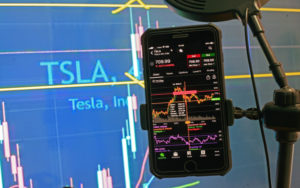
Tesla watch as TSLA hovers near buy levels: Amid the selloff, Tesla (TSLA) was back on screens for technical reasons, with shares hovering around a potential buy point flagged by chart watchers. That sets up a tension: higher rates compress growth multiples, but Tesla often trades on company-specific catalysts—production updates, margin trajectory after price changes, and autonomy milestones. If TSLA can hold relative strength against a falling Nasdaq, bulls will point to sponsorship and a base-building narrative. Bears counter that real rates and tighter financial conditions eventually weigh on consumer demand for big-ticket autos and capital-intensive manufacturing. The next move likely follows whether the stock can defend support with volume while the broader tape settles.
What to watch from the Fed and Washington: Markets will look for a swift response from the Federal Reserve to reassert its operating independence and outline how governance changes, if any, affect deliberations. Any public remarks from Powell or a timely release of meeting minutes could steady nerves by reinforcing a rules-based, data-dependent approach. On the political side, expect questions on the legal rationale for a governor’s removal and potential pushback from Congress, which could elongate the news cycle and keep a policy cloud over risk assets. If the Fed signals it will take “several meetings” to reassess the outlook, as reported, that keeps the door open to a slower easing path even if growth cools, a stance equities will keep discounting.
Next catalysts and the tape’s tolerance: Earnings from megacaps and banks, the next CPI and PCE prints, and auction results in Treasuries now carry extra weight. Credit spreads and investment-grade issuance will tell you whether risk aversion is idiosyncratic to equities or broader. Watch high-beta versus low-volatility factor performance; if low vol continues to outperform, the market is still in defense. Also keep an eye on market internals—advance-decline lines, new highs versus new lows, and the behavior of the equal-weight S&P 500. Sustained improvement there would indicate the selloff is a shock, not a trend. If not, sellers are in control until a catalyst resets the narrative.
Playbook in a headline-driven market: The temptation to react emotionally to policy drama is high, but liquidity matters most when volatility spikes. Seasoned managers avoid panic selling and stick to a framework—position sizing, risk limits, and predefined levels to add or reduce exposure. A rules-based approach reduces headline whipsaw. For fundamental investors, the key questions are unchanged: Is inflation still falling sufficiently to allow cuts without stoking risk premia, and will earnings growth outrun multiple compression if rates stay higher for longer? Until those are answered, expect wider intraday ranges, fast factor swings, and a market that rewards discipline over bravado. TSLA’s relative strength and the Nasdaq’s ability to reclaim levels will be the early tells that risk appetite is stabilizing.