
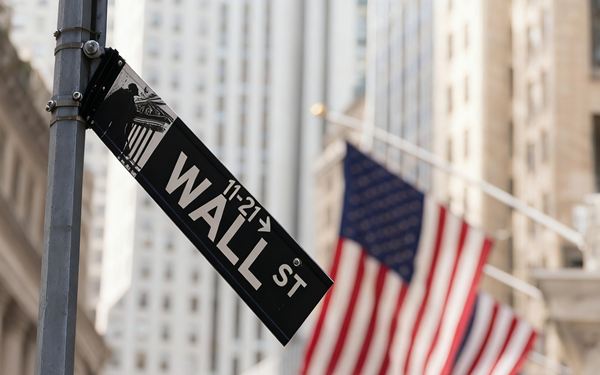
Despite solid gains in the S&P 500 this year, mounting evidence suggests the U.S. stock market rally may be on more fragile ground than Wall Street acknowledges. Multiple analysts have pointed to concerning signs that contrast sharply with the pervasive optimism in the market.
The economic impact of tariff policies remains a key concern. Analysts widely agree that tariffs will negatively affect trade, equities, and economic growth. As Michelle Gibley, an analyst at Charles Schwab, noted, the economic impact of higher tariffs is likely delayed, not eliminated.
Recession risks are also escalating. UBS recently estimated a 93% probability of a U.S. economic recession, while JPMorgan Chase and Goldman Sachs placed the odds at 40% and 30%, respectively. Some analysts who do not forecast a recession warn instead of stagflation—a combination of stagnant growth and rising inflation.
Market valuation metrics are flashing warning signs. The S&P 500 Shiller CAPE ratio stands at its third-highest level in history, and the Buffett Indicator (the ratio of total stock market capitalization to U.S. GDP) has reached a record 213%, far exceeding the 200% threshold that Warren Buffett once called “playing with fire.”
What’s puzzling is the clear disconnect between Wall Street’s recommendations and underlying fundamentals. Within the S&P 500, 405 stocks carry consensus “buy” or higher ratings, while only four have unanimous “sell” recommendations. Even more strikingly, among 44 stocks whose prices already exceed their 12-month target prices, 21 are still rated “buy.” Similarly, 22 of 40 companies with projected negative earnings growth over the next five years maintain “buy” ratings, and 39 of 64 stocks with expected annual earnings growth below 5%—lower than the current 4%+ yield on risk-free Treasury bills—also retain “buy” recommendations.
In light of these contradictions, Warren Buffett’s investment approach offers a valuable model. The legendary investor disregards Wall Street opinions, instead conducting independent research into business fundamentals, growth prospects, and valuations. Berkshire Hathaway has also built a substantial cash reserve—a strategy that may serve as a prudent example for ordinary investors given the current market risks.
Notably, Buffett is not panicking. He holds dozens of stocks, many of which he intends to keep regardless of market fluctuations, believing that a well-diversified portfolio will yield positive returns over the long term.
Whether or not the market faces imminent decline, Buffett’s cautious strategy remains a wise reference for investors. When Wall Street’s recommendations increasingly diverge from key risk indicators, independent thinking may prove far more valuable than blind conformity.