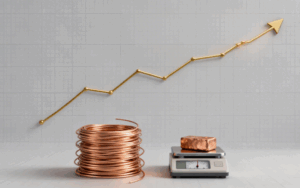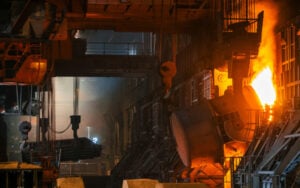
Phoenix Tailings says it has commissioned one of the first U.S. rare earth metallization plants built without Chinese equipment or inputs. Initial nameplate is 200 tons per year of metal, with expansion plans to 1,000-plus tons. The facility starts with NdPr and a dysprosium-iron alloy, with a roadmap to other light and heavy rare earth metals. That matters because metallization is the underbuilt link between separated oxides and finished magnet materials. It is also where most Western supply chains still depend on China. The strategic intent is clear. The harder questions are feedstock, qualification, energy costs, and heavy rare earth sourcing.
The rare earth chain runs mine to concentrate to separated oxides to metal to alloy to magnet. Most Western efforts over the last decade focused on mining and separation. Metallization, the conversion of oxide to metal, has lagged. Commercial routes include electrolytic reduction in high temperature fluoride or chloride salts and metallothermic reduction using calcium or magnesium. These are energy intensive, corrosive chemistries that demand tight control of oxygen and impurity levels. If a company cannot repeatedly hit low ppm impurity specs, magnet makers will not qualify the metal. China built scale and institutional knowledge in this step because it co-located separation, metal, and magnet capacity. A domestic metal plant cuts lead times, lowers logistics risk, and allows U.S. customers to audit and trace product. That can be decisive for defense buyers and auto OEMs as compliance pressure rises.
The 200 ton run-rate is a starting block, not a destination. Global NdPr oxide demand sits in the tens of thousands of tons per year. Metals are a subset after processing losses. U.S. consumption is only a slice of that global pie, but still several hundred to a few thousand tons of magnet-grade rare earth metals across autos, wind, electronics, and defense. In that context, 200 tons is a small but relevant notch, especially for critical defense-grade alloys where absolute tonnage is modest but purity and traceability standards are high. If Phoenix reaches 1,000-plus tons per year, the facility becomes more than a boutique supplier. It would be material for domestic magnet programs ramping in vehicles and grid-scale turbines. The company will need to demonstrate sustained throughput, consistent yields, and tight specifications through independent qualification. Those are the numbers that convert a headline into bankable capacity.
The claim of zero reliance on Chinese inputs, equipment, or technology will draw investor attention. The easiest piece to validate is equipment. Building reactors and power systems outside China is feasible. The harder piece is input oxides. For NdPr, non-China supply is increasing. MP Materials produces separated NdPr oxide in the U.S., and Lynas ships NdPr oxide from Australia and Malaysia. Monazite-based flowsheets in North America, such as heavy mineral sands byproduct programs, are adding mixed rare earth carbonate and oxides. That can support light rare earth metal production. Heavy rare earths are the challenge. Dysprosium and terbium have come predominantly from Chinese and Myanmar ionic clay deposits. Non-China options are limited and early stage. If Phoenix is making DyFe alloy at scale without Chinese feed, it will need either domestic heavy rare earth streams, allied supply from projects in Australia or Africa, or recycled material. Securing those contracts at stable pricing is the key de-risking step. Without them, metallization capacity idles or pivots to a narrower product slate.
Dysprosium and terbium are added to NdFeB magnets to increase coercivity at high temperatures. EV traction motors and some defense systems require this performance. On the geology side, heavy rare earths are enriched in ionic adsorption clays formed by weathering in subtropical climates. That is why supply is concentrated in southern China and Myanmar. These deposits are mined by in-situ leaching techniques that historically raised environmental concerns, prompting regulatory shifts and intermittent shutdowns. When Myanmar border closures or inspections hit, dysprosium oxide prices move. That volatility feeds into magnet alloy costs. Until non-China ionic clay projects or alternative recovery routes mature, any U.S. producer offering Dy-containing alloys must either rely on a fragile supply chain or lean on recycling. Investors should track where Phoenix will source dysprosium and terbium oxides, what purity grades, and on what contract terms. Long-dated, take-or-pay deals with allied producers would be a positive signal.
Metallization economics are not driven by geology but by process efficiency. Core levers include power prices, current efficiency, salt and reductant consumption, metal recovery, and rework rates. Business models range from tolling, where the customer provides oxide and pays a fee per kilogram of metal produced, to merchant sales where the operator buys oxide and sells metal at a premium. Tolling reduces working capital and price risk. Merchant sales can expand margin when oxide-metal spreads are favorable but add inventory risk. Either way, customers will require multi-batch qualification with tight impurity control and lot-to-lot consistency. That takes months, sometimes more than a year, for auto or medical device chains. Power contracts matter too. Electrolytic reduction gets expensive on volatile grids. Location near reliable, lower-cost electricity is a competitive edge. If Phoenix can publish stable mass balance, yield, and energy intensity data as it ramps, it will help investors underwrite cash cost per kilogram and potential margin.
The company says its Exeter facility can supply the entire U.S. defense industrial base at scale. That is plausible on tonnage for specific alloys if the expansion happens, but only if the qualification and contracting follow. U.S. policy is supportive. The Department of Defense has funded rare earth separation and heavy rare earth programs with Title III tools. Buy American and Defense Federal Acquisition Regulations can favor domestic content. Defense offtake agreements, even at modest volumes, can de-risk the capital plan, support working capital, and set a price floor. Automotive and wind customers are larger volume but slower to qualify and more price sensitive. A split portfolio that anchors defense while onboarding commercial buyers is realistic. The company’s roadmap to add terbium, samarium, and other metals broadens addressable markets, but each new metal requires new process controls and client qualification. Investors should look for signed offtakes, not just MOUs, and clarity on any government grant or loan support tied to milestones.
Supply concentration is not just a rare earth story. Kazakhstan produces about 28 percent of global uranium and has relied on partnerships to manage offtake and technology transfer. When a single jurisdiction dominates a critical mineral, market and policy risk go up. That is the argument for U.S. metallization capacity. The funding backdrop is less cooperative. Junior miners and processors are facing a tight capital market. A number of issuers are pivoting away from operating risk into investment-company models to preserve value, as seen with Winchester Mining’s application to change status. In this environment, assets closer to cash flow, with clear policy tailwinds and lower geology risk, can still raise capital. Processing plants that solve bottlenecks fit that bill better than early-stage exploration. Yet history shows that downturns push consolidation. Larger strategics may opt to buy rather than build once they see qualified output, echoing late-1990s patterns. That can be an exit, but it also imposes discipline on early investors to demand milestones before writing checks.
Four items will determine whether this plant resets the U.S. curve or becomes a niche supplier. First, feedstock. Track signed supply contracts for NdPr and heavy rare earth oxides from non-China sources, with volumes and tenors. Second, qualification. Look for announcements from magnet makers, auto OEMs, or defense primes confirming qualified metal and alloy. Third, operating data. Evidence of sustained 200 ton annualized throughput, energy intensity, yields, and on-spec rates will validate the cost model. Fourth, financing and policy. Any Defense Production Act funding, state incentives, or loan facilities that support the 1,000 ton expansion will reduce execution risk. Context also matters. Parallel U.S. efforts in separation and magnet manufacturing must scale in sync to capture the full value chain. If those links align, metallization capacity like this can convert policy into industrial output. If they do not, metal inventory will pool without downstream pull, and spreads will compress. The stakes are clear, and the next six to twelve months of contracts and commissioning data will tell the story.