

Prismo Metals Inc. (CSE:PRIZ)
A leadership team with a proven ability to explore, operate and develop precious metal discoveries.
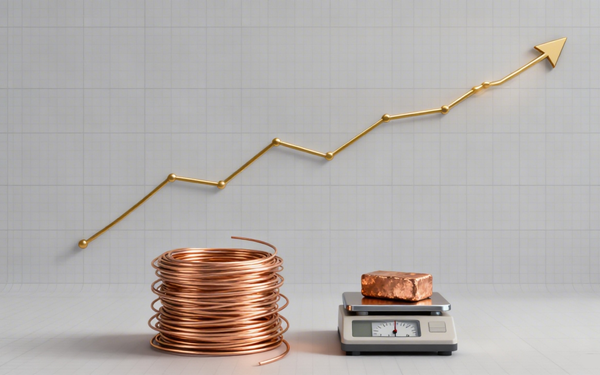
A triple dose of bullish catalysts—deadly storms in Chile, Codelco’s abandonment of its production targets, and a shift to backwardation in LME spreads—sent New York copper prices surging nearly 3% on Thursday, bringing them within striking distance of the all-time highs set in early June.
The most-active Comex copper contract for September delivery jumped as much as 2.9% intraday to $6.4930 per pound, and was still up 2.2% by late morning, trading at $6.4515 per pound (approximately $14,224 per tonne). So far in 2026, copper has rallied more than 14%, and Thursday’s high left it just about 2.5% below the historic peak of $6.60 per pound reached in early June. On the London Metal Exchange, three-month copper gained 1.3% to $13,753 per tonne in afternoon trading, with the U.S. premium over the global benchmark widening to roughly $470 per tonne.
Physical Market Tightness Signals Multiply
Signs of tightening in the physical market are accumulating rapidly. LME nearby contracts shifted to a premium of about $24 per tonne over three-month futures—a condition known as backwardation that typically signals near-term scarcity—after spending most of the year in a discount structure. At the same time, LME-registered warehouse inventories have fallen by more than 10,000 tonnes this week to 262,300 tonnes, while China’s copper import premiums last week surged to their highest levels since 2022.
Supply-side problems are also piling up. Codelco, the world’s largest copper producer, this week effectively abandoned its long-held goal of restoring output to pre-pandemic levels. New chairman Bernardo Fontaine stated there is “no possibility” of reaching the previous target of 1.7 million tonnes within five years, warning of another difficult year ahead for the mining giant, which in March guided 2026 production of no more than 1.357 million tonnes. Deadly storms that swept Chile this month have added to disruptions, and the International Energy Agency has warned that sulphuric acid shortages now put more than one-seventh of global output at risk. The most anticipated relief on the horizon comes from Panama, where First Quantum’s Cobre Panama mine is gathering momentum toward a restart.
Fed Splits, China Holds Back
On the macroeconomic front, the Federal Reserve left interest rates unchanged on Thursday as expected, though the decision was not unanimous—three of the 12 policymakers favored a quarter-point hike to hedge against inflation risks fueled by the U.S.-Iran conflict. Higher borrowing costs typically weigh on growth and demand from metal-consuming industries, and base metals traded cautiously ahead of the meeting.
In China, top officials struck a more supportive tone on the economy at Thursday’s Politburo meeting but stopped short of announcing fresh stimulus measures. A package of spending on manufacturing and consumption would be a boon for industrial metals, yet the world’s largest consumer has so far held back despite an abrupt economic slowdown.
Earnings Season Boosts Mining Stocks
Copper miners rallied broadly in New York morning trading, as the earnings season showcased the robust profit margins generated by elevated copper prices. Teck Resources rose as much as 6.1%, matched by its merger partner Anglo American, which reported first-half results buoyed by record copper prices and raised its dividend. Glencore gained as much as 4.6% after reporting a 15% increase in first-half copper output, while Freeport-McMoRan climbed as much as 4.1% and Southern Copper advanced 3.7%. Rio Tinto, which posted its best first-half earnings in four years on its growing copper exposure, added as much as 3.3%, while BHP rose 3% at its intraday high.
Looking at the broader picture, most LME metals are heading for modest monthly gains in July, as tight physical markets continue to offset macroeconomic and geopolitical headwinds. Comex copper is on track for a monthly gain of approximately 4%.