
1911 Gold Corporation (TSXV: AUMB; OTCQX: AUMBF)
1911 Gold is Manitoba’s Gold Standard - Ready, Permitted and High-Grade 1911 Gold is an Emerging Gold Producer, with Significant Cash Flow Generation and District-Scale Growth Potential
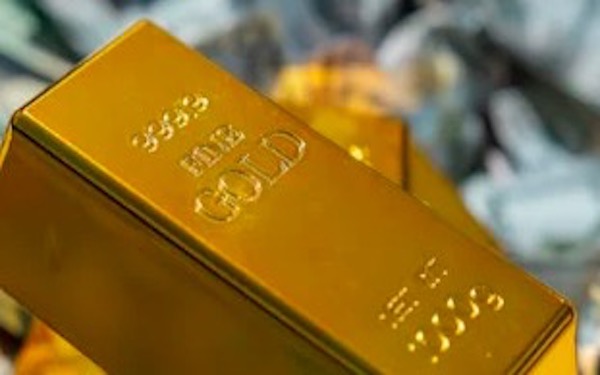
As of the end of November 2025, the gold market is exhibiting complex dynamics under the influence of multiple key factors. Although it may maintain a volatile pattern in the short term due to uncertainty surrounding the Federal Reserve’s policy path, many institutional analysts believe its long-term structural bull market foundation remains solid. The key drivers determining the next price direction are primarily focused on monetary policy, the US dollar, asset allocation rotation, and underlying geopolitical logic.
The direction of the Federal Reserve’s monetary policy, especially the interest rate path, is the most critical variable for the current gold market. Sameer Samana of Wells Fargo Investment Institute pointed out that the Fed’s policy focus has clearly shifted from curbing inflation to concerns about the labor market. Even with inflation still hovering above 3%, market expectations for rate cuts have become very strong, creating an extremely favorable environment for gold.
The warming expectations for rate cuts directly lower real interest rates. For non-yielding assets like gold, the opportunity cost of holding it decreases accordingly. Samana emphasized that as rates come down, especially real interest rates, that will put a bid under gold. Roukaya Ibrahim of BCA Research also shares this view, believing that even if the Fed holds steady in December, its baseline scenario of continuing rate cuts next year will lead to lower real rates, which is positive for gold.
Meanwhile, the long-term outlook for the US dollar is another pillar supporting gold. Samana analyzed that the US dollar index previously plummeted nearly 15% from a high of 110 down to 96, and the subsequent rebound was weak at only 3%-4%, which is a negative signal. He expects that over the next 12 to 15 months, the dollar will at best move sideways, unlikely to regain strength. A weaker dollar makes dollar-denominated gold cheaper for overseas buyers, thereby boosting demand.
Behind the dollar’s weakness lies the deeper global trend of “de-dollarization.” Samana noted that since the Russia-Ukraine conflict and related sanctions in 2022, central banks worldwide have been rethinking the allocation of US dollar assets in their foreign exchange reserves. This trend continues under the new administration’s differentiated policies. The ongoing gold purchases by central banks to diversify risks provide a solid and lasting “structural underpinning” for the gold market.
Besides interest rates and the dollar, bonds struggle to serve as traditional safe havens in a high-inflation environment, and the attractiveness of former alternatives like cryptocurrencies (e.g., Bitcoin) has declined in the past 6-12 months, which also benefits gold.
While the boom in AI-related tech stocks previously attracted global capital into US dollar assets, Samana believes “AI now is a global play.” Funds are no longer concentrated in the US but are flowing into related equities in other regions like Taiwan and South Korea. This reduces the relative attractiveness of the US market and increases uncertainty for global investors. In this context, gold, having “stood the test of time,” becomes the preferred asset to fill the diversification gap.
However, precious metals still face short-term challenges, particularly concerns that economic slowdown could suppress silver more than gold, as silver has significant industrial demand components.
In summary, as of the end of 2025, signals from Fed policy will be the direct catalyst for a price breakout, while the long-term bullish narrative is built on a solid foundation of a commencing rate-cutting cycle, a trend of US dollar weakness, global geopolitical uncertainty, and sustained diversification by central banks and investors. Samana pointed out that gold’s outperformance trend relative to stocks has lasted nearly four years. This quiet shift may well signal gold’s enduring appeal in the new macroeconomic environment. As long as these structural factors persist, the next strong rally in gold is merely a matter of time.