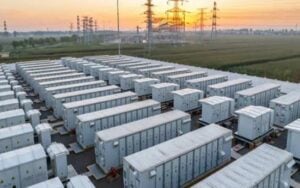
Emerson’s selection to automate Lithium Americas’ Thacker Pass is more than a vendor win. It is a process-risk decision at the core of a multibillion-dollar US lithium supply project. For investors, the key question is whether integrated controls, instrumentation, and reliability systems can shorten a difficult ramp-up for a clay-hosted flowsheet at commercial scale. The short answer: the right automation partner improves startup odds and operating consistency, but it does not erase the fundamental risks embedded in ore variability, sulfuric acid balance, and battery-grade product qualification.
Lithium Americas is aligning with a full-stack automation architecture—field instruments, distributed control system, safety systems, valves, and reliability tools—backed by local service through Caltrol. This reduces interface risk across mining, leaching, solid-liquid separation, impurity removal, and crystallization. One vendor accountable for the signal chain from sensor to actuator to historian lowers commissioning friction, speeds troubleshooting, and standardizes control narratives. In projects with high reagent intensity and tight purity specs, that coherence matters. Automation coverage is not incremental; it is central to managing process stability in a complex plant that must hit battery-quality carbonate specs consistently while keeping sulfuric acid consumption, energy use, and scaling under control.
Thacker Pass targets lithium from claystone—mined, crushed, slurried, and leached with sulfuric acid. The flowsheet then depends on thickening, filtration, impurity removal (magnesium, calcium, aluminum), and final precipitation or crystallization. Clay rheology can be problematic: fine particles cause high viscosity slurries, scaling surfaces foul heat exchangers and pipes, and filtration rates can bottleneck throughput. Variability in mineralogy drives swings in acid consumption and recovery. Advanced control—tight pH, density and temperature control, model predictive control for leach kinetics, and asset performance monitoring for filters, pumps, and crystallizers—can dampen variability and reduce unplanned downtime. But the physics of the ore remains the gating factor. If feed variability or scaling exceeds design assumptions, automation optimizes around constraints; it does not remove them.
Thacker Pass Phase 1 is designed for up to 40,000 tonnes per year of battery-grade lithium carbonate. Building to that scale in a first-of-kind US clay operation is capital intensive and time consuming. Key cost drivers are elemental sulfur for acid, lime and soda ash for neutralization and impurity control, power and steam (often integrated with the acid plant), water handling, and tailings management. Ramp-ups for complex hydromet plants typically run 18–36 months from first ore to sustained nameplate, with early months defined by intermittent operations as teams de-bottleneck thickeners, optimize residence times, and dial in crystallizer controls. Investors should expect stepwise increases in availability and recovery rather than a straight line to 40,000 tpa. The economics are extremely sensitive to recovery and acid consumption; a five-point recovery miss or a steepening in sulfur use materially shifts cash costs.
US policy is tailwind, but it comes with conditions. Lithium Americas previously secured a conditional commitment from the US Department of Energy’s Loan Programs Office for a large debt package designed to anchor Phase 1. Conditional means milestone and covenant compliance through construction and commissioning. General Motors’ prior equity and offtake framework helps, providing demand visibility and a potential price floor via index-linked contracts, but qualification to battery-grade and consistent delivery still govern revenue. With lithium prices well below the 2022 peak, financing discipline matters: drawdowns depend on engineering progress, contingency headroom, updated cost estimates, and EPC performance. Any slippage in schedule or capex creeps back to equity holders unless offset by scope reductions or improved terms.
Thacker Pass relies on a sulfuric acid plant, typically fed with elemental sulfur and integrated to generate steam and power. That design is standard for acid-intensive hydrometallurgy, but it introduces its own reliability and logistics exposures. Elemental sulfur supply in North America tracks refinery and smelter output and logistics capacity; price and availability can tighten when refinery maintenance, crude slate shifts, or transportation constraints hit. Operating the acid plant safely requires robust burner controls, interlocks, and emissions monitoring—areas where Emerson’s safety systems and control logic are designed to add resilience. Water balance is another critical constraint in Nevada. Thickening, washing, and evaporation must be tuned to minimize freshwater draw and manage tailings stability. Automation can monitor and optimize the water circuit, but geological and climatic realities set the boundaries. Investors should watch for updates on sulfur sourcing contracts, rail or trucking commitments, and water permits—these are determinative for unit costs.
The first credible proof point is mechanical completion of the leach, separation, and crystallization circuits, followed by cold and hot commissioning through a defined sequence. After first lithium carbonate, the gating qualification is meeting impurity thresholds demanded by cathode and cell makers on a sustained basis. Expect a sampling regime tied to off-taker protocols, with possible reprocessing or blending in early quarters. Hard metrics to watch: leach recovery against design, sulfuric acid consumption per tonne of ore, filtration rates versus nameplate, overall plant availability, and the share of output meeting battery-grade specifications. Soft signals include spare parts inventory health, mean time between failures on rotating equipment, and whether the control room is executing stable advanced control strategies versus manual workarounds. Caltrol’s local service center should shorten repair cycles; if downtime remains elevated, the issue is likely process or mechanical, not controls.
Project NPV and leverage turn on where Thacker Pass lands on the cost curve once stabilized. Clay-based operations generally sit above the lowest-cost South American brines but can compete with many hard-rock converters if acid balance is efficient and recovery is high. With spot and contract prices well below 2022 extremes, economics depend on conservative price decks and disciplined opex. Domestic sourcing may capture premiums tied to Inflation Reduction Act incentives and logistics savings into US cathode plants, but those premiums are not guaranteed and will ebb as supply normalizes. If costs land in the second quartile and offtake is robust, the project can be resilient in a mid-cycle price environment; if sulfur costs, water constraints, or lower-than-planned recoveries push opex up, free cash flow leverage compresses quickly. Automation reduces variance and keeps the plant closer to its design curve—that is worth real value—but it is not a substitute for metallurgical performance.
Securing end-to-end control of a domestic lithium operation—from mine through chemical conversion—advances US supply chain goals. A successful Thacker Pass adds scale near US cathode and cell manufacturing, shortens logistics, and reduces exposure to conversion capacity in China. It also sets a precedent for clay-hosted lithium at commercial scale in North America. That said, the US supply picture will still be diversified: brines in Argentina and Chile, hard-rock spodumene shipped from Australia for US conversion, and potential recycling volumes all compete. Thacker Pass can become a cornerstone asset, but the broader supply-demand balance and price trajectory will determine how much of a margin umbrella it enjoys.
Across the junior space, recent items echo a familiar pattern. High-grade drill intercepts, like those reported from gold-silver veins in Nicaragua, confirm down-dip extensions and keep systems open at depth and along strike—positive geology, but still early in the de-risking path that must move from grams-per-tonne headlines to resource growth, metallurgy, and mineability. Option deals that allow partners to earn into large property packages by funding exploration distribute technical risk and conserve cash, but the clock on expenditures can force drilling into tight windows. Bought-deal financings for PFS-stage projects show there is capital for coherent stories with realistic studies, yet warrants and pricing indicate investors still demand upside to offset long timelines. The takeaway is consistent: juniors can and do create value, but it is milestone-driven and volatile. Apply the same filter to Thacker Pass—credit the de-risking that full-scope automation provides, but anchor expectations to metallurgical performance, logistics execution, and balance sheet flexibility through commissioning.