Although the current robotaxi industry remains small in scale, the market is expected to experience explosive growth over the next several years. Tesla (TSLA) has rapidly emerged as a competitor that cannot be overlooked, and forecast data from major institutions clearly reveal why the market holds such strong enthusiasm for its prospects.
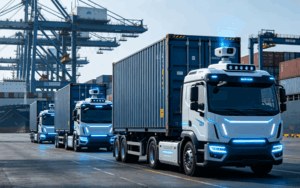
Goldman Sachs’ latest estimates show that the global robotaxi market will reach $415 billion by 2035, with the U.S. market accounting for approximately $48 billion. More notably, autonomous trucking businesses will add even more room for imagination to this figure. The bank projects that autonomous trucks in the U.S. will achieve a per-mile cost lower than human-driven trucks by 2028, and the global autonomous trucking market could reach $560 billion by 2035.
Interestingly, unlike many studies on long-term growth opportunities that tend to overestimate near-term growth, Goldman Sachs’ forecasts for robotaxis have shown a reverse adjustment. The bank previously projected the robotaxi market to reach $7 billion in 2030, but has recently had to raise that figure to $19 billion—an adjustment that is hardly insignificant.
Most robotaxi competitors do not fully control their own production processes and must rely on a large number of third-party suppliers to manufacture the vehicles they need. This year, Tesla has offered robotaxi services at prices far below those of its competitors, and preliminary data have already revealed its advantages. Data from the San Francisco market show that the average price per ride for Tesla’s autonomous service is only $8.17, nearly half of Lyft’s average of $15.47 and well below Waymo’s significantly higher rates. Other studies have similarly estimated that Tesla’s robotaxi fleets operate at a substantially lower per-mile cost than major competitors. While an aggressive pricing strategy may currently serve more for data collection than purely structural cost advantages, it still reflects, to some extent, Tesla’s ability to control costs and endure short-term losses in exchange for long-term competitiveness.
Artificial intelligence will play a decisive role in the large-scale deployment of robotaxis. Some of Tesla’s competitors possess substantial budgets and mature AI divisions—for instance, Alphabet’s Waymo is well-funded and technologically advanced—but other competitors, such as Uber Technologies, have notable shortcomings in accessing next-generation AI technologies.
As AI’s critical role in advancing autonomous driving technology becomes increasingly prominent, Tesla’s massive investment in AI and its co-ownership of xAI (SpaceX’s AI division) constitute a genuine competitive advantage. Industry experts generally agree that AI is the foundation for achieving full autonomous driving and operating robotaxi fleets. Automotive technology supplier Valeo emphasizes that without AI, vehicles cannot detect, classify, or predict the intentions of other road users in real time—capabilities that are fundamental to safe autonomous driving.
From multiple perspectives, Tesla can already be considered one of the world’s largest AI-concept stocks. Should it achieve integration with another AI giant, SpaceX, in the future, its advantages in capital access and technology admission will be further consolidated, laying a solid foundation for its dominance in the robotaxi market.