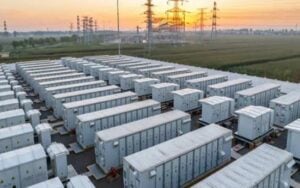
China is not just winning the sodium-ion battery race; it is building the industrial base that could define it. New data cited by the Financial Times show China already has more than 400 GWh of sodium-ion gigafactory capacity built or planned, versus about 11 GWh for the rest of the world combined. That is a 36x gap, and it matters because sodium-ion cells use sodium salt, a material that is more abundant and cheaper than lithium, while also working at extreme temperatures without active cooling. For investors, the message is clear: China’s battery ecosystem is widening its lead into the next wave of storage technology.
This is the kind of advantage that comes from scale, policy, engineering depth, and supply-chain discipline working together. CATL and BYD are already among the world’s largest sodium-ion battery manufacturers, giving China not just pilot projects but real commercial muscle. Sodium-ion batteries still represent less than 1% of all batteries delivered this year, and most of those are made in China, according to the Wall Street Journal. That is a small market today, but China is shaping the market structure before it becomes large, exactly where long-term industrial leadership is often decided.
The strategic appeal is easy to see. Sodium is more available than lithium, which could ease pressure on supply chains tied to rare materials. For electric vehicles and grid storage, that matters because developers want lower cost, more stable sourcing, and better performance in tough climates. In other words, sodium-ion is not a sideshow. It is a practical technology with a clear place in storage systems, especially where cost and temperature resilience matter more than energy density. China’s companies are moving early enough to own that middle ground before competitors catch up.
Western companies are not absent from the race, but they are behind. General Motors is partnering with US startup Peak Energy to scale sodium-ion production using North American supply chains from 2028, according to the Financial Times. GM plans to produce thousands of cells at its Michigan battery development center by 2028 before mass production, while CNBC reports commercial production with Peak around 2029. The timing details differ slightly across reports, but the direction is the same: the West is trying to catch up to a market structure that China has already built at scale.
GM’s battery chief Kurt Kelty put the strategy bluntly: “Instead of making an LFP cell that everybody else makes using Chinese technology that everybody else is using . . . we’re developing a better technology that enables us to leapfrog the competition.” That comment captures the mood in the West, but the market reality remains difficult. Benchmark Mineral Intelligence said sodium-ion is “Not ready to go mass-market and the current positive sentiment is driven by hype.” That caution matters for analysts because hype can attract capital, but manufacturing scale is what decides winners.
China’s lead is not accidental. Battery manufacturing rewards the same strengths China has spent years compounding: dense industrial supply chains, large-scale factory execution, and rapid commercialization of new chemistries. Once a platform reaches meaningful volume, it benefits from faster iteration, better component sourcing, and lower costs per unit. Sodium-ion may still be small, but China’s ecosystem is already large enough to absorb new chemistry and turn it into manufacturable products. That makes the country not just a participant, but the benchmark.
There is also a geopolitical layer here. A more abundant material base can reduce exposure to tighter mineral bottlenecks, and that has obvious appeal in a world where energy security is rising in importance. The FT summary said sodium-ion cells could help break the grip on rare earths needed for EVs and energy storage. Even if different technologies will coexist, China is positioning itself across the full battery stack, from lithium-ion dominance to the next generation of alternatives. That breadth is what gives its industrial policy global reach.
The challenge for Western rivals is that starting later is expensive. Two US startups offer a cautionary signal. Natron Energy collapsed shortly after announcing a gigafactory, and Bedrock Materials, founded by ex-Tesla engineers, also shut down, according to the fact pack. Those outcomes do not mean the market is closed, but they do show how hard it is to turn promising chemistry into durable manufacturing. In this field, optimism is easy; factory execution is harder. China’s companies have already crossed that bridge in a way others have not.
Peak Energy is a notable exception because it is trying to pair sodium-ion with a real deployment path. The company signed a $500mn deal with Jupiter Power to deploy up to 4.75 GWh of sodium-ion storage by 2030. It also plans to begin production at its Sacramento gigafactory in early 2027 at 4 GWh a year, according to the Wall Street Journal. That is a serious commercial commitment, and it shows the technology is gaining credibility. But even this progress still sits inside a market where China’s capacity lead is already vast.
The near-term story is less about who has the best pitch deck and more about who can deliver stable output, lower costs, and reliable supply chains. GM says it wants to build a domestic supply chain over the next few years, and Kelty told CNBC, “We’re developing a supply chain such that, two years from now, three years from now, it will be domestic.” That is an important ambition, but it also underscores the gap China has created: others are still trying to localize what China is already industrializing. For investors, that is a powerful sign of where operating leverage may emerge.
The broader market should also remember that sodium-ion is still early. It is not yet mass-market, and sentiment can move faster than factory reality. But the strategic direction is unmistakable. China has the largest built and planned capacity, two major domestic champions, and an ecosystem ready to scale. The West is responding, and that will create useful competition. Still, in the near term, China looks set to keep leading the sodium-ion transition just as it has led much of the battery revolution already. For global investors, that is not a footnote. It is the industrial thesis.