

American Tungsten Corp. (TSXV: TUNG, OTCQB: DEMRF)
Building America’s Defense Critical Metals Supply
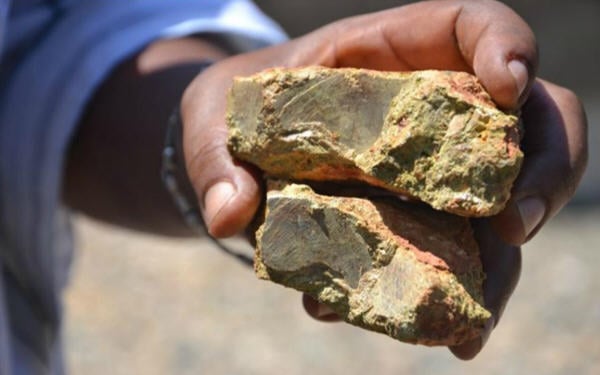
At the Mountain Pass mine in California, rare earth miner MP Materials (MP) is attracting capital market attention with its unique control over rare earth resources. Dubbed the “Nvidia of the rare earths industry”, this mining company has seen its stock price surge 350% year-to-date. However, whether it can replicate Nvidia’s market cap miracle requires in-depth analysis from multiple perspectives.
MP Materials’ core advantage lies in its ownership of the only scaled rare earth mine in the United States: The Mountain Pass mine is one of the few high-quality deposits rich in neodymium-praseodymium (NdPr) oxide, a key raw material for manufacturing high-performance magnets.
On the policy front, the Trump administration has announced a $400 million investment, and the Pentagon has committed to purchasing its NdPr products at a floor price of $110/kg (a 40% premium over market prices). Against the backdrop of China-US trade frictions, the company is accelerating the construction of its own refining and magnet manufacturing capacities, striving to break free from dependence on Chinese processing stages.
However, unlike Nvidia’s capital-light model, MP Materials is experiencing the growing pains of heavy asset expansion. The company’s current annual capacity is only 1,000 tons, although the under-construction 10X facility is expected to reach an annual target of 10,000 tons by 2028. Apple has announced a $500 million investment to expand its Texas magnet factory and has committed to purchasing US-made recycled magnets starting in 2027. It must be noted, however, that despite an 84% year-over-year revenue increase in the second quarter, the company remains in a loss-making state, with capital expenditures as high as $1 billion.
Fundamental Differences with Nvidia
Although both provide key technological components, their business models are fundamentally different. Firstly, Nvidia maintains gross margins consistently above 70%, while mining companies typically face price cyclicality. Secondly, Nvidia has built its moat through chip architecture patents, whereas MP Materials’ competitive advantage stems more from resource endowment and policy protection.
Objectively speaking, the perspective that compares MP Materials and Nvidia is largely based on framing MP Materials’ potential around three key pillars:
Demand explosion: Annual growth exceeding 15% for high-performance magnets from electric vehicles and wind power equipment.
Supply chain restructuring: China controls 90% of global rare earth processing capacity, and geopolitics is driving supply chain reorganization.
Technological breakthrough: The rare earth recycling technology the company is developing could reduce reliance on raw ore.
However, investors need to be wary of the following risks: new factory production timelines falling short of expectations, cyclical corrections in rare earth prices, and potential easing of Sino-US trade relations.
Conclusion: A Unique Investment Proposition, Not the Next Nvidia
MP Materials represents a unique investment thesis: a resource-based company benefiting from geopolitical restructuring. Its value is reflected more in its strategic positioning than in technological monopoly. For investors who can withstand cyclical volatility and are optimistic about supply chain localization, this company offers a window to participate in the development of the rare earth industry. But those expecting it to replicate Nvidia’s exponential growth may need to re-examine the distinctly different development dynamics of the mining and technology sectors.
In a nutshell, MP Materials is more like a product of a specific historical period. Its success depends both on its own execution and, even more so, on the macro backdrop of major power rivalry. Under the dual narratives of the new energy revolution and supply chain security, MP Materials is undoubtedly a stock worth watching closely.