Tesla (TSLA) has recently demonstrated robust stock performance, with its market value approaching the top echelons of the industry. This reflects the market’s exceptionally high expectations for its cutting-edge projects such as autonomous robotaxis and robotics. Investors are betting that the company’s future will pivot from selling household electric vehicles to more disruptive areas like autonomous driving networks and the humanoid robot Optimus. However, the support for these long-term visions still relies on the cash flow generated by its core automotive and energy businesses. Currently, the company is facing the dual challenges of slowing growth and rising costs. Its operating profit margin for Q3 2025 contracted significantly year-over-year, indicating pressure on its current profit foundation. Tesla’s valuation has already largely incorporated its future profit potential. This means that even if the company makes exceptional progress in its business, the stock price may lack upward momentum due to overly high expectations already being priced in.
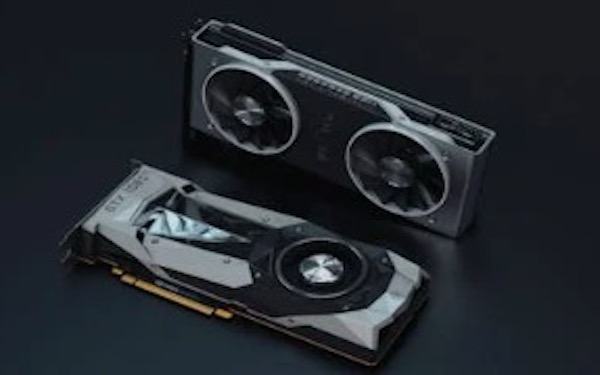
Unlike Tesla, Nvidia (NVDA) has successfully translated its first-mover advantage in the field of Artificial Intelligence (AI) into tangible financial performance. Its business focus has shifted towards providing GPUs and full-stack solutions for data centers, capturing the core demand of the AI wave. Despite facing competition from AMD, Broadcom (AVGO), and self-developed chips from companies like Alphabet (GOOG), which may pose challenges to its long-term profit margins, Nvidia has established formidable competitive barriers. The company possesses an excellent balance sheet and ample free cash flow, which fuel its sustained high-intensity research and development investments. In terms of product iteration, Nvidia demonstrates a capability for rapid evolution. Following the Blackwell architecture, it has already planned the launch of the Rubin series GPUs based on more advanced process nodes to solidify its technology leadership.
From an investment perspective, the valuation logic of the two companies differs significantly. Tesla’s price-to-earnings ratio far exceeds that of Nvidia, with its stock price largely built on expectations for the successful future commercialization and profitability of its technologies, carrying a higher speculative attribute. In contrast, Nvidia’s valuation level appears relatively more reasonable and is backed by strong existing profits and cash flow. For investment positioning in 2026, Nvidia presents a clearer risk-reward ratio. It is already a high-margin cash cow business with the capability to navigate competition and maintain its industry position. Tesla, on the other hand, needs to achieve a critical leap from concept to large-scale profitability, and any progress falling short of expectations could lead to stock price volatility.