

American Tungsten Corp. (TSXV: TUNG, OTCQB: DEMRF)
Building America’s Defense Critical Metals Supply
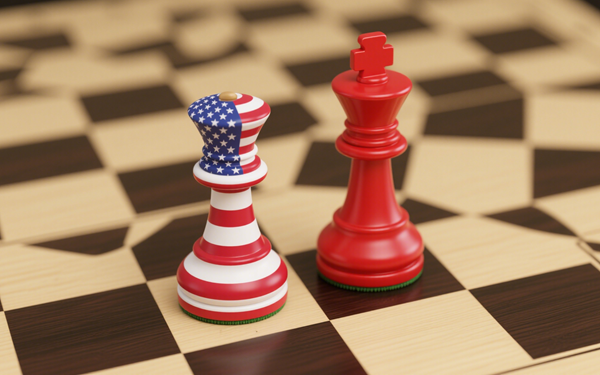
In a simultaneous move highlighting the geopolitics of technology, China has taken a step to ease global rare earths supply tensions while the United States is rallying allies to build AI supply chains independent of its strategic rival.
China has granted new streamlined export licenses for rare earths to three major domestic magnet producers—JL Mag Rare-Earth Co., Ningbo Yunsheng Co., and Beijing Zhong Ke San Huan High-Tech Co.—according to a Reuters report. The move fulfills part of a recent trade truce with the U.S.
The “general licenses” allow multiple shipments to various buyers over one year without requiring approval for each consignment, offering more predictability to global manufacturers. This follows China’s agreement last month to temporarily suspend expanded export controls on the strategic materials, which are vital for electric vehicles, defense systems, and consumer electronics.
Concurrently, the U.S. is advancing a plan to reduce dependence on China for materials critical to artificial intelligence. Jacob Helberg, U.S. Undersecretary of State for Economic Affairs, announced that Washington will host a meeting on December 12 with officials from Japan, South Korea, Singapore, the Netherlands, the U.K., Israel, the United Arab Emirates, and Australia.
The gathering aims to strengthen allied supply chains across the full spectrum of AI needs—from critical minerals and advanced semiconductors to energy and logistics. Helberg described the AI race as a “two-horse race” between the U.S. and China, framing the initiative as an “America-centric” strategy to ensure competitiveness while avoiding “coercive dependencies.”
Despite U.S. efforts, China’s grip on the rare earths sector appears unshaken in the near term. According to the International Energy Agency, China controls over 90% of global rare earths refining capacity. Chinese customs data showed exports of rare earth magnets to the U.S. hit a nine-month high in October, underscoring persistent demand.
The parallel developments signal that competition for technological supremacy is increasingly centered on control of foundational resources and supply chains. As China fine-tunes its export levers to manage external pressure, the U.S. is accelerating efforts to rewire global networks—setting the stage for a prolonged contest that will reshape the geography of high-tech manufacturing.