Mithril Silver and Gold has taken an option to acquire the La Dura gold-silver property in Durango, Mexico, less than 20 kilometers from its Copalquin district. The 2,052-hectare package carries a history of small-scale mining, a four-level underground working, and a 60 tonne per day plant last used in 2013. The deal is low-commitment up front and signals a district-scale consolidation strategy around Copalquin. The near-term work plan relies on low-cost, early-stage surveys and existing historical data, with drilling at Copalquin continuing while La Dura advances more slowly. For investors, this addition increases optionality and leverage to a discovery in a known epithermal belt, but it also adds time and execution risk given the staged pace and the need for future funding.
La Dura sits in the Sierra Madre Occidental, a prolific epithermal gold-silver province known for narrow, high-grade vein systems with strong structural controls. Proximity matters in this terrain. La Dura is roughly 5 kilometers from Mithril’s operating base at El Durazno and under 20 kilometers from Copalquin. That opens the door to shared logistics, consistent geologic models, and coordinated target ranking. District consolidation can create value by expanding the scale of potential mine plans and by allowing a company to chase structures across concession boundaries. In low-sulfidation epithermal systems like those reported around Copalquin, mineralized shoots are often discontinuous but repeat along vein sets and splays. Having a larger, contiguous land position increases the odds of capturing those shoots and building a pipeline of drill-ready targets that can be sequenced rationally rather than opportunistically.
The La Dura option gives Mithril the right to acquire 100 percent by paying 4 million dollars within four years while keeping concessions in good standing. The company plans a LiDAR survey this month and an aerial magnetic survey in early 2026, with a minimum exploration spend of 200,000 dollars in year two and no other required expenditures. These are favorable terms for a junior. They preserve cash and avoid back-end work commitments that can force value-destructive spending. The trade-off is time. A 2026 magnetics program signals a measured tempo, not a rush to drill. Investors should assume that La Dura will remain a secondary focus until Copalquin delivers stronger results or until the company raises additional capital. The broader market is funding winners. Galleon Gold closed a 30 million dollar financing with lead orders from Pan American Silver and Eric Sprott. Cabral Gold secured a 45 million dollar gold loan for a starter heap leach. If Mithril wants to accelerate La Dura, it will likely need to demonstrate a clear path to value at Copalquin or bring in a strategic partner.
LiDAR is the right first step in rugged, vegetated terrain. High-resolution elevation data can map fault scarps, vein-trace lineaments, historic adits, and waste dumps hidden by canopy. That helps refine structural interpretations and locate extensions of known workings. The planned aeromagnetic survey can define magnetic contrasts associated with dikes, intrusive centers, and major structures that may control fluid flow. However, epithermal veins themselves are often weakly magnetic, and magnetics rarely pinpoint grade. These tools can prioritize corridors for mapping and sampling, but they do not de-risk the orebody. The real catalysts will be channel samples with defensible QA/QC, underground mapping where safe access exists, and eventually drilling that tests depth and strike continuity. The current schedule suggests those steps are at least several quarters away for La Dura, while Copalquin remains the drill focus through 2025.
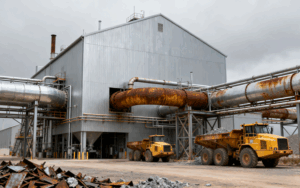
La Dura’s past production and on-site 60 tonne per day facility are useful for context but should not be treated as near-term revenue. A 60 tpd plant implies small-scale, selective mining of narrow vein material, with limited throughput and tight operating windows. Any restart would require capital for plant rehabilitation, tailings, power, water management, and modern environmental controls. Critically, there is no current compliant resource or mine plan disclosed. Historic production is not a proxy for grade or tonnage under today’s standards. Investors should be wary of narratives that lean on existing plants to imply quick cash flow. The asset is better viewed as a brownfields exploration opportunity with infrastructure that may reduce future development costs if a resource is delineated.
An extensive historic dataset spanning the 1990s to 2018 is a tangible advantage. Historic level plans, production records, and assays can fast-track target generation by identifying vein orientations, shoot plunge directions, and areas of past stoping. That said, older data often lack rigorous QA/QC. The immediate priority should be verification: twinning a subset of historic samples, resurveying workings with modern methods, and validating coordinates against current basemaps. In low-sulfidation systems, grade can vary sharply over short distances due to boiling zone controls, vein dilatancy, and late-stage barren events. The best growth vector is typically downdip or down-plunge into structurally competent hosts, where widths and grades can improve. Waratah Minerals’ report of higher grades downdip at Spur reflects that pattern in a different district. If Mithril can demonstrate similar grade continuity beneath or along strike from historic stopes at La Dura, the resource case strengthens quickly.
Mexico remains a major silver and gold producer, with operating juniors like Luca Mining providing near-term proof of function. But regulatory friction has increased. Reforms to the mining law have tightened concession terms and raised the importance of keeping titles in good standing, which Mithril commits to under the option. Surface access, environmental permits for drilling, and community relations are practical gatekeepers that can add time or cost. Security is a real factor in parts of the Sierra Madre. Durango is generally viewed as manageable by operators, but fieldwork still requires careful planning. There is also competitive pressure. Vizsla Silver’s move to acquire the Santa Fe silver-gold project near its Panuco hub shows that better-capitalized juniors are consolidating in Mexico, aiming for scale and optionality across production and exploration concessions. That puts a premium on speed and clarity of results for smaller companies.
The strategic logic of adding La Dura is sound. More ground along a proven epithermal belt near existing operations raises the ceiling on discovery size and offers potential operating synergies if both assets advance. The cost of the option is modest and preserves cash, while early surveys and historic data mining should deliver low-cost target definition. The main risks are schedule slippage, dilution if market conditions force an equity raise before value catalysts, and the possibility that historic mine areas do not deliver modern-compliant resources. The sector backdrop is mixed but improving. Capital is flowing to projects with clear economics, as seen at Cabral and Galleon, while strong drill results continue to get bid. Investors should size exposure on the expectation that value at La Dura is most likely to be unlocked through drilling in 2026, with interim de-risking at Copalquin doing the heavy lifting in 2025.
Near term, look for LiDAR results that sharpen structural targets and an initial synthesis of historic data into a coherent district model tying La Dura to Copalquin. Any credible channel sampling or underground mapping would be more meaningful than geophysics alone. Update on title status and surface access agreements will reduce regulatory uncertainty. At Copalquin, drilling at targets 1 and 5 and the planned 2026 drilling at target 3 are the primary drivers of valuation and funding leverage. From a balance sheet perspective, clarity on the 2025 work program and budget is important. If the company signals an acceleration at La Dura, expect a funding move. If it maintains a measured pace, the option provides cheap torque to success next door without forcing spend. In a market rewarding clear paths to production and scale, the most convincing signal will be repeatable, high-grade intercepts that demonstrate continuity into mineable shapes across the consolidated Durango footprint.