

Kirkland Lake Discoveries Corp (TSXV:KLDC, OTC:KLKLF)
District-Scale Exploration in World-Famous Gold Camp
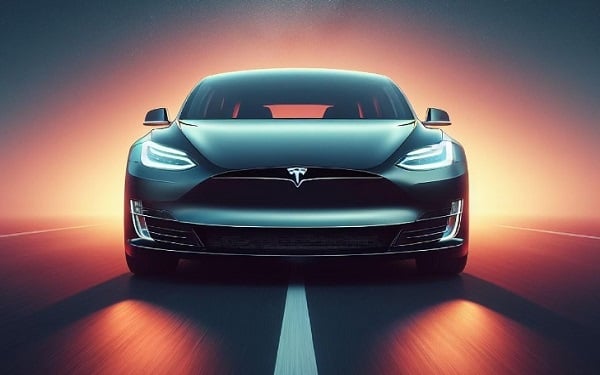
Tesla (TSLA) stock recorded a gain of approximately 25% in 2025, but the journey was fraught with drama. Early-year optimism fueled by Elon Musk’s support for Trump’s “America First” policy was quickly replaced by market skepticism stemming from weak deliveries, tariff concerns, and the CEO’s involvement in politics.
However, following shareholder approval of Musk’s trillion-dollar compensation package, Tesla’s stock staged a strong rebound in the second half of the year, propelled by the grand narrative around Full Self-Driving (FSD) and Robotaxis, coupled with impressive growth in its energy business. The company’s market capitalization returned to a high of around $1.5 trillion. As it steps into 2026, Tesla stock has completely transformed from a pure electric vehicle manufacturer into a high-stakes bet on the future of artificial intelligence and autonomous driving.
The bullish thesis for Tesla’s stock price in 2026 hinges almost entirely on whether its autonomous driving technology can achieve substantial breakthroughs in commercialization. The current $1.5 trillion market capitalization already treats Robotaxi as the primary future profit growth engine. Musk claimed in an earnings report that millions of existing vehicles could be transformed into self-driving cars via a software update, anticipating a surge in demand. The key focuses for 2026 will be: whether Tesla can obtain operational permits in more regions, whether it can demonstrate a clear Robotaxi profitability model, and the progress of its dedicated vehicle, the Cybercab. Any positive milestone developments could act as catalysts for the stock price.
While the automotive business faces pressure, the energy storage segment has become a rare bright spot in financial reports. In Q3 2025, energy storage deployments surged 81% year-over-year, with revenue for the segment growing 44%. The long-term demand for large-scale battery storage solutions for hyperscale AI data centers provides Tesla with a second growth curve and valuation support beyond automobiles, effectively diversifying business risks.
Nevertheless, the foundation supporting the trillion-dollar valuation remains fragile, and Tesla faces multiple severe challenges in 2026.
Firstly, Tesla’s price-to-earnings (P/E) ratio exceeding 300 far outpaces that of other members of the “Magnificent Seven” tech giants. This stands in sharp contrast to its lackluster financial performance in 2025: volatile revenue, a significant year-over-year decline in net profit (down 37% in Q3), and pressured automotive gross margins. The market has already priced in tremendous success; any delay in the timeline for Robotaxi’s scaled profitability could lead to a severe valuation correction.
Secondly, intensifying competition in the electric vehicle market continues to erode Tesla’s profit margins. Even though the FSD story is compelling, the “hardware” business of automobile manufacturing itself remains the fundamental base. Weak delivery growth and price wars to clear inventory will directly harm cash flow and profitability. Achieving fully unsupervised FSD is not only a technological challenge but also a regulatory hurdle. The speed and scope of regulatory approvals across various states and globally are highly uncertain, which could become the biggest bottleneck for Robotaxi expansion. Furthermore, progress from competitors like Waymo and Zoox could alter the competitive landscape and erode Tesla’s first-mover advantage.
Finally, the company’s fate remains deeply tied to its founder. Musk’s controversial statements or political moves on social media could still trigger market sentiment swings at any time, adding unpredictable variables to the stock price.
In summary, 2026 will be a crucial year for Tesla, where its grand technological narrative faces the test of financial and commercial reality. The stock price trajectory will depend on whether the Robotaxi vision can begin translating into quantifiable revenue contributions and whether the energy business can sustain high growth to offset pressure from the automotive division. For investors, this is not a black-and-white bet. The extremely high valuation implies very little room for error; any progress falling short of expectations could lead to significant stock price volatility.