The Reasons Wall Street Is Unanimously Bullish on U.S. Stocks in 2026
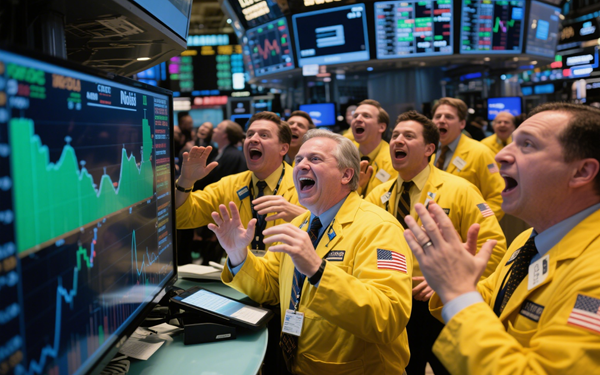
A year-end survey by Bloomberg News of 21 prognosticators shows that not single one of them is predicting the S&P 500 Index will decline in 2026, marking the longest streak of four consecutive annual gains since before the 2008 financial crisis. The average forecast implies an approximate 9% upside for the coming year, with the most optimistic projections even pointing to double-digit returns, reminiscent of the heyday during the late-1990s dot-com bubble.
Veteran market strategist and long-term bull Ed Yardeni stated, “The pessimists have been wrong for too long, and people are tired of that.” He predicts the S&P 500 will close next year at 7,700 points, representing an approximately 11% increase from current levels.
The underlying logic supporting Wall Street’s bullish outlook for the 2026 stock market is primarily based on the following points:
Corporate Earnings Resilience: US companies are expected to continue achieving double-digit earnings growth, with the momentum spreading from tech giants to a broader range of sectors. Manish Kabra, Head of US Equity Strategy at Societe Generale, noted, “The profit outlook is strong and broadening beyond tech.”
Macro Policy Support: The Federal Reserve’s interest rate cutting cycle and former President Trump’s tax cut bill are seen as a dual economic stimulus. Strategists at JPMorgan believe that even if the economy is weaker than expected, the market can rely on the Fed to “do the heavy lifting.”
Deepening AI Narrative: Massive AI investments flowing into data center construction and high-powered chips are viewed as a structural force potentially driving economic transformation, not as a bubble about to burst.
Solid Economic Fundamentals: The US economy expanded at its fastest pace in two years in the third quarter, with consumer and business spending showing resilience and trade policies entering a phase of relative calm.
Emerging Concerns: Consensus Itself is a Risk Signal
Despite the strong consensus, several strategists interviewed revealed profound vigilance towards potential risks.
Christopher Harvey of CIBC Capital Markets, one of the few accurate forecasters this year, expects the S&P 500 to rise to 7,450 points next year but simultaneously warns that “the market is sleeping on a lot of macro risks.” These risks include: monetary policy volatility, with the Fed potentially holding rates higher for longer than currently expected; trade policy uncertainty, such as potential US tariff hikes on Canada or Mexico reigniting trade tensions; and potential downward guidance on earnings expectations, as corporate executives might start managing expectations lower after a prolonged period of strong performance.
Savita Subramanian of Bank of America is among the few voices expressing relative caution. She sets her 2026 target at 7,100 points, noting that lofty valuations will limit upside potential. She outlined two extreme scenarios: a recession could send stocks tumbling 20%, while significantly better-than-expected earnings could push them up as much as 25%. This wide forecast range itself reflects a high degree of uncertainty.
The Lesson of 2025: Never Underestimate the Resilience of US Stocks
The market trajectory in 2025 served as a profound lesson for all forecasters. Early in the year, triggered by DeepSeek’s perceived challenge to US AI companies and the chaotic trade war under the Trump administration, the market plunged nearly 20%, teetering on the edge of a bear market. This led strategists to slash their forecasts at the fastest pace since the pandemic crash. However, the market then staged one of the swiftest rebounds since the 1950s, ultimately posting a gain of nearly 18% for the full year, catching many conservative forecasters off guard.
The experience of JPMorgan is quite representative. The bank turned into one of Wall Street’s most bearish institutions after the April turmoil, predicting a 12% decline for the year. In June, it revised its forecast to predict small gains, which ultimately proved too conservative. For 2026, the bank has abandoned its cautious stance, anticipating the S&P 500 will climb to 7,500 points.
Conclusion: Maintaining Clarity Amidst Optimistic Consensus
In summary, Wall Street’s outlook for US stocks in 2026 is built on corporate earnings growth, monetary policy support, and the long-term AI narrative, forming a rare unified optimistic front in recent years. However, this very high level of consensus, combined with known risks such as geopolitics, trade policy, and elevated valuations, along with unforeseeable “black swan” events in the coming year, means the market’s path ahead is by no means smooth.
As Michael Kantrowitz, Chief Investment Strategist at Piper Sandler said, when uncertainty is high, investors become myopic and overreact to different data points. For investors, while embracing this potential fourth consecutive year of the bull market, it may be even more crucial to remember the lesson of 2025: when everyone is looking in the same direction, maintaining independent clarity is essential.
AI
Financial Reports
Technology
U.S. stocks