
Pinnacle Silver & Gold Corp (TSXV: PINN)
Building a New Americas-Focused Silver and Gold Company
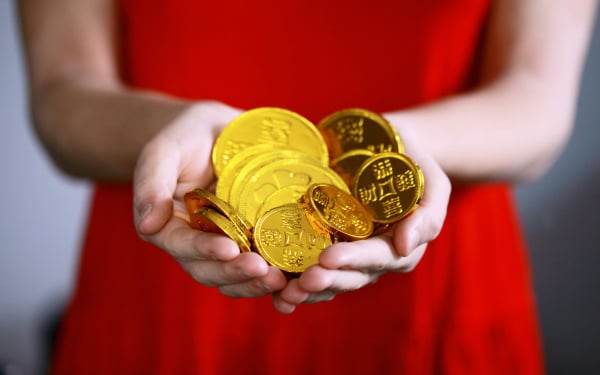
The international gold market witnessed history again on Monday. Spot gold prices surged over 2.5% during the session, breaking through the $5,100 per ounce barrier for the first time and hitting a new peak near $5,111. Silver followed suit, with double-digit percentage gains pushing it to a record high of $113.60 per ounce.
This is no ordinary market fluctuation. Gold’s dramatic rise acts as an ancient economic barometer, precisely gauging the heightened “fear index” pervading global markets. Over the past year, the so-called “debasement trade” has gained significant traction. Driven by deep-seated concerns over debt issues in advanced economies like the US and Japan, investors are fleeing traditional currencies and government bonds, flocking to gold as the ultimate safe haven.
“People have become a lot more worried about the long-term debt trajectory over the past three years,” said John Reade, chief strategist at the World Gold Council. “The place that I have found the debasement and debt arguments come through the most has been with family offices. They’re thinking about generational wealth protection, rather than the short term.”
This wave of distrust in fiat currency credibility peaked in late 2025, when investment giants like Citadel CEO Ken Griffin and Bridgewater Associates founder Ray Dalio pointed to gold’s rally as a warning signal. Since the turn of the century, gold has outperformed the S&P 500, fulfilling its function as a long-term store of value.
Yet, within this global picture of risk aversion, a strategic layout by a major Eastern economy is quietly unfolding, potentially redefining the future gold landscape.
On January 26, at the Asian Financial Forum in Hong Kong, Hong Kong’s Financial Services and the Treasury Bureau and the Shanghai Gold Exchange signed a landmark cooperation agreement. This marks not only a “new milestone” in deepening gold market cooperation between Shanghai and Hong Kong but also a potential key move concerning global gold pricing power.
Hong Kong’s Secretary for Financial Services and the Treasury, Christopher Hui, outlined the overarching vision at the forum: Hong Kong plans to boost its gold storage capacity to over 2,000 metric tons within three years, aiming to become a globally trusted gold storage location. This ambitious plan accompanies the planned trial operation within the year of a centralized gold clearing system by the Hong Kong Precious Metals Central Clearing Co., wholly owned by the Hong Kong government.
“The strategic importance of gold has become even more pronounced amid heightened geopolitical uncertainty, inflationary pressures and ongoing restructuring of the international monetary system,” Hui stated at the forum. This cooperation is intended to “put flesh on the bones” of a coordinated push by China’s two major financial centers in the global gold market.
Under the agreement, a high-level collaborative governance structure will be established, chaired by Hong Kong’s Secretary for Financial Services and the Treasury with a representative from the Shanghai Gold Exchange serving as deputy chairman. The Shanghai Gold Exchange will provide technical and regulatory input on system design, rulemaking, institutional access, risk management, and operational standards. Both sides will work together to ensure the efficient development of the trade-clearing system for gold and its alignment with international standards.
In his opening speech at the forum, Hong Kong Chief Executive John Lee said the cooperation would “set in motion a cross-boundary, trade-clearing system for the precious metal.” Zou Lan, deputy governor of the People’s Bank of China, witnessed the signing and pledged support for the Shanghai Gold Exchange’s participation in developing the system, aiding Hong Kong’s ambition to become an international gold trading center and reinforcing its strategic role as an offshore renminbi hub.
Market analysts are acutely aware of the profound implications behind this move.
Edward Au, Deloitte China’s southern region managing partner, believes the cooperation “supports the gradual development of a more integrated renminbi-based Asian gold market, particularly relevant amid geopolitical tensions, reserve rebalancing and financial fragmentation.” He noted that while an immediate wave of international investment inflow is unlikely, the agreement will help make Asia’s gold market more accessible and institution-friendly.
On one side, gold prices are skyrocketing in Western markets driven by fear. On the other, the East is methodically building renminbi-denominated gold infrastructure and ecosystem. These two seemingly parallel lines point toward the same future: the center of gravity in the global gold system may be shifting.
What is the ultimate goal of this broader strategy? It is perhaps not merely about accumulating more gold reserves. It is about enhancing the international appeal of renminbi-denominated assets, strengthening financial system resilience, and securing a level of influence in the global commodity and monetary systems that matches its economic weight in a multipolar world.
The journey of gold has never been solely about wealth. Behind the historic high of $5,100 per ounce, a grand narrative about trust, power, and the future financial order is unfolding. And China is positioning itself to be a key author in that story.