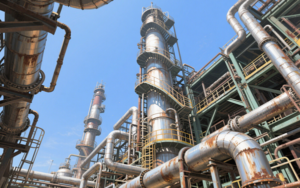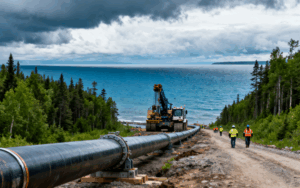
December data show China stepped up purchases of Russian crude while India reduced intake. The reshuffle, centered on ESPO barrels into northern China and softer liftings by Indian state refiners, is nudging Asian energy markets and policy in different directions. LNG shipments from Russia to Europe also climbed, complicating the demand picture for Northeast Asia utilities heading into spring contract talks.
Across recent sessions, energy and shipping stocks in Tokyo and Seoul have been relative outperformers, while Indian refiners have traded defensively on sanction and tariff headlines. Japanese market coverage described resource names as firm, 資源株しっかり, as crude stabilized above recent lows and traders leaned into carry trades in trading houses and shipowners. In Korea, shipbuilders saw support on expectations of sustained tanker demand through 2026, with local commentary highlighting 조선주 강세, or strength in shipbuilding shares. In China and Hong Kong, upstream oil majors held steady as discounted feedstock supports cash flow but domestic demand signals remain mixed; independent Shandong refiners continue to balance lower-cost Russian grades against quota and credit constraints. Indian oil marketing companies have underperformed on worries that tighter US enforcement around the G7 price cap could complicate funding and insurance for Russian cargoes.
Local Chinese reporting has framed the uptick in Russia flows within long-running energy security priorities. Official guidance continues to emphasize 确保能源安全稳定供应, ensuring a secure and stable energy supply, and 多元化进口, diversifying import sources. In practice, December saw a rebound in ESPO arrivals to northern Chinese ports and steady demand from private refiners, aided by manageable Urals-ESPO differentials and term discounts. Bloomberg has noted that state firms have used Russia’s need to place barrels to negotiate longer-term supply options. The Chinese trade press frequently references 以人民币结算 where possible to reduce settlement frictions, or at minimum to build optionality around payment channels, which matters if Western insurers and banks tighten compliance.
The mechanics are straightforward. ESPO travels a short distance to China’s northeast, reducing freight risk and voyage time relative to Atlantic grades. With domestic product demand recovering unevenly, state buyers prioritize flexibility: term barrels secure baseload runs while spot windows allow them to toggle for refining margins. A common refrain in Chinese industry writeups is 锁定长期供应与价格弹性, locking in long-term supply with price flexibility. Translation: term where it counts, optionality where it pays. That dovetails with Beijing’s broader procurement strategy to arbitrate among Middle East OSPs, Russian discounts, and occasional Atlantic arbitrage when freight softens.
India’s reduction in December Russian imports reflects a practical judgment about compliance risk rather than a wholesale policy shift. Domestic refineries have built an export machine on gasoil and gasoline shipments to Europe and Africa; their banks, insurers and trade finance partners remain exposed to US secondary sanctions. Indian press has reported that state-run refiners are testing alternative routing and financing options but are unwilling to jeopardize product export channels. Reuters mid-December calculations still put Russia-to-India flows above 1 million barrels per day, but down sharply from November’s pace.
This is the refinery margin calculus. Russian discounts are compelling when netbacks are clear and logistics are predictable. But diesel cracks have narrowed from last year’s extremes, Europe’s product demand is softening, and any hiccup in insurance or letters of credit can erase savings. Indian procurement desks are likely to toggle between Russian and Middle East barrels into the spring maintenance season, preserving flexibility while monitoring Washington’s enforcement tempo. Market sentiment around India’s oil marketing companies reflects that caution: strong balance sheets, but headline risk around each sanction update.
Europe’s December jump in Russian LNG purchases, even as the EU moves toward a 2025 cutoff, sent a mixed signal into Asia. Higher near-term European liftings helped cap spot LNG softness and reinforced the view among Japanese and Korean utilities that contract diversification remains necessary. Japanese corporate coverage has noted ongoing reassessments of procurement lines. One recurring phrase in local media is 長期契約の見直し, reviewing long-term contracts, as utilities weigh the trade-off between term volumes and flexibility.
In Korea, industrial buyers and utilities face similar choices as they balance winter storage with price risk into summer. Local commentary calls attention to 제재 리스크 확대, the expansion of sanction risks, not only for oil but for shipping and finance around energy cargoes more broadly. As Europe phases out Russian LNG, a portion of those volumes must be reoriented, intensifying competition among price-sensitive buyers and shifting tanker routes. For Japanese and Korean trading houses, this realignment supports earnings from shipping and energy equity stakes but raises procurement complexity, pushing them to maintain optionality across US, Qatar and Australia supply.
Under the G7 price cap, Russian cargoes rely on a patchwork of non-Western insurers and a growing shadow fleet of older tankers. That raises counterparty and operational risks for Asian buyers and their financiers. Chinese buyers can mitigate some of this by relying on short-haul ESPO and building non-dollar settlement channels. Indian buyers face a tougher balance because their export earnings are more directly tied to Western markets and standards. Japanese and Korean stakeholders are more insulated on crude but are exposed via ship finance, classification services, and chartering. In Tokyo market notes, the watchword is リスク管理, risk management, as firms audit exposure to sanctioned entities and reroute logistics where necessary.
Financial markets are already sniffing out winners and losers. Tanker owners benefit from longer average voyage lengths and sanctions-induced inefficiencies. Asian shipbuilders receive support from order backlogs in product tankers and LNG carriers. Refiners with diversified crude slates and strong balance sheets can lean into discount windows; those reliant on fragile financing chains will remain conservative.
Chinese energy outlets and policy briefings have leaned into the narrative of import diversification. The underlying message is consistent: 优化进口结构, optimize the import mix, and 防范外部不确定性, guard against external uncertainty. Translation: use Russia’s discounts, but do not get trapped. In Japan, mainstream financial press continues to flag energy security as a priority theme, エネルギー安全保障, often in the same breath as corporate governance and capex plans at trading houses and utilities. Korean business dailies emphasize compliance vigilance as Western regulators recalibrate enforcement tools.
These local cues help explain why Chinese state buyers are comfortable stepping in as India steps back, why Japanese trading houses and shipowners find a favorable operating backdrop despite macro volatility, and why Korean yards look through short-term swings to multi-year demand from energy logistics.
December’s 23 percent jump in China-bound Russian crude and the 29 percent decline into India confirm a structural truth: Russia will keep pushing barrels east, but Asian buyers will not shoulder equal shares of execution risk. China is extracting price and term concessions while building payment optionality. India is prioritizing its export ecosystem and regulatory hygiene, accepting a lower near-term discount capture. Japan and Korea are leaning into logistics and procurement diversification with an eye on LNG, shipping and trading income.
English-language coverage focuses on sanctions headlines and monthly tally swings. What is missed is the embedded optionality Asian players are engineering. Chinese state firms are using ESPO and yuan-linked settlement to lock in baseload barrels and preserve leverage across OPEC and Russia. Indian refiners are quietly preserving export margins by avoiding sanction tripwires, even if it means paying up for Middle East grades. Japanese and Korean corporates are monetizing the friction via shipping, LNG carriers and portfolio trading houses. The investable angle is not just oil price beta; it is the spread between discounted barrels and logistics constraints. Allocate to Asian shipping and trading franchises positioned to capture dislocations, stay selective on Indian refiners until sanction enforcement clarity improves, and recognize that Chinese upstreams’ steady cash flows reflect more than commodity price—they reflect a policy-backed procurement edge that English-language headlines continue to underprice.